
Style

What You Need to Know About Jewelry Week — Paris, July 2026

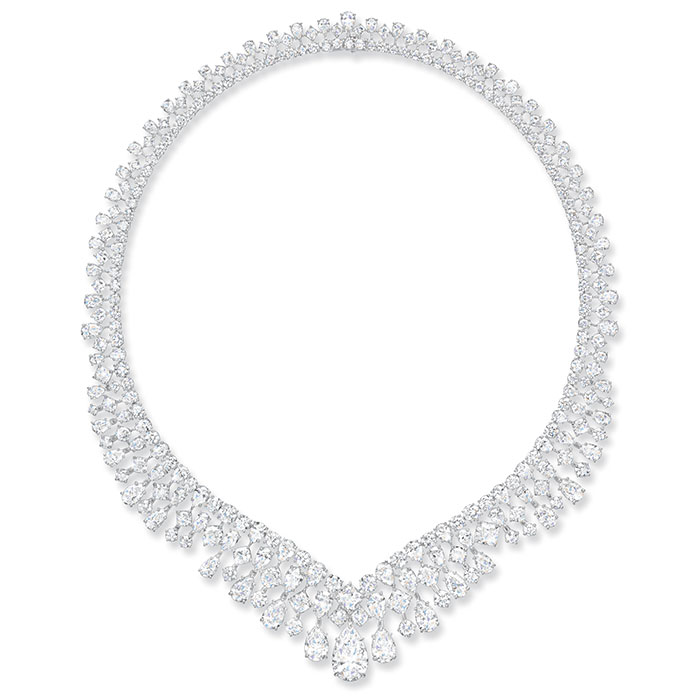
By virtue of its size, visibility, the number of stones it mobilizes and the technical constraints it imposes, the necklace remains high jewelry’s ultimate test. In July 2026, more than ever, it allowed the houses to demonstrate their virtuosity.

By virtue of its size, visibility, the number of stones it mobilizes and the technical constraints it imposes, the necklace remains high jewelry’s ultimate test. In July 2026, more than ever, it allowed the houses to demonstrate their virtuosity.

By Sandrine Merle


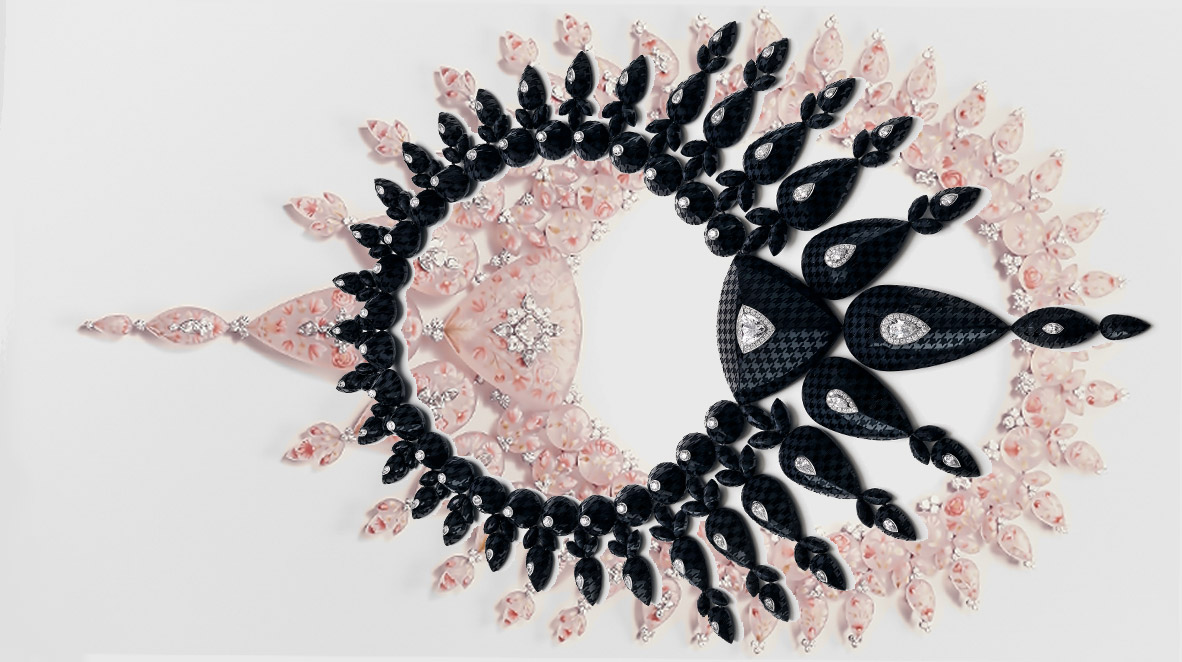
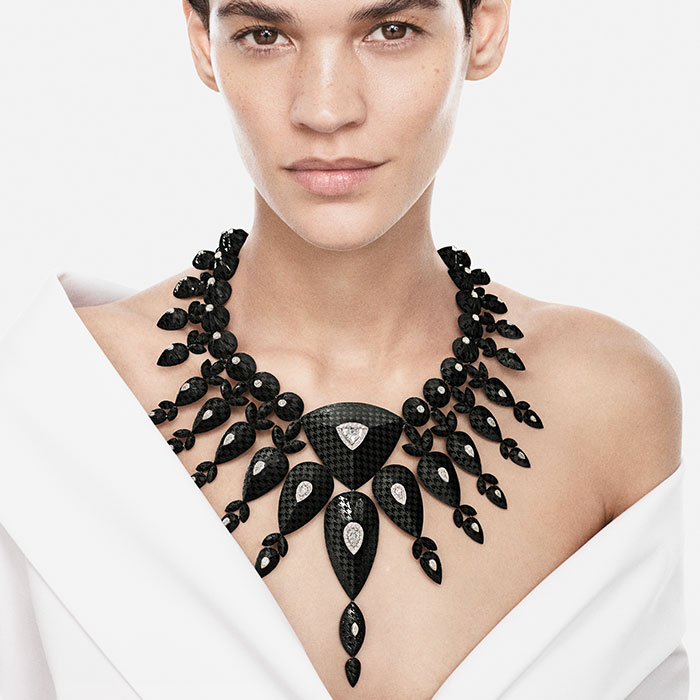
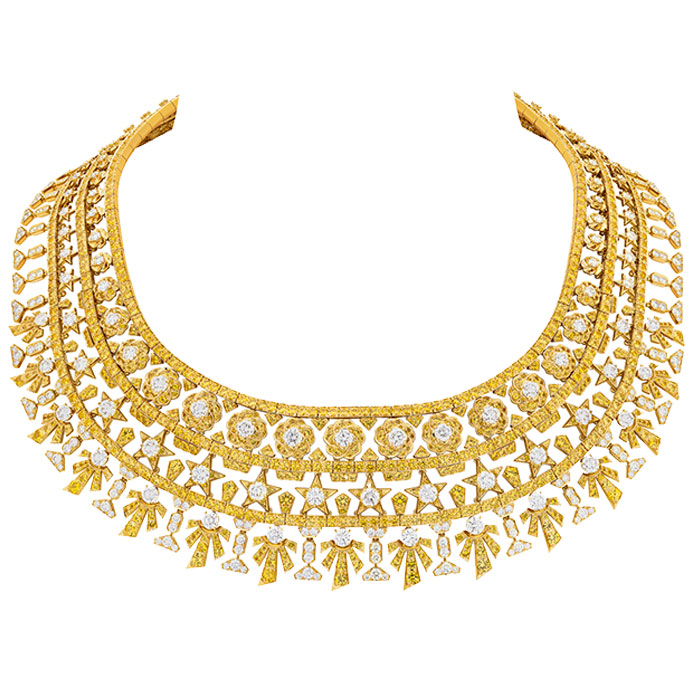
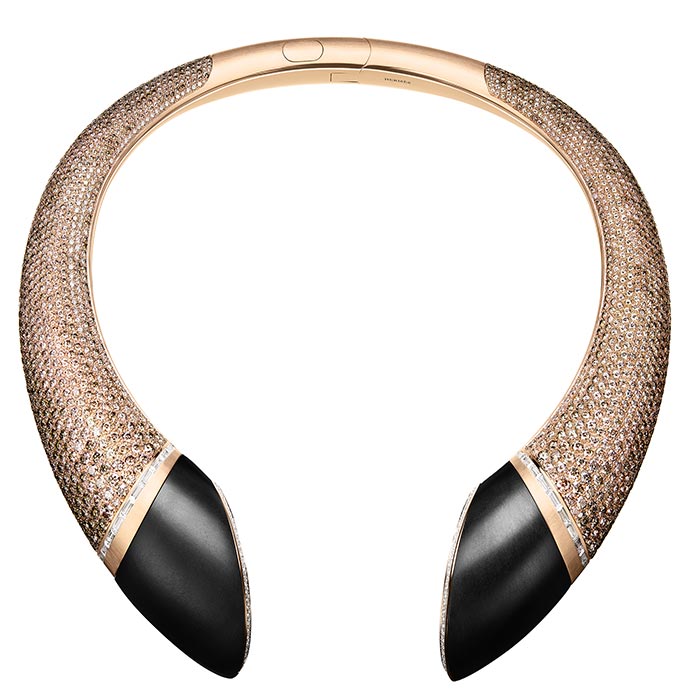
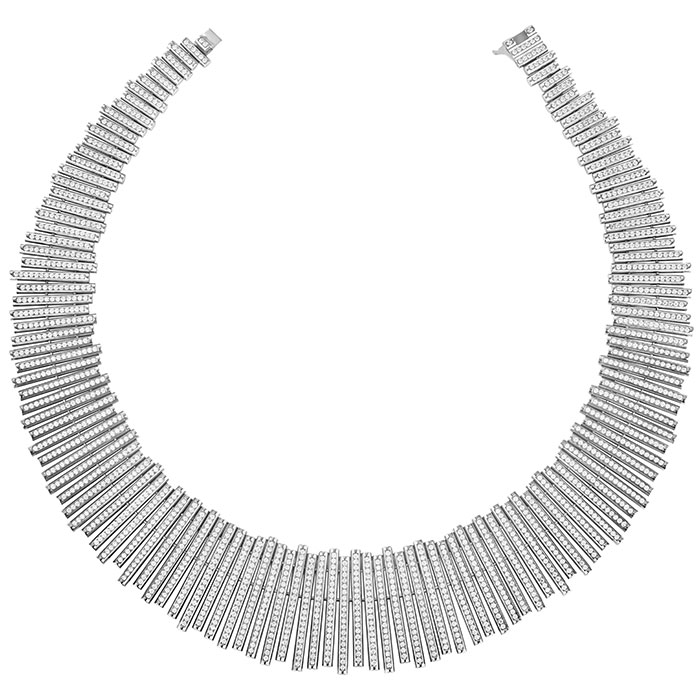
Bib necklaces and torques dominated the season, eclipsing sautoirs and tie necklaces by their sheer number and magnificence. At Boucheron, Claire Choisne even went so far as to dedicate an entire collection to the bib necklace, an archetypal model of high jewelry, with five pieces created from a single design. Each was accompanied by just one ring. “Traditionally, the necklace is the starting point of a collection; as the pillar of the parure, it is generally accompanied by several rings, bracelets or clips that echo one of its motifs, a stone, or a color,” explains Gihane Zakhia, a jewelry consultant who long worked alongside Victoire de Castellane at Dior.


A strategic position

This enthusiasm is first explained by the necklace’s strategic position. It is impossible to miss: worn on the upper body, close to the face, it naturally falls within the line of sight. Even when it features just one central stone, that stone becomes immediately visible; it lights up the face, draws the eye and gives the silhouette its focal point. The necklace is also the most photogenic jewel. It asserts itself effortlessly in an image or on a red carpet. It structures the neck, the collarbone, and sometimes the entire upper bust. Whatever the framing, it occupies the center of the image, while a ring or bracelet can easily disappear or require a pose. Around the neck, it is also less exposed to knocks and friction, allowing the use of particularly fragile materials: enamel, lacquer, emerald or rock crystal.


A narrative space

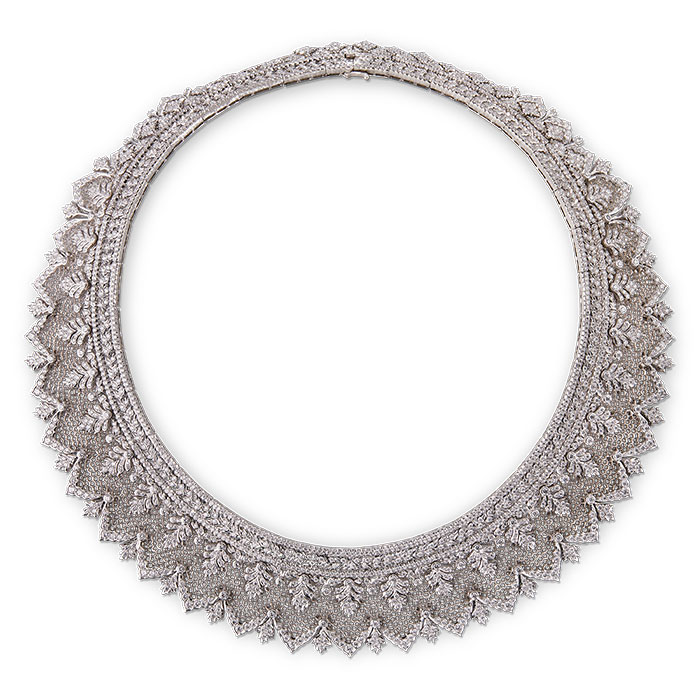
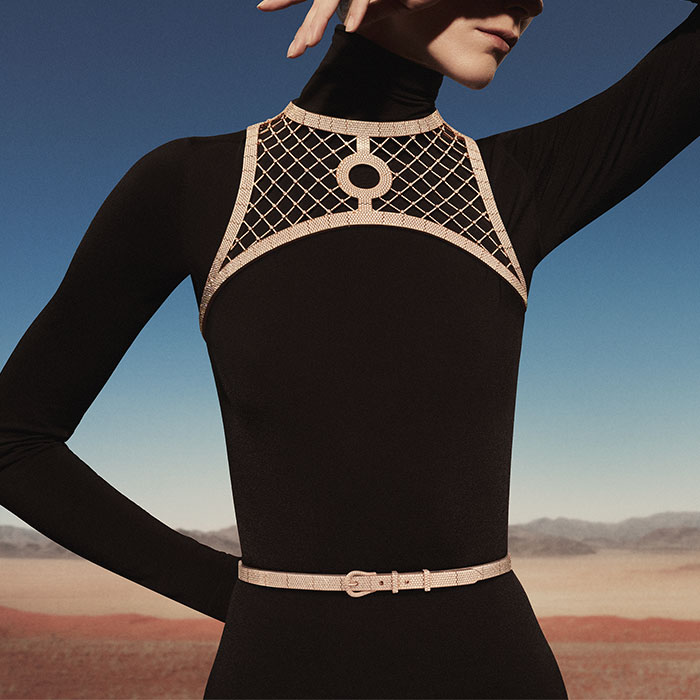
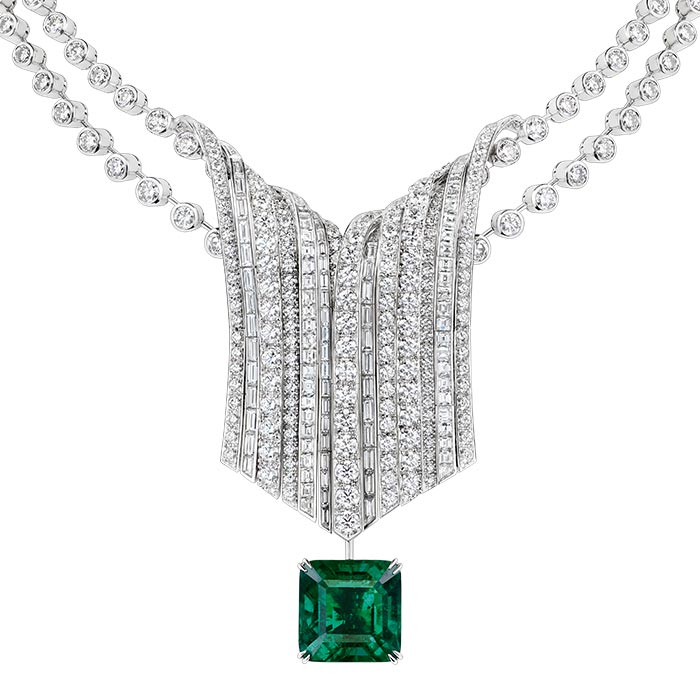
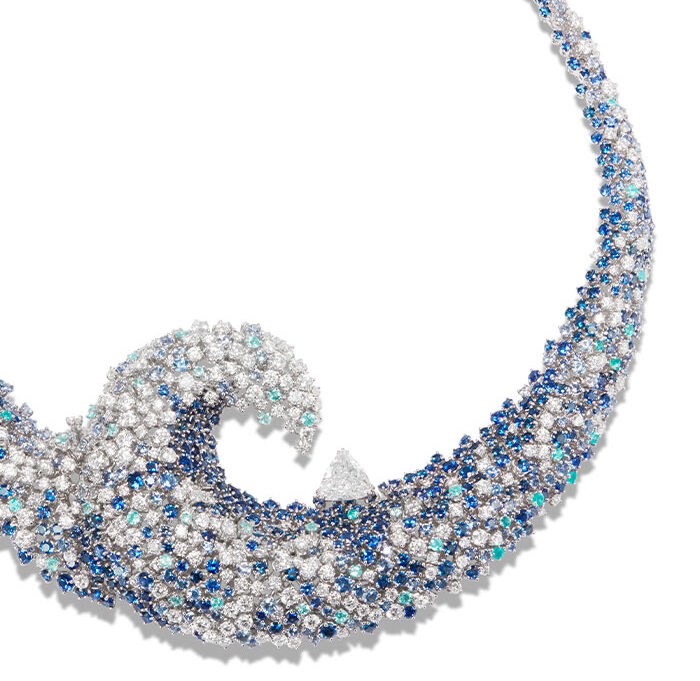
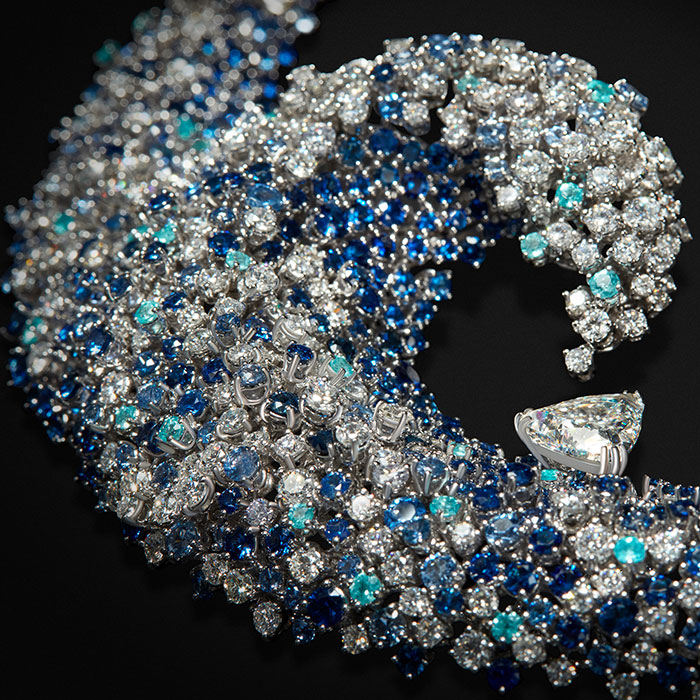
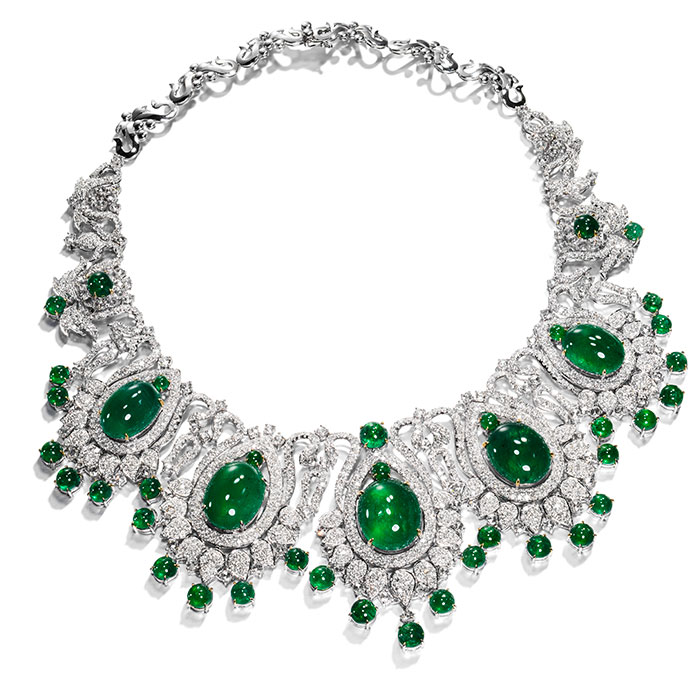
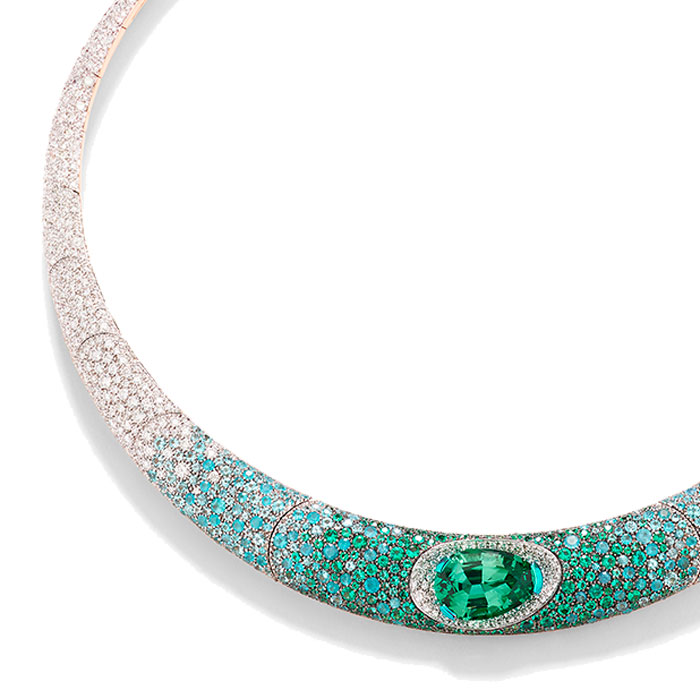
The necklace is not only the jewel one sees best; it is also the one that offers the largest surface for composing with precious stones. Some Hermès pieces reach such a scale that they sit at the boundary between jewelry and clothing. Houses use this surface to deploy gradations of colored stones, compositions of diamonds in different sizes and weights, or exceptional matching, such as the five Zambian emeralds brought together by Anna Hu. They add tassels and pendant elements. The necklace also makes it possible to work a motif with a three-dimensional effect that would be impossible elsewhere. At Damiani, the wave inspired by Hokusai provides a spectacular example: movement, volume and depth restore, in stones, the power of water.


A technical challenge

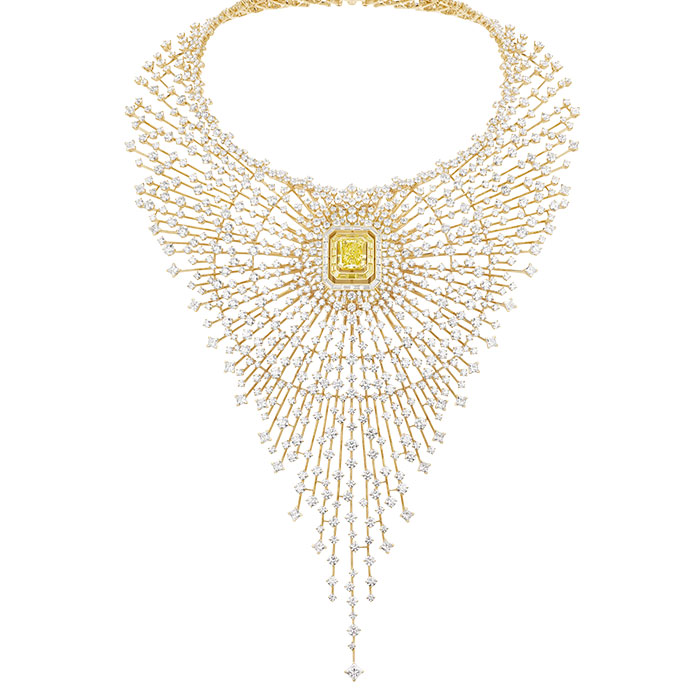
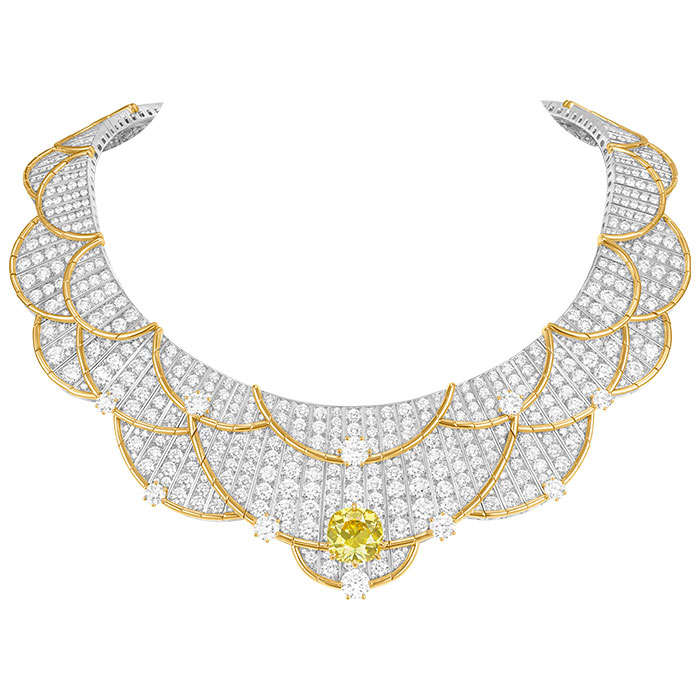
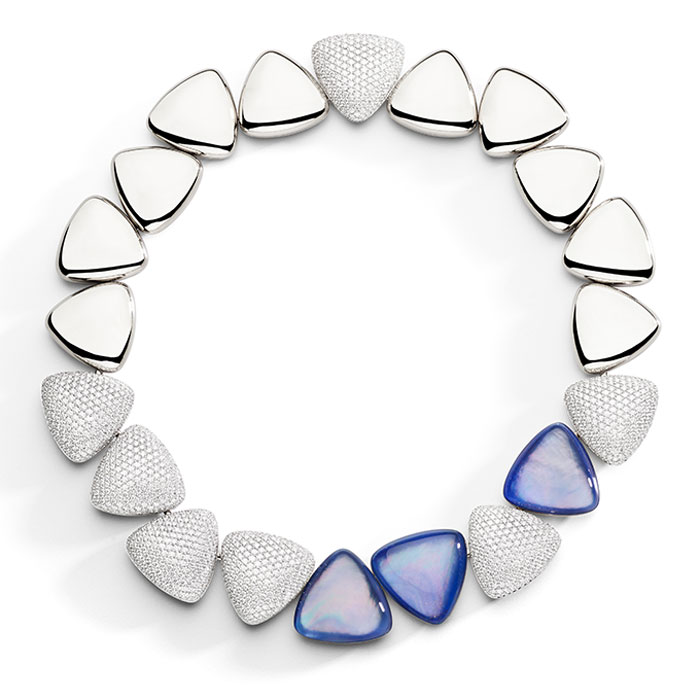
If it is too heavy, too stiff or too demonstrative, a high jewelry necklace immediately loses its force. To avoid these pitfalls, workshops devote hundreds, sometimes more than a thousand hours, to solving problems of structure, weight, stability and comfort. A very heavy central stone has to be stabilized, as in the case of Fred’s Soleil d’Or, where a 100-carat gem becomes the heart of an immense radiant bib necklace. Light must be allowed to circulate, solids and voids must be organized, the metal structure must be concealed, and suppleness ensured through nearly invisible links or articulations. The jewel must follow the movement of the body, avoid pulling on the neck, remain stable and never freeze into a rigid plate. At Boucheron, this requirement notably led the workshops to hollow out each onyx element one by one, making them lighter without weakening their visual impact.


The presence of so many necklaces during this Jewelry Week was no coincidence; it reflects the state of a particularly buoyant market. Each necklace represents a risk: it immobilizes stones, cash flow and a considerable number of workshop hours. There must also be clients capable of acquiring it. Without a buyer, a necklace can remain in a safe for months, sometimes years, before eventually being dismantled. It is not only the most spectacular piece in a collection: it is the one through which a house shows what it is able to commit — technically, aesthetically and financially.


 Learn more about Paris Jewelry Week:

Highlights from Jewelry Week – Paris, Juillet 2025

Highlights of Haute Joaillerie – Paris, June 2024

Takeways from Jewelry Week – Paris, July 2023

Memorable Moments of Fashion and Jewelry Week – Paris, January 2023

Takeways from Jewelry Week – Paris, July 2022

Highlights from Jewelry Week – Paris, January 2022

By virtue of its size, visibility, the number of stones it mobilizes and the technical constraints it imposes, the necklace remains high jewelry’s ultimate test. In July 2026, more than ever, it allowed the houses to demonstrate their virtuosity.

By Sandrine Merle


Bib necklaces and torques dominated the season, eclipsing sautoirs and tie necklaces by their sheer number and magnificence. At Boucheron, Claire Choisne even went so far as to dedicate an entire collection to the bib necklace, an archetypal model of high jewelry, with five pieces created from a single design. Each was accompanied by just one ring. “Traditionally, the necklace is the starting point of a collection; as the pillar of the parure, it is generally accompanied by several rings, bracelets or clips that echo one of its motifs, a stone, or a color,” explains Gihane Zakhia, a jewelry consultant who long worked alongside Victoire de Castellane at Dior.


A strategic position

This enthusiasm is first explained by the necklace’s strategic position. It is impossible to miss: worn on the upper body, close to the face, it naturally falls within the line of sight. Even when it features just one central stone, that stone becomes immediately visible; it lights up the face, draws the eye and gives the silhouette its focal point. The necklace is also the most photogenic jewel. It asserts itself effortlessly in an image or on a red carpet. It structures the neck, the collarbone, and sometimes the entire upper bust. Whatever the framing, it occupies the center of the image, while a ring or bracelet can easily disappear or require a pose. Around the neck, it is also less exposed to knocks and friction, allowing the use of particularly fragile materials: enamel, lacquer, emerald or rock crystal.


A narrative space

The necklace is not only the jewel one sees best; it is also the one that offers the largest surface for composing with precious stones. Some Hermès pieces reach such a scale that they sit at the boundary between jewelry and clothing. Houses use this surface to deploy gradations of colored stones, compositions of diamonds in different sizes and weights, or exceptional matching, such as the five Zambian emeralds brought together by Anna Hu. They add tassels and pendant elements. The necklace also makes it possible to work a motif with a three-dimensional effect that would be impossible elsewhere. At Damiani, the wave inspired by Hokusai provides a spectacular example: movement, volume and depth restore, in stones, the power of water.


A technical challenge

If it is too heavy, too stiff or too demonstrative, a high jewelry necklace immediately loses its force. To avoid these pitfalls, workshops devote hundreds, sometimes more than a thousand hours, to solving problems of structure, weight, stability and comfort. A very heavy central stone has to be stabilized, as in the case of Fred’s Soleil d’Or, where a 100-carat gem becomes the heart of an immense radiant bib necklace. Light must be allowed to circulate, solids and voids must be organized, the metal structure must be concealed, and suppleness ensured through nearly invisible links or articulations. The jewel must follow the movement of the body, avoid pulling on the neck, remain stable and never freeze into a rigid plate. At Boucheron, this requirement notably led the workshops to hollow out each onyx element one by one, making them lighter without weakening their visual impact.


The presence of so many necklaces during this Jewelry Week was no coincidence; it reflects the state of a particularly buoyant market. Each necklace represents a risk: it immobilizes stones, cash flow and a considerable number of workshop hours. There must also be clients capable of acquiring it. Without a buyer, a necklace can remain in a safe for months, sometimes years, before eventually being dismantled. It is not only the most spectacular piece in a collection: it is the one through which a house shows what it is able to commit — technically, aesthetically and financially.


 Learn more about Paris Jewelry Week:

Highlights from Jewelry Week – Paris, Juillet 2025

Highlights of Haute Joaillerie – Paris, June 2024

Takeways from Jewelry Week – Paris, July 2023

Memorable Moments of Fashion and Jewelry Week – Paris, January 2023
Takeways from Jewelry Week – Paris, July 2022

Highlights from Jewelry Week – Paris, January 2022

Most read articles