


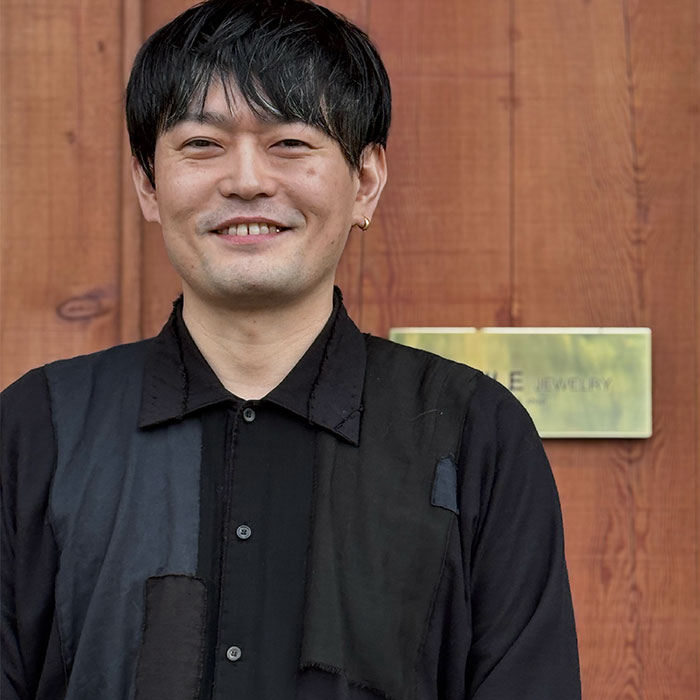
I met Takashi Kojima several times in Kyoto. His studio and shop, Facile —meaning “easy” in Italian— opened in 2010 in the Gosho-minami neighborhood, across from the towering trees of the Imperial Palace Park. Now in his forties, Kojima grew up in a family of artists. He went on to attend the University of Art and Design, studying architecture during the day and metal engraving at night. He told me that he developed an interest early on in the history of cultured pearls, which is closely intertwined with that of Japan. In 1919, Mikimoto succeeded in developing a method for cultivating perfectly round pearls. For his label, Kohkoh, Kojima turned his attention to what remains after a pearl is harvested: the pearl oyster’s shell, which is usually discarded. He gives it a new life.
A Patented Process
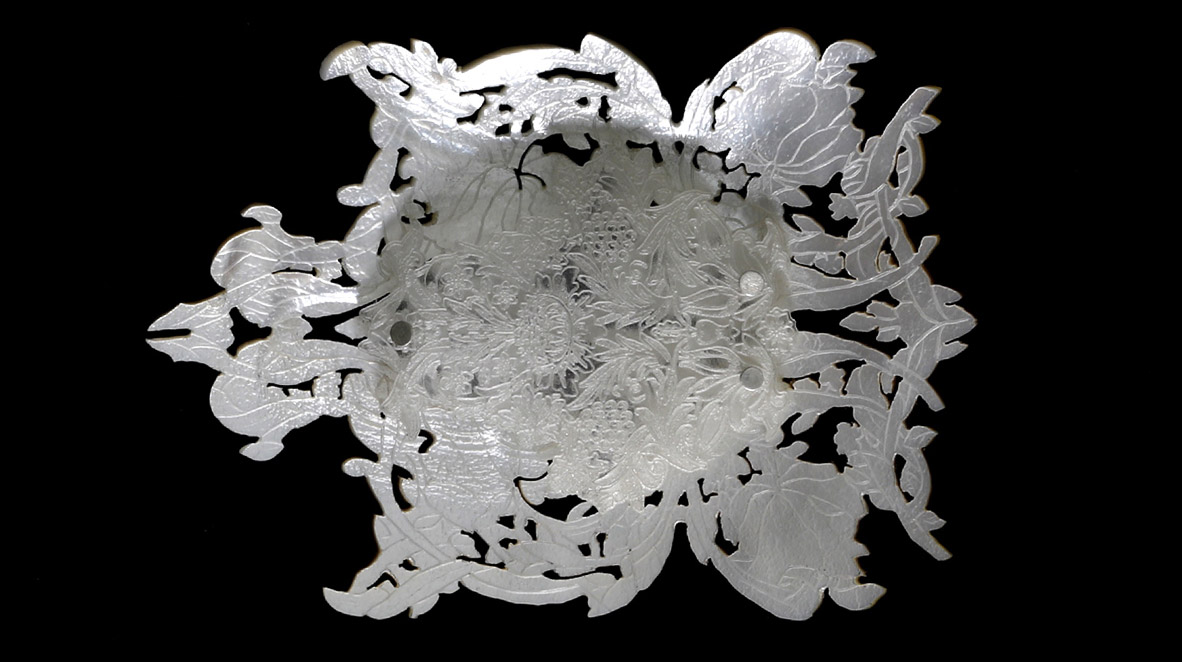
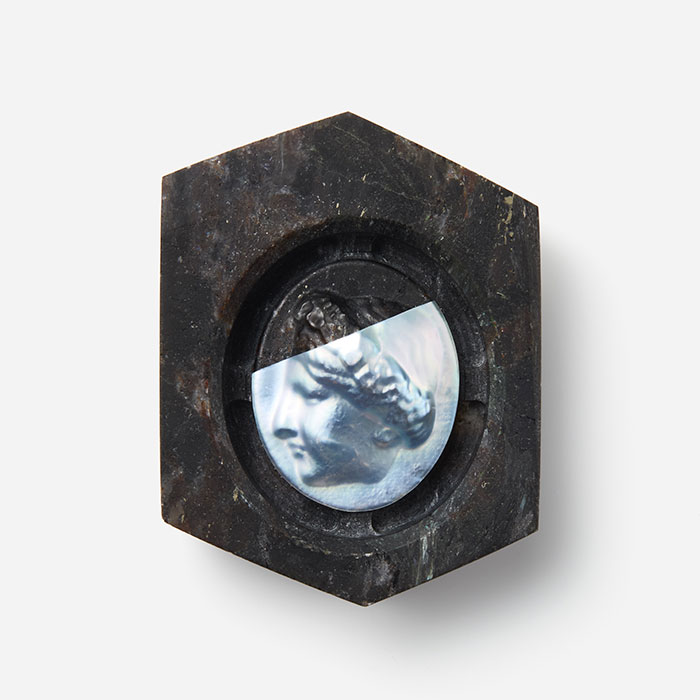
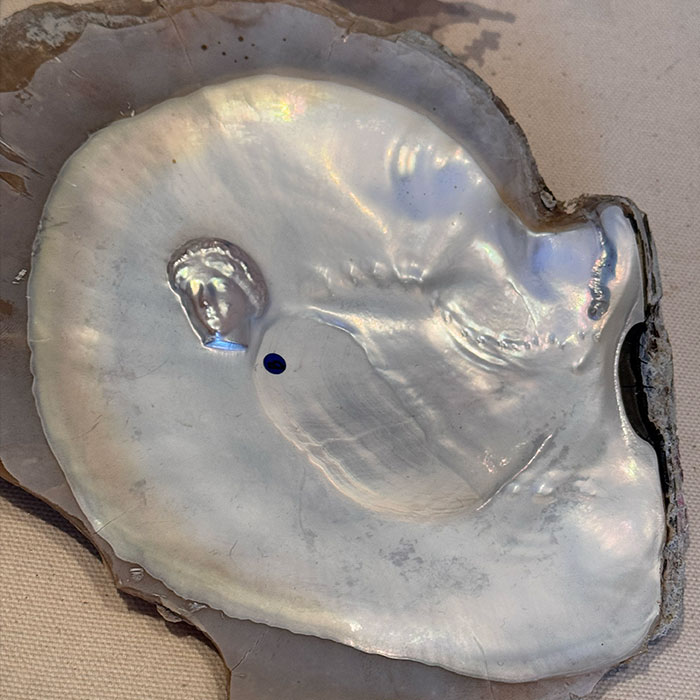
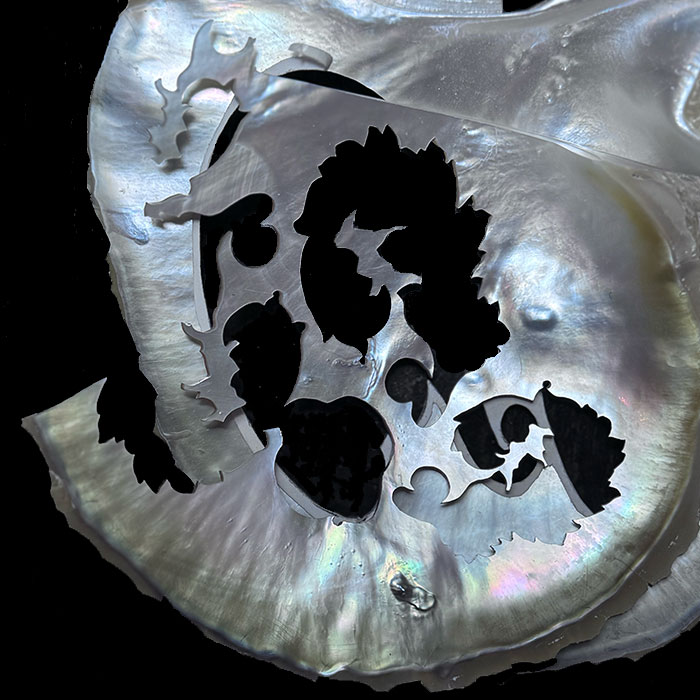
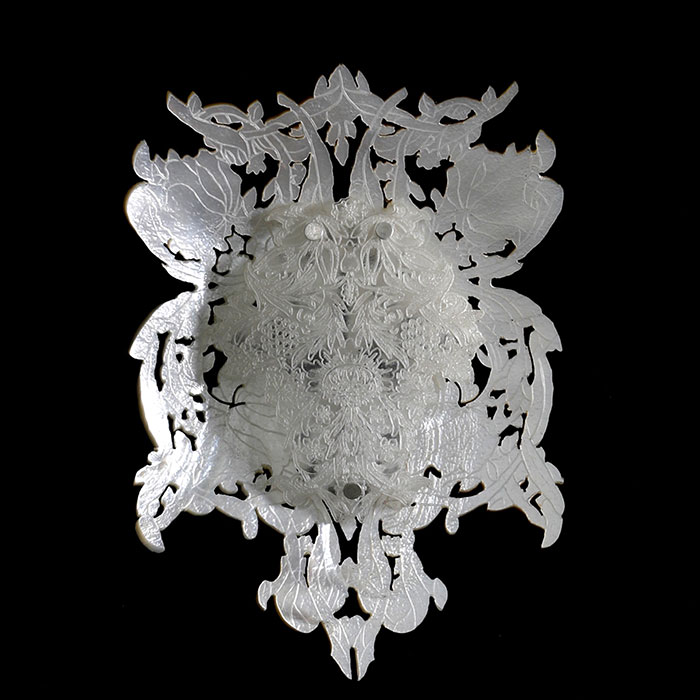
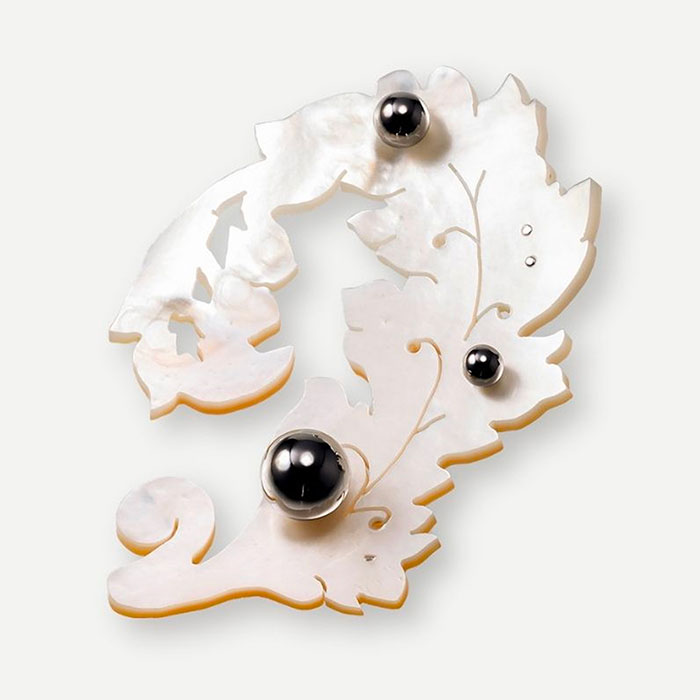
Inside the shell, Takashi Kojima places an antique-inspired motif of his own design—a kind of neo-cameo produced through digital fabrication. He then returns the oyster to the sea. Over the next six months, successive layers of nacre form over the motif, creating an extremely thin coating just 0.2 to 0.3 millimeters thick. Like a luminous, almost immaterial skin, the nacre preserves an exact impression of the form beneath it. Using a process he patented in Japan in 2022, Kojima removes the resin cameo to reveal a remarkably crisp relief and surfaces of a delicacy impossible to achieve by hand. For the Light ring, which pairs smoky quartz with mother-of-pearl, he follows the same principle. He places a resin model of the stone inside the oyster, where it is gradually coated with nacre. Once the nacre has formed, Kojima removes the core, and the resulting layer fits precisely over part of the stone.
The Strange Beauty of an Oyster Shell
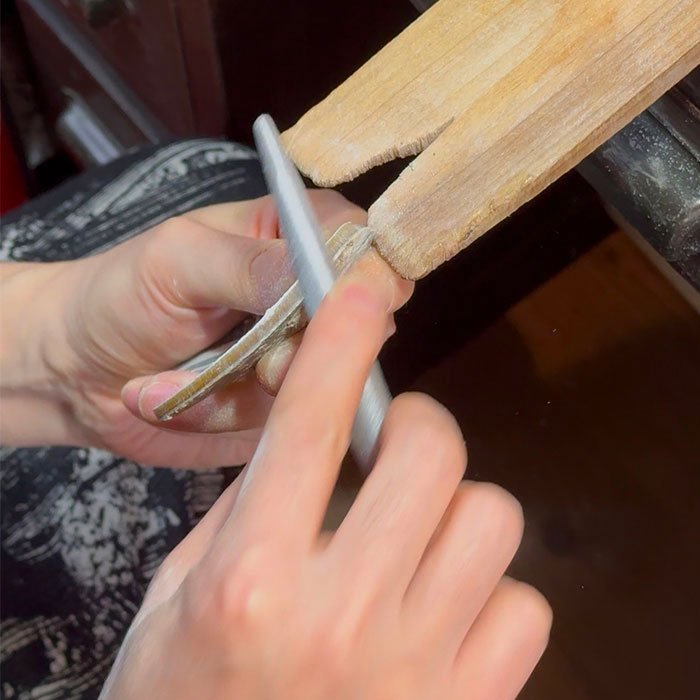
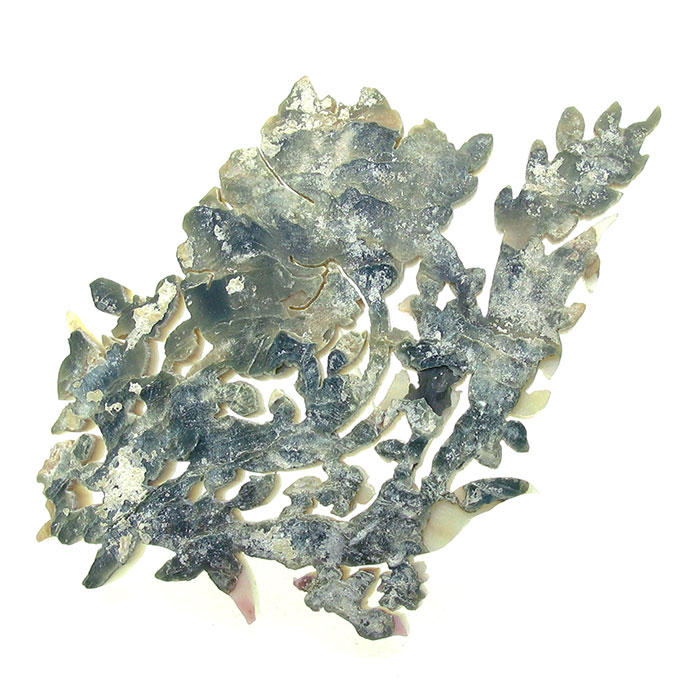
Kojima does not confine himself to the shell’s traditionally prized interior, where iridescent mother-of-pearl catches the light. He is equally drawn to its exterior: rough, shaped by its time in the sea, and mottled in shades of green, gray, and even pink. Encrustations, erosion, algae, and marine organisms turn the shell’s surface into a rugged landscape. Kojima carves this terrain with lush botanical motifs inspired by William Morris, as well as geometric forms. Mounted as brooches, the resulting pieces reveal the outer surface, the thickness of the shell, and the inner nacre all at once. Close attention to the material guides every stage of the making process. However precise the machining, it is not used to erase natural imperfections. Instead, it works with them, bringing forth a form that neither the artist nor the machine has fully determined.
Beyond the Oyster: Systems and Structures
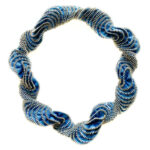
Kohkoh and pearl oysters tell only part of Kojima’s story. He also creates jewelry that resembles spacecraft. In one body of work, he assembles natural and synthetic stones so that they touch and support one another through carefully calibrated tension, without traditional prongs. The gemstones are not merely decorative; they form the structure of the piece. Remove them, and everything collapses. In another, Kojima uses plastic sprues—the branching frames left over from model kits once the individual parts have been removed. Once again, what framed the object and seemed destined to disappear becomes the object itself. This metamorphosis echoes the transforming robots and manga that shaped his childhood.
From mother-of-pearl to plastic sprues, a single fascination runs through Kojima’s work: systems, structures, and transformation.
Learn more about my exhibition Japan, Stillness & Substance (“Japon, Murmures et Matières) at Sotheby’s Paris held at Sotheby’s Paris from October 1–6, 2026, as part of Parcours Bijoux 2026, and explore Jewelry in Japan.
Opening talk (registration required) on October 1, 2026, at 6:00 p.m. at Sotheby’s Paris, with three of the artists in attendance: Aya Iwata, Mariko Sumioka, Shinji Nakaba.
This exhibition is part of Parcours Bijoux