
My agenda

A stunning exhibition: “Marion Delarue. Pierre, Plume, Ciseaux!” at the Musée des Arts Décoratifs in Paris.

The exhibition “Marion Delarue. Pierre, Plume, Ciseaux!” traces the artist’s career and her residency at the Musée des Arts Décoratifs in Paris. The museum gave her unrestricted access to its collections, among the richest in the world.

By Sandrine Merle.

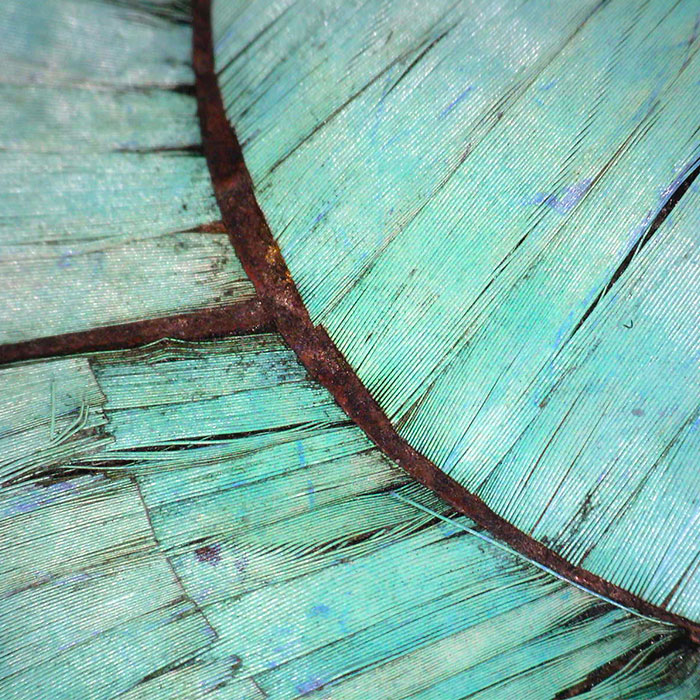
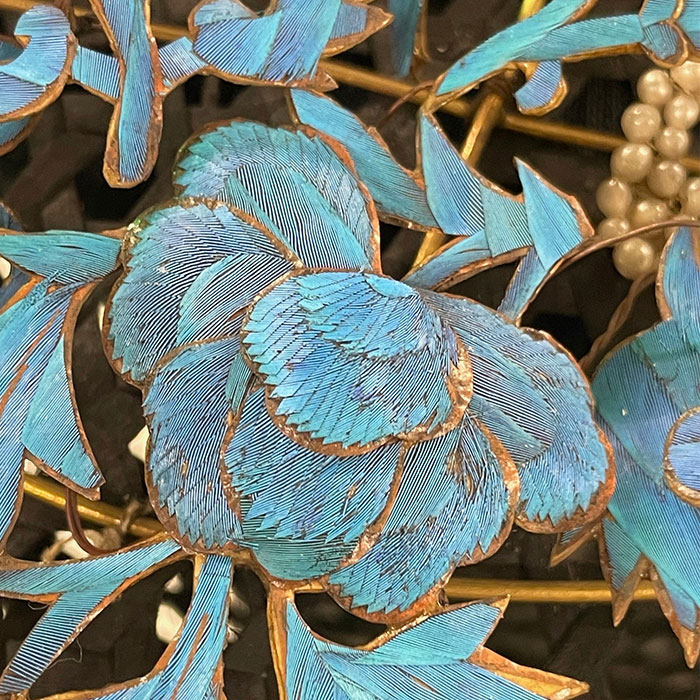
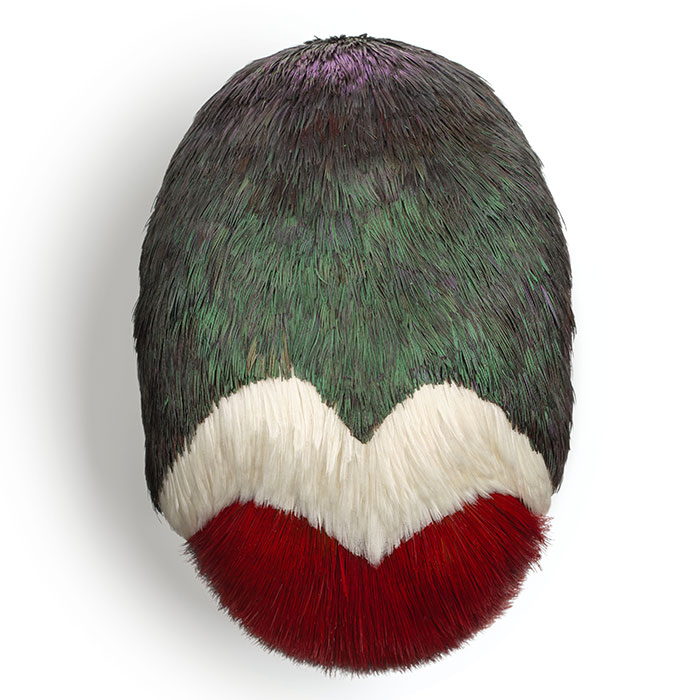
In 2013, contemporary jewelry artist Marion Delarue fell in love with diancui, the extraordinary technique of kingfisher feather inlay used on a 19th-century Chinese hairpin. She was captivated by the feathers’ iridescent blue-green sheen and the exquisitely refined floral and botanical motifs they formed. To uncover the secrets of cutting and gluing these feathers, she set off the following year for a residency at the Inside-Out Art Museum in Beijing. “But nothing went as planned: Guangchun Xiao, one of the few masters of diancui, ultimately chose not to share his knowledge with me, reserving it for his daughter. He had learned it from his own father,” Delarue explains.

Formative Years in Residence

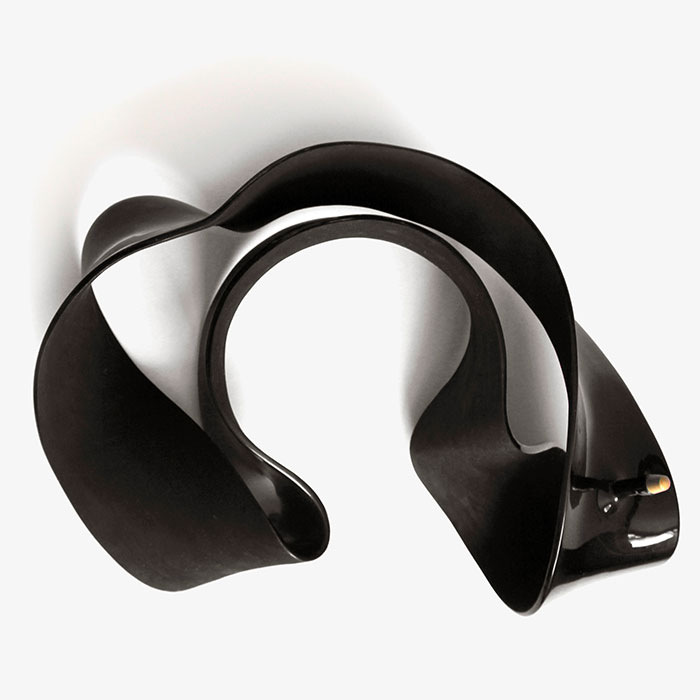
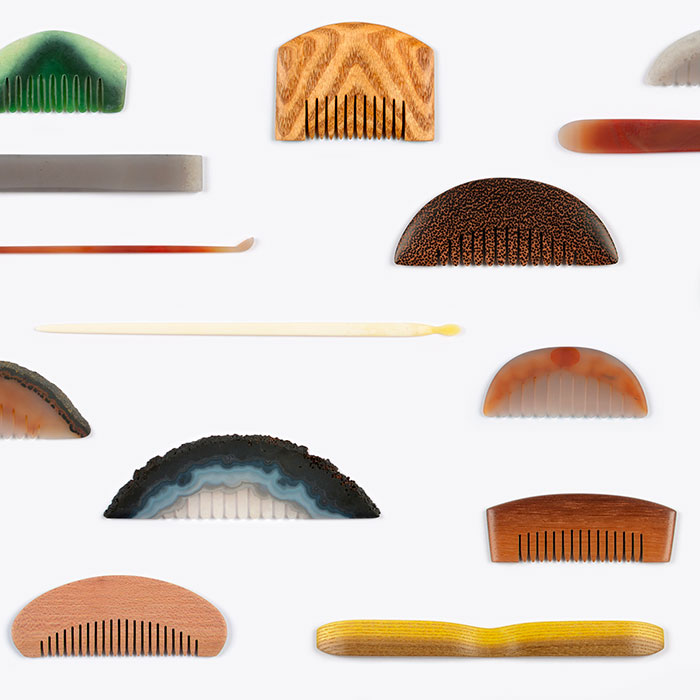
For Delarue, who trained in the Contemporary Jewelry program at the Haute École des Arts du Rhin, this encounter was the starting point for a long series of residencies in Asia, where she learned a wide range of traditional techniques. One of the most memorable took place in South Korea, where she was drawn to the attention devoted to hair, particularly the traditional headdress worn by married women: an enormous mass of braids twisted into a monumental bun. In Cracheh (2011), she reinterpreted it as a collar resembling a neck brace, using a century-old lacquering technique: an inner tube is lacquered layer by layer, day after day. At the Villa Kujoyama in Kyoto, Japan, in 2019, she began exploring Japanese hair accessories: kushi, kogai, and kanzashi. In her Tennennomono series, she fashioned them from traditional materials (wood, horn, horse hoof, and stones), drawing on their natural patterns and unexpected shades to create the illusion of elaborate decoration. In 2025, she returned to the source with a residency at the Musée des Arts Décoratifs, where she had first fallen in love with diancui a little over a decade earlier.

Returning to the Source of Inspiration

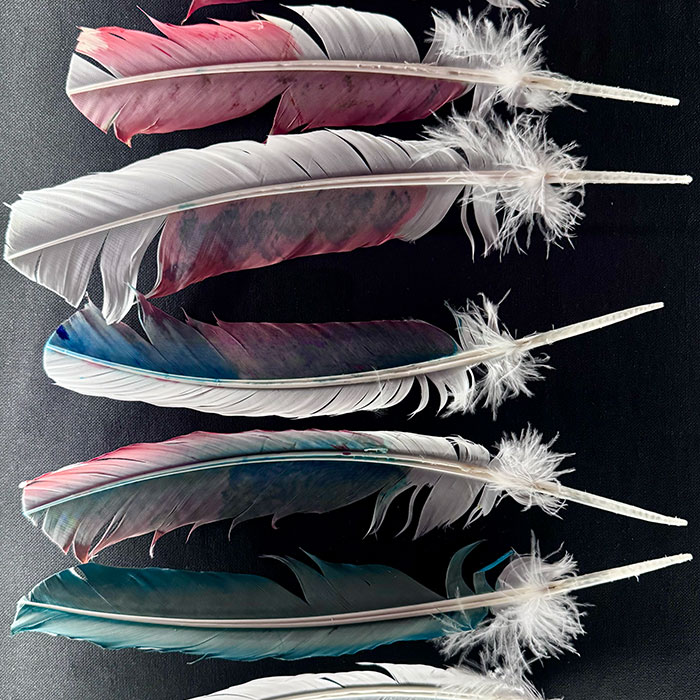
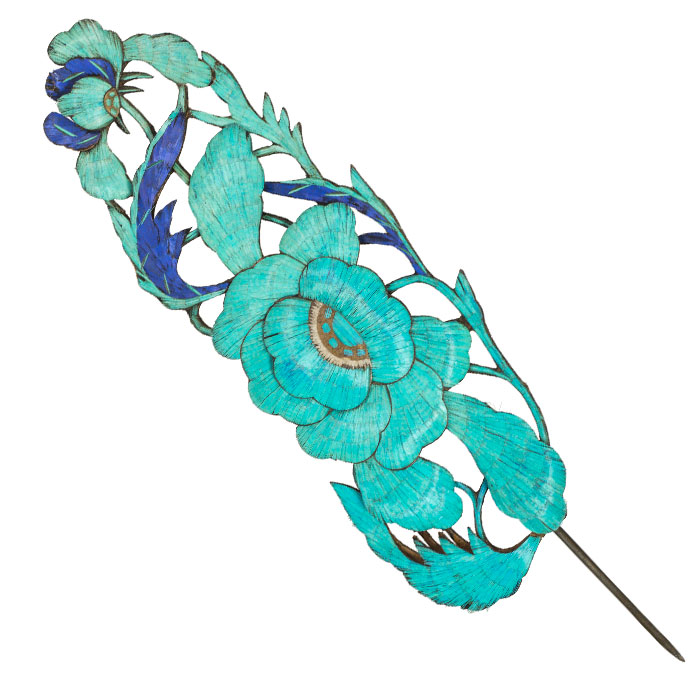
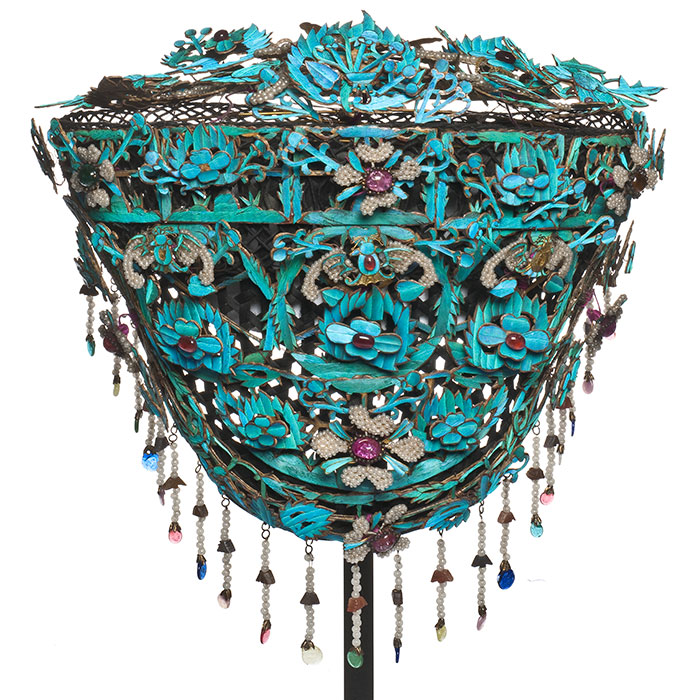
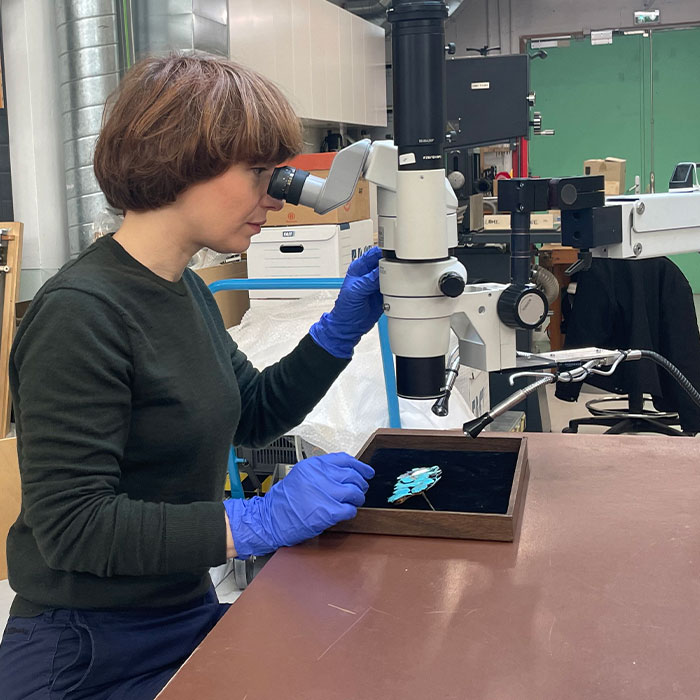
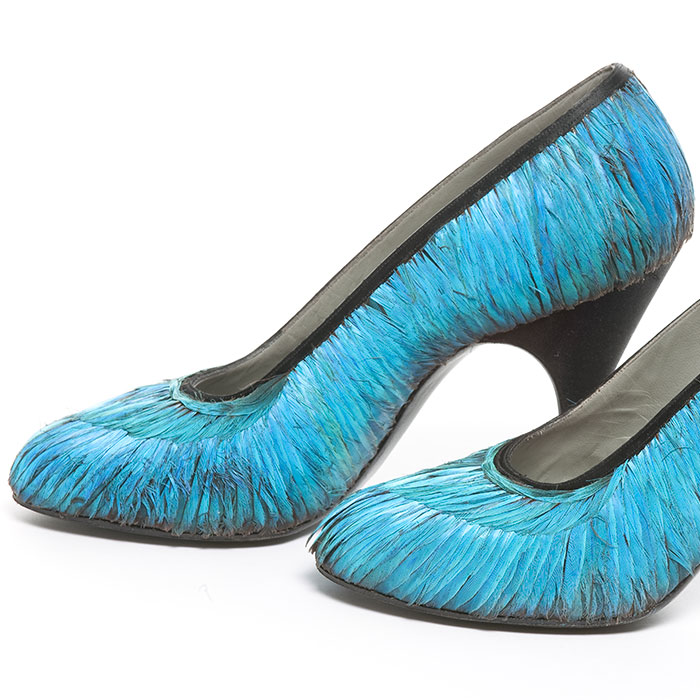
“I put Marion Delarue in touch with curators, conservators, and scientists across the different departments so she could explore all our collections,” explains Mathieu Rousset-Perrier, the exhibition curator, who oversees the museum’s Medieval and Renaissance collections and its jewelry collection. She discovered extraordinary objects, some of which are displayed alongside the four headdresses she created during her residency. “The fashion collections had a particularly strong influence on me,” the artist says. Although the sumptuous feather coats could not be displayed in this beautiful gallery, visitors can admire an exquisite muff with iridescent reflections, unusual hats, including a Caroline Reboux design (c. 1940) made with grebe feathers, and Christian Dior pumps by Roger Vivier (1954) embellished with kingfisher feathers. Delarue also had the opportunity to deepen her study of diancui through the celebrated Chinese hairpin and an elaborate Chinese bridal headdress. To the museum’s delight, she unlocked the secrets of both objects: the hairpin uses intact feather sections on silver, while the headdress is decorated with individual barbs from kingfisher wing feathers, applied one by one. She also researched “feathered leather,” molded vegetable-tanned leather, leather bonded to a backing, and ways of dyeing feathers to reproduce the kingfisher’s shimmering, moiré-like sheen, among other techniques.

Four Headdresses Created During the Residency at the Musée des Arts Décoratifs

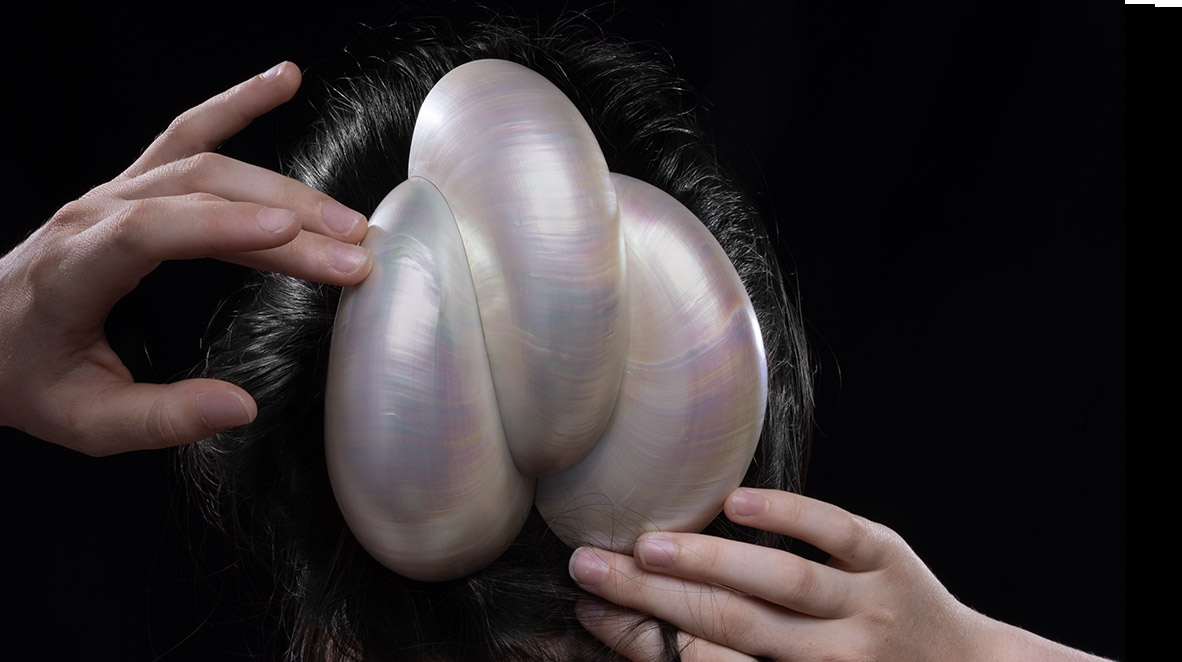
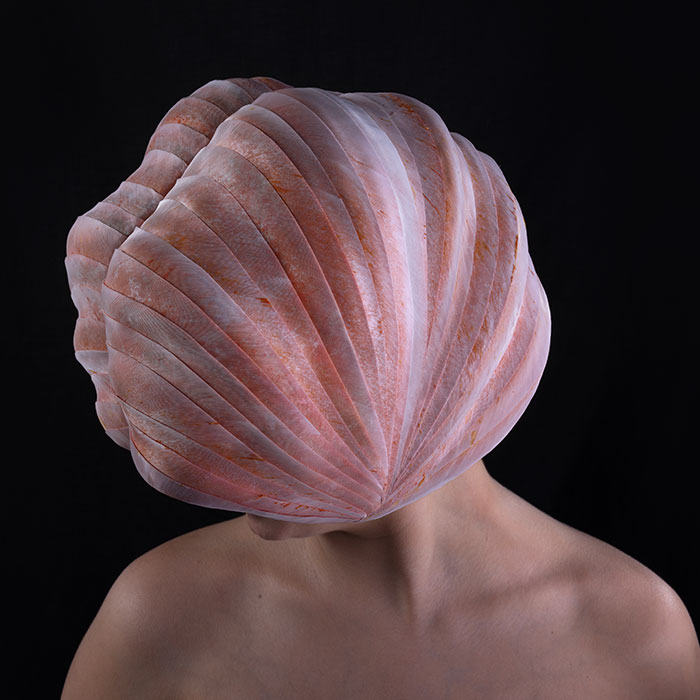
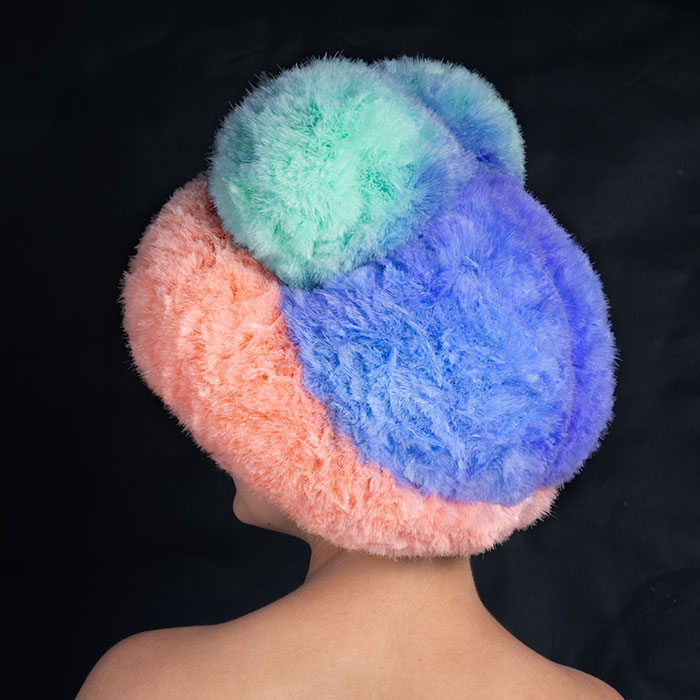
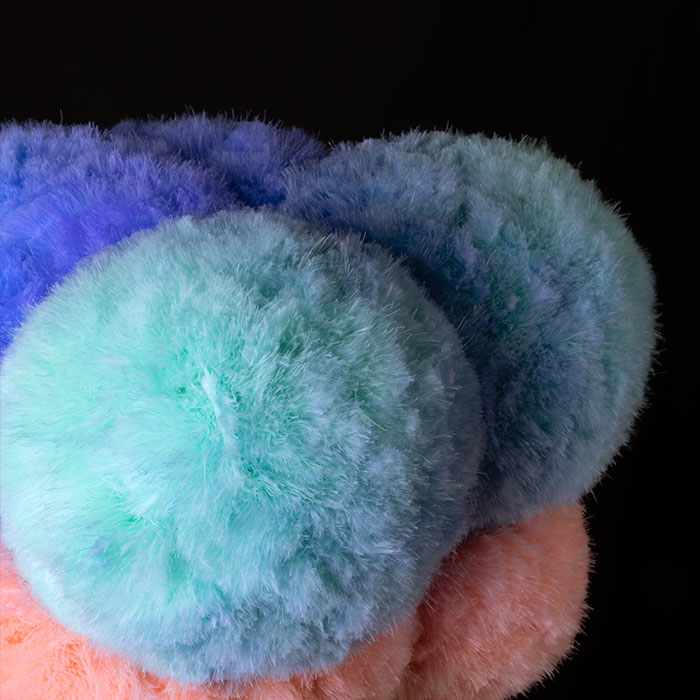
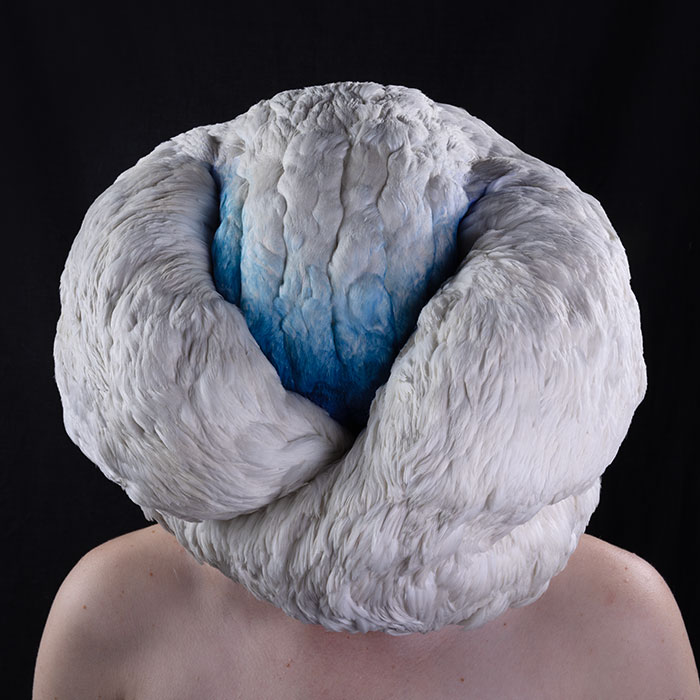
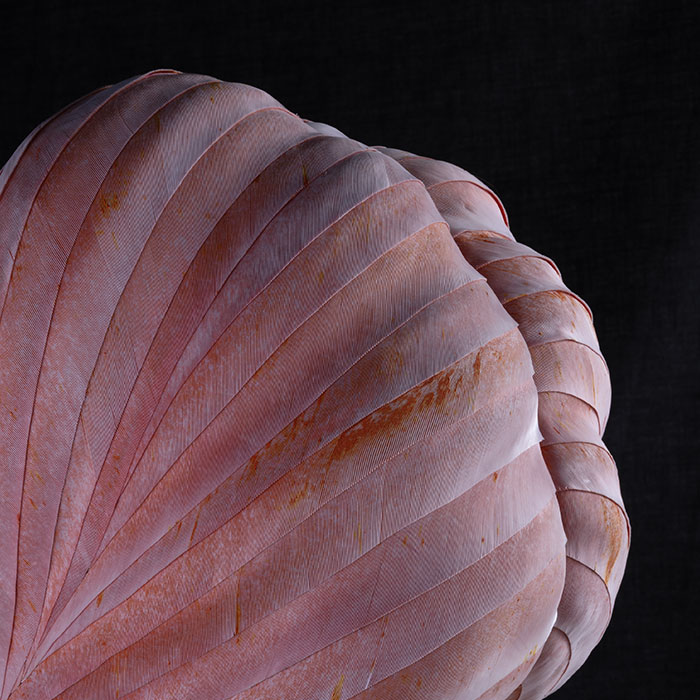
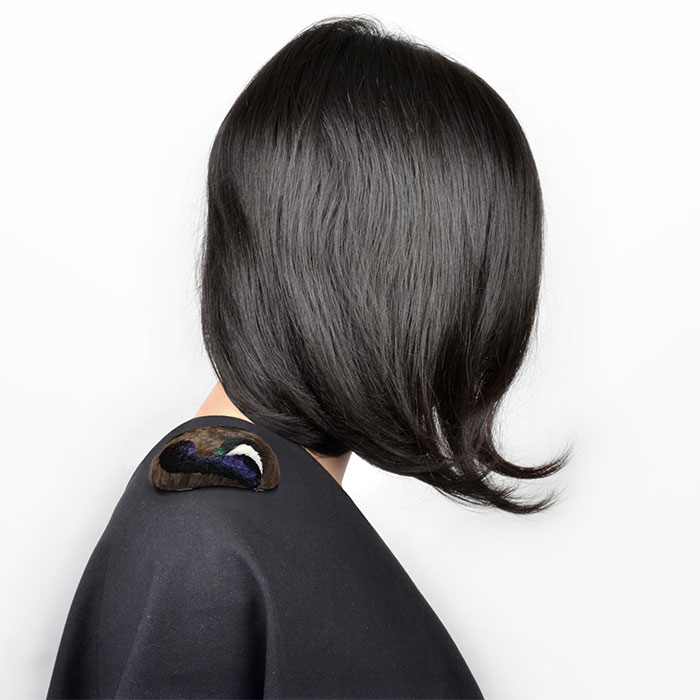
The four oversized headdresses in feathers and mother-of-pearl created during the residency are the centerpiece of the exhibition. Strange, sublime, and almost unsettling… One, reminiscent of a Chinese carp’s head, draws on the Chinese legend of Kunpeng, a fish that transforms into a bird. Another echoes the volumes and pompoms of the Dao Madan headdresses worn in Peking opera. Gradations of color and blue reflections create a monumental mane of feathers, dense and overwhelming. The artist also takes inspiration from swans sleeping with their heads tucked into their wings. The fourth headdress is made of mother-of-pearl: its sculptural forms evoke an elaborate hairstyle, a shell, and a carapace. One of the four is slated to enter the Musée des Arts Décoratifs’ permanent collection.


“Marion Delarue. Pierre, Plume, Ciseaux !,” (“Marion Delarue.Stone, Feather, Cissors!”) October 6, 2026–January 10, 2027, Musée des Arts Décoratifs, Drawings, Wallpaper, and Photography Gallery, Level 5 – Tuileries.


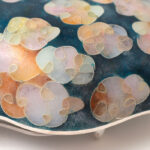
Banner image: Marion Delarue – (2026) Kai Mage, 2026. Overlapping mother-of-pearl elements; lacquered interior. H. 16 cm; W. 14 cm; D. 7 cm. Created as part of the Villa Kujoyama post-residency program, with support from the Institut français du Japon and the Fondation Bettencourt Schueller. Collection of Marion Delarue.


More on Marion Delarue’s work:

Marion Delarue: Reflections on Kushi, Kogai, and Kanzashi

For more on the collections of the Musée des Arts Décoratifs in Paris, click here.
In 2013, contemporary jewelry artist Marion Delarue fell in love with diancui, the extraordinary technique of kingfisher feather inlay used on a 19th-century Chinese hairpin. She was captivated by the feathers’ iridescent blue-green sheen and the exquisitely refined floral and botanical motifs they formed. To uncover the secrets of cutting and gluing these feathers, she set off the following year for a residency at the Inside-Out Art Museum in Beijing. “But nothing went as planned: Guangchun Xiao, one of the few masters of diancui, ultimately chose not to share his knowledge with me, reserving it for his daughter. He had learned it from his own father,” Delarue explains.

Formative Years in Residence

For Delarue, who trained in the Contemporary Jewelry program at the Haute École des Arts du Rhin, this encounter was the starting point for a long series of residencies in Asia, where she learned a wide range of traditional techniques. One of the most memorable took place in South Korea, where she was drawn to the attention devoted to hair, particularly the traditional headdress worn by married women: an enormous mass of braids twisted into a monumental bun. In Cracheh (2011), she reinterpreted it as a collar resembling a neck brace, using a century-old lacquering technique: an inner tube is lacquered layer by layer, day after day. At the Villa Kujoyama in Kyoto, Japan, in 2019, she began exploring Japanese hair accessories: kushi, kogai, and kanzashi. In her Tennennomono series, she fashioned them from traditional materials (wood, horn, horse hoof, and stones), drawing on their natural patterns and unexpected shades to create the illusion of elaborate decoration. In 2025, she returned to the source with a residency at the Musée des Arts Décoratifs, where she had first fallen in love with diancui a little over a decade earlier.

Returning to the Source of Inspiration

“I put Marion Delarue in touch with curators, conservators, and scientists across the different departments so she could explore all our collections,” explains Mathieu Rousset-Perrier, the exhibition curator, who oversees the museum’s Medieval and Renaissance collections and its jewelry collection. She discovered extraordinary objects, some of which are displayed alongside the four headdresses she created during her residency. “The fashion collections had a particularly strong influence on me,” the artist says. Although the sumptuous feather coats could not be displayed in this beautiful gallery, visitors can admire an exquisite muff with iridescent reflections, unusual hats, including a Caroline Reboux design (c. 1940) made with grebe feathers, and Christian Dior pumps by Roger Vivier (1954) embellished with kingfisher feathers. Delarue also had the opportunity to deepen her study of diancui through the celebrated Chinese hairpin and an elaborate Chinese bridal headdress. To the museum’s delight, she unlocked the secrets of both objects: the hairpin uses intact feather sections on silver, while the headdress is decorated with individual barbs from kingfisher wing feathers, applied one by one. She also researched “feathered leather,” molded vegetable-tanned leather, leather bonded to a backing, and ways of dyeing feathers to reproduce the kingfisher’s shimmering, moiré-like sheen, among other techniques.

Four Headdresses Created During the Residency at the Musée des Arts Décoratifs

The four oversized headdresses in feathers and mother-of-pearl created during the residency are the centerpiece of the exhibition. Strange, sublime, and almost unsettling… One, reminiscent of a Chinese carp’s head, draws on the Chinese legend of Kunpeng, a fish that transforms into a bird. Another echoes the volumes and pompoms of the Dao Madan headdresses worn in Peking opera. Gradations of color and blue reflections create a monumental mane of feathers, dense and overwhelming. The artist also takes inspiration from swans sleeping with their heads tucked into their wings. The fourth headdress is made of mother-of-pearl: its sculptural forms evoke an elaborate hairstyle, a shell, and a carapace. One of the four is slated to enter the Musée des Arts Décoratifs’ permanent collection.


“Marion Delarue. Pierre, Plume, Ciseaux !,” (“Marion Delarue.Stone, Feather, Cissors!”) October 6, 2026–January 10, 2027, Musée des Arts Décoratifs, Drawings, Wallpaper, and Photography Gallery, Level 5 – Tuileries.


Banner image: Marion Delarue – (2026) Kai Mage, 2026. Overlapping mother-of-pearl elements; lacquered interior. H. 16 cm; W. 14 cm; D. 7 cm. Created as part of the Villa Kujoyama post-residency program, with support from the Institut français du Japon and the Fondation Bettencourt Schueller. Collection of Marion Delarue.


More on Marion Delarue’s work:

Marion Delarue: Reflections on Kushi, Kogai, and Kanzashi

For more on the collections of the Musée des Arts Décoratifs in Paris, click here.
Most read articles