


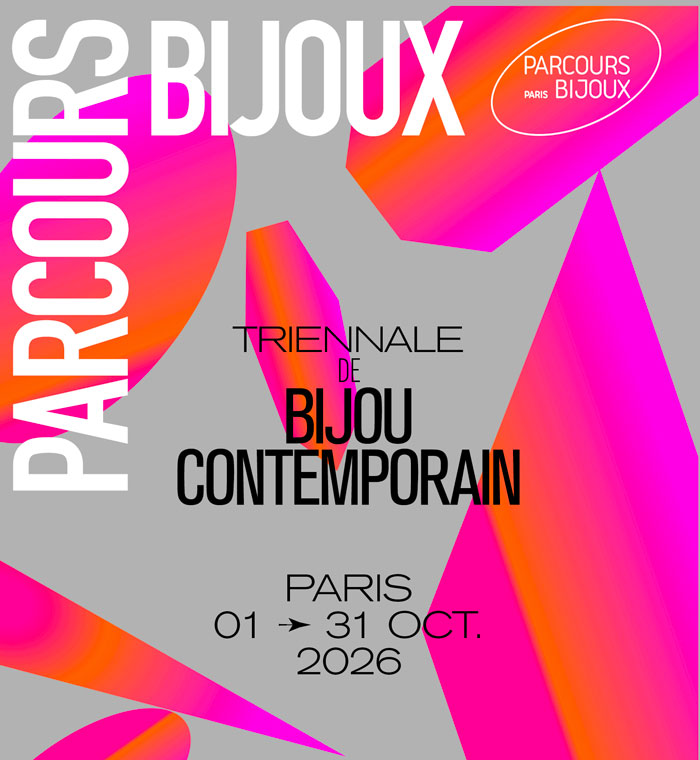
The exhibitions will trace a cultural route between the Right Bank and the Left Bank, from the Marais to Saint-Germain-des-Prés, via the 8th arrondissement, in venues that are emblematic, prestigious or unexpected: Sotheby’s, Galerie MiniMasterpiece, the Palais Galliera fashion museum, the Mexican Cultural Institute and Galerie Negropontes, among others.
In Praise of Matter
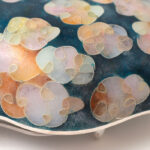
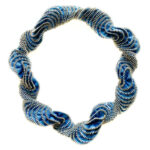
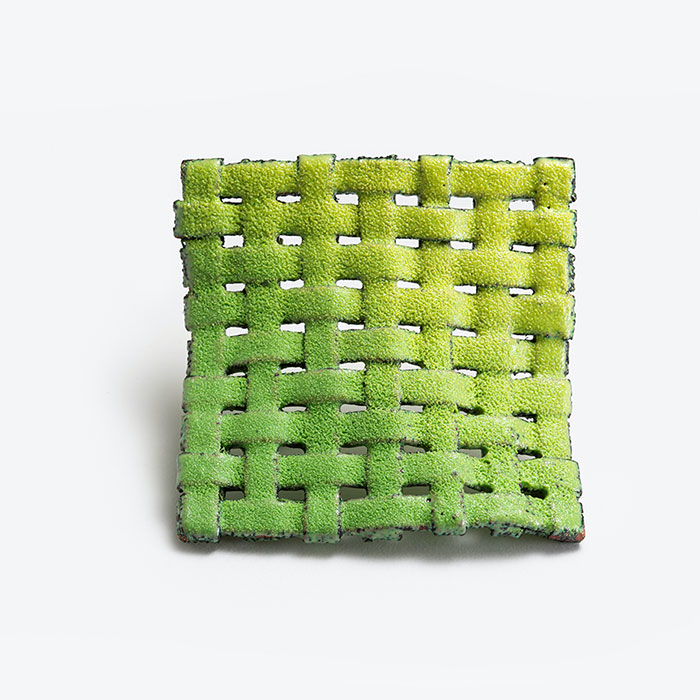
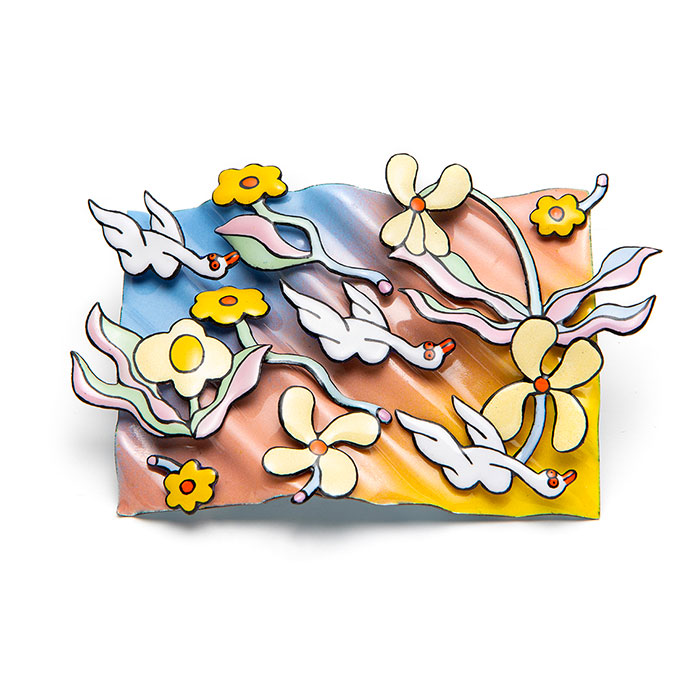
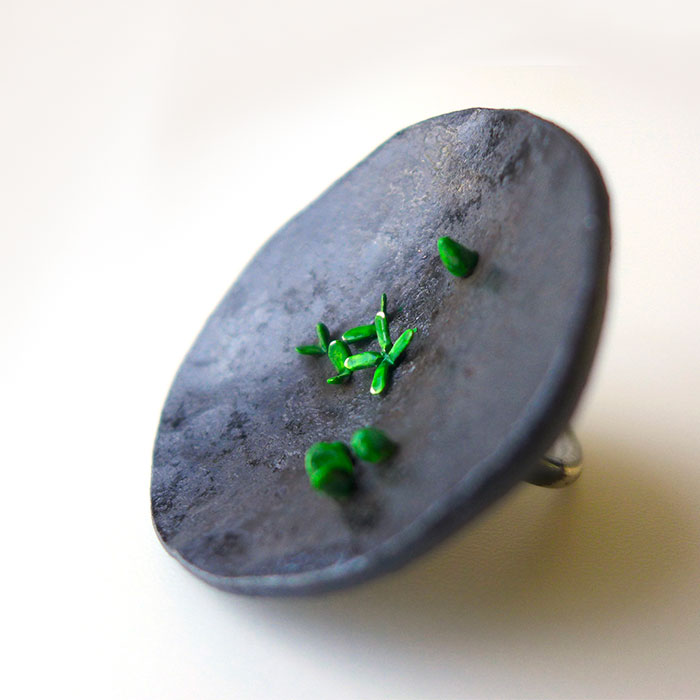
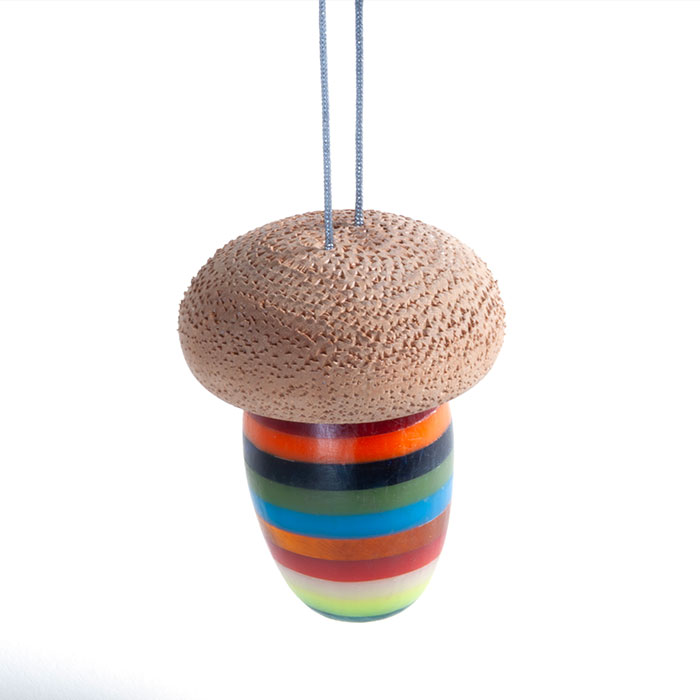
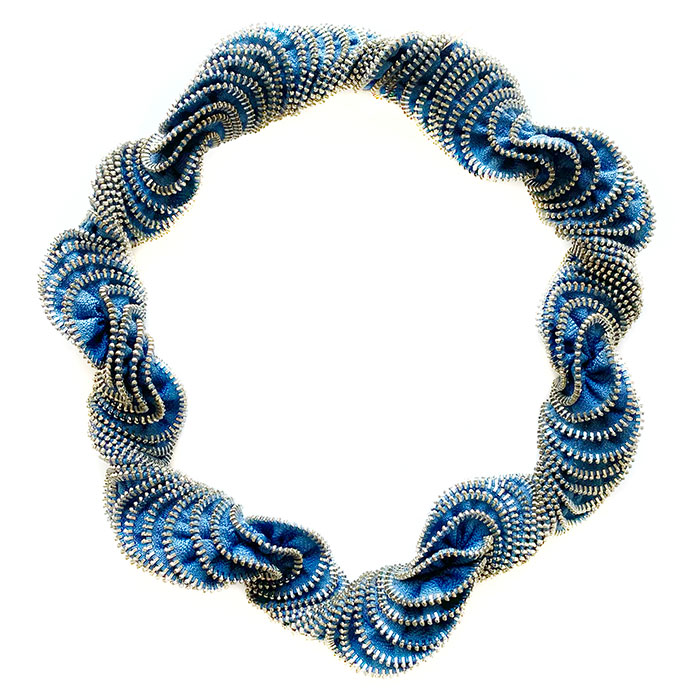
One of contemporary jewelry’s favourite themes runs throughout the programme: the use of so-called “humble” materials. Here, jewelry is no longer defined only by gold or gemstones, but by its sensory, ecological or memorial charge. Compostable presents fragile jewels made from hair, mother-of-pearl and sand, conceived to return to the earth. With Spirals. Values and Meanings, the artist Olga gives new presence to objects — zips, metallic sponges, colanders and bolts — that might otherwise seem devoid of aesthetic value. The ancient and highly demanding practice of enamel, explored in Colour as Matter: Enamel in Canada, reminds us of the slowness of the creative process: the need to fire and re-fire before achieving a perfectly smooth and luminous surface. This reflection finds a particular echo in Japan — Stillness and Substance, which I have the honor of curating. Wood, lacquer, silk, plant fibres and paper are not simply supports here: they form the very heart of the jewel. Charged with memory, symbols and sensations, matter dictates both form and gesture.
Perspectives on Japan
A second theme focuses on Japan, which occupies a prominent place in this edition of Parcours Bijoux 2026. Alongside Japan — Stillness and Substance, two other exhibitions explore this subject. In Japans Imagined, Sophie Hanagarth, Brune Boyer and the photographer Graziella Antonini bring together jewelry, objects and images to set their experiments and discoveries against a Japanese culture that is at once past and present, popular and scholarly. In Vanishing Points, Virginie Blajberg and Andrea Piñeros share the experience of a first journey to Japan, while retaining very different impressions: memory, identity and images of the past for one; nature, geometry and contrasts for the other. This dialogue continues at Elemento school, where Andrea Piñeros is organising a workshop with the Japanese metalsmith Kimiaki Kageyama.
Solo Exhibitions
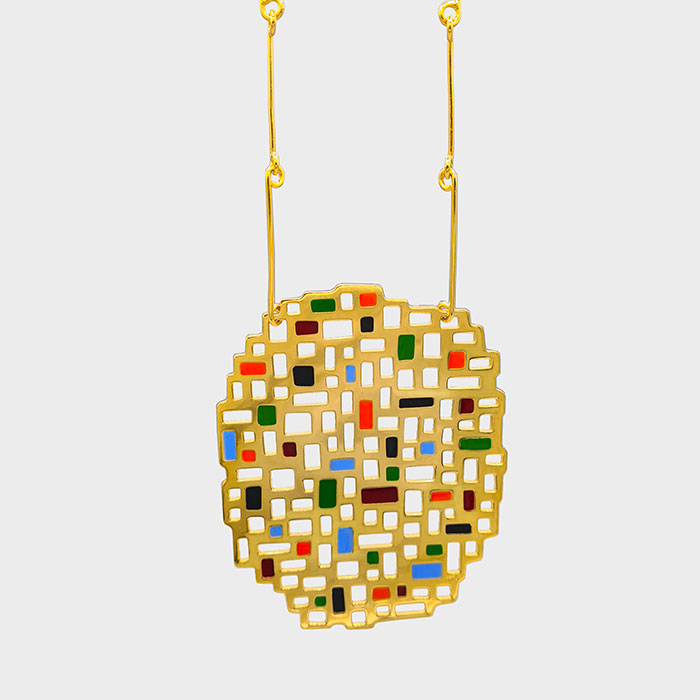
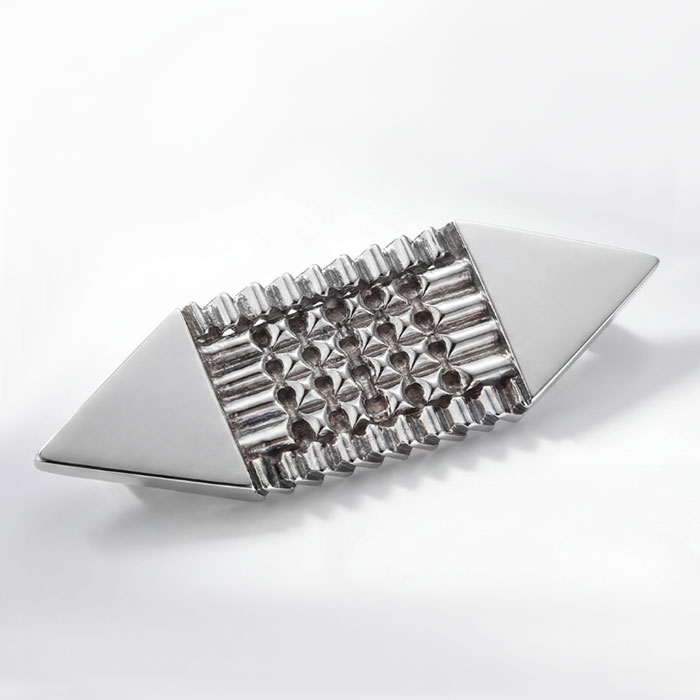
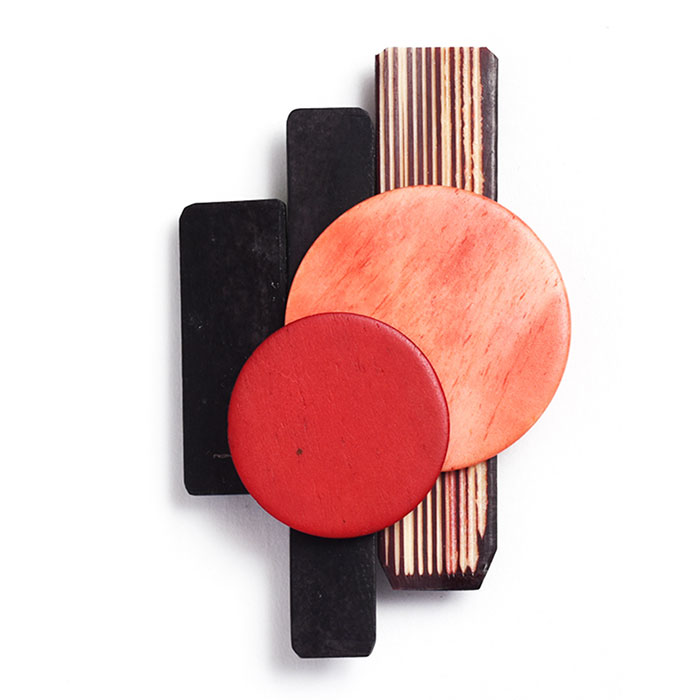
Two solo exhibitions are essential. The first is presented by Esther de Beaucé at Galerie MiniMasterpiece and is devoted to the designer and visual artist Pierre Charpin. Known for his work in object and furniture design, he presents Kuluba, a jewel inspired by a drawing made with a black felt-tip pen on ordinary paper, “like those one might make spontaneously during long telephone conversations: an arrangement of small squares and rectangles of varying sizes, placed edge to edge, forming an irregular grid that generates its own outline within an almost oblong shape.” The second, organised by galerist Amira Sliman, pays tribute to the little-known Hungarian artist Suzanne Somogyil. It is time to rediscover her powerful pieces, characterized by geometric forms in Plexiglas, aluminium, enamel and cut pebbles, which she exhibited in the 1970s alongside Jean Vendome and Jean Dinh Van.
When No One Creates Alone
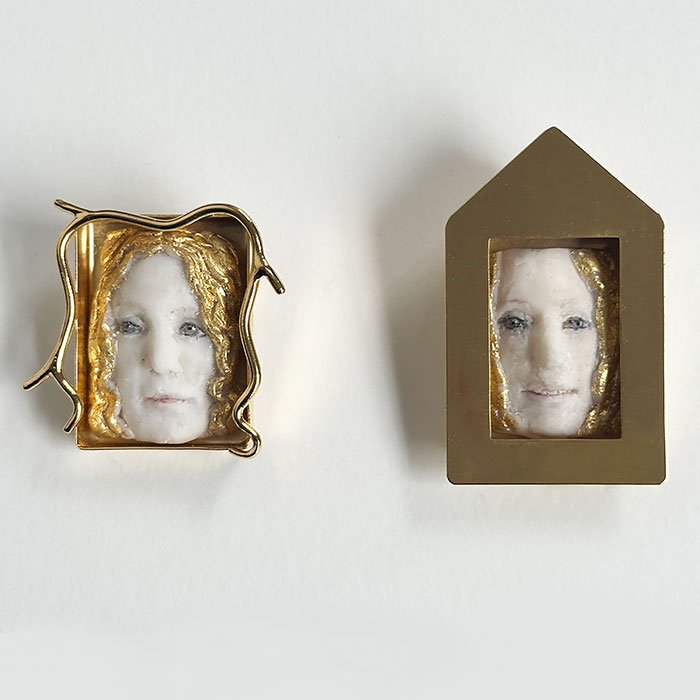
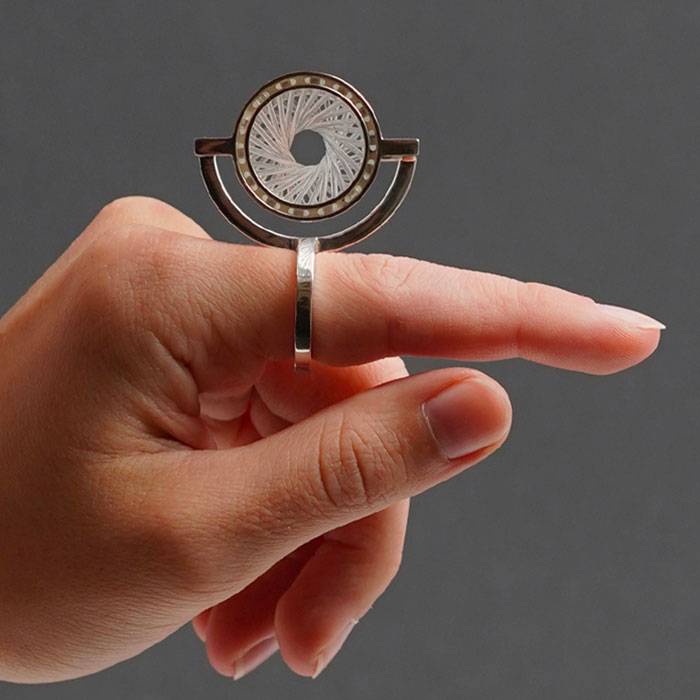
Another theme in this edition focuses on collective creation, when jewellery emerges from a bond, a circulation, a dialogue. Collaboration may take the form of a duo, as in Lines and Links Paris Berlin, or in Duo at Galerie Negropontes, where Agnès Baillon combines her resin cameos with Éric de Dormael’s light structures in gilded brass to create unprecedented ex-votos. In Where Art Meets the Eye, creation is a four-handed process: those of a goldsmith and an ophthalmologist, both designers, Gabri Schumacher and Evi Bakker. Drawing directly on anatomical structures and ophthalmological concepts, they question the way we see, perceive and are observed. With six artists, the logic of the collective becomes a true circulation. Le Voyage amical, a Franco-Swiss escapade bringing together Marianne Anselin, Julie Usel, Claire Wolfstirn and others, is based on a principle of response: each piece by one artist sparks an idea in another. In this collaboration conceived as a strategy of the living, the artists draw inspiration from plants and seeds, which invent forms, colors, lures and fruits in order to enter into relation with other beings and reproduce. This dynamic expands further with A Pool in the Ocean, where sixteen artists each create two jewels in pairs. Individuality does not disappear; it becomes part of a shared movement, in which each gesture extends another.
Talks, Symposiums and Performances
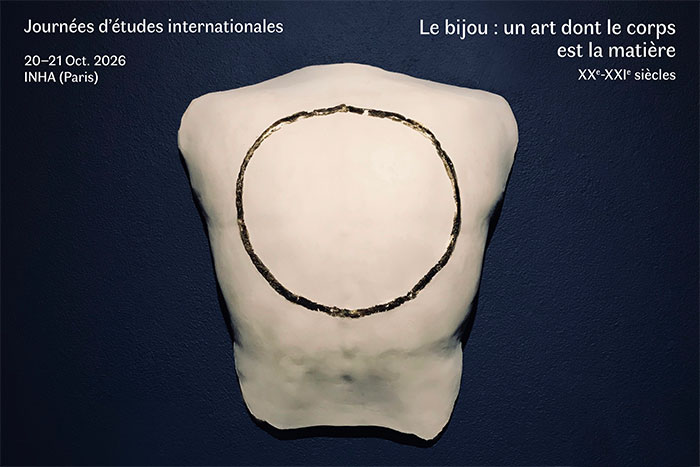
Parcours Bijoux also extends the reflections opened by the exhibitions through several events. A performance runway show will be presented in the basement of the Palais Galliera. Over two days, the scientific symposium jewelry, an Art Whose Matter Is the Body (20th–21st Century) will bring together doctoral students, researchers from various disciplines, artists and professionals. At the Musée des Arts Décoratifs, gallerist Noel Guyomac’h will give a talk in connection with his exhibition Colour as Matter: Enamel in Canada, while historian Michèle Heuzé will invite audiences to explore humour in jewelry. As for me, I will have the great honour and pleasure of welcoming the artists Aya Iwata, Mariko Sumioka and Shinji Nakaba for the conference Japan — Stillness & Substance at Sotheby’s. Not to be missed, just before the opening of the exhibition of the same name.
For Andrea Piñeros, president of the association D’un Bijou à l’Autre, which organises Parcours Bijoux, “this momentum remains fragile: artists often bear a significant economic burden alone, while institutions are becoming increasingly difficult to mobilise. Fortunately, contemporary jewellery is also supported by a new generation capable of communicating differently, particularly in order to distinguish itself from the major houses.” Parcours Bijoux 2026, a much-awaited event among insiders, is one of the rare places where singular and surprising creation can express itself with complete freedom.
Discover the Parcours Bijoux 2026 programme.
To find out more about Parcours Bijoux and contemporary jewelry: