


With real estate and life insurance no longer delivering sufficient returns, antique and vintage is increasingly being viewed as an investment. But for newcomers, the reality is far from straightforward.
By Sandrine Merle.
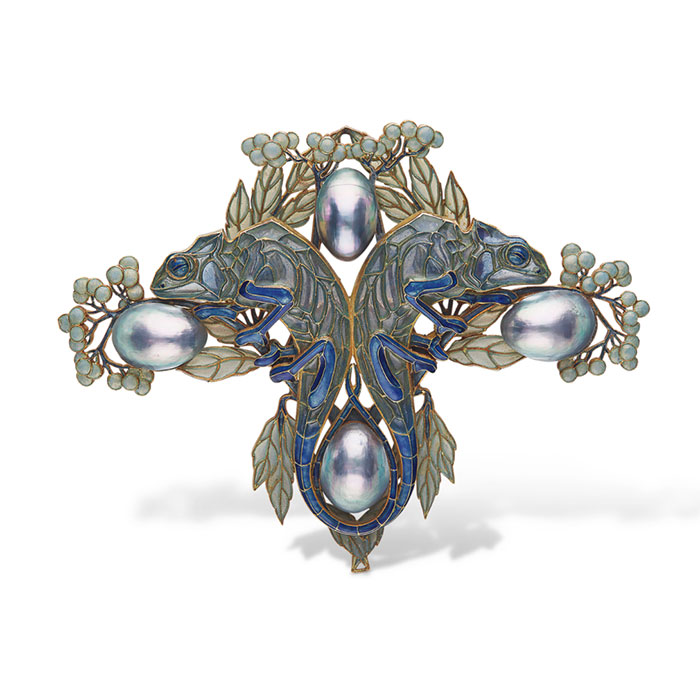
Wondering which period is the most bankable? That’s the wrong question. What really matters — almost exclusively — is the signature: the reputation of the house or designer. At the very top end of the market, collectors and professionals swear by just two names: Cartier and Van Cleef & Arpels. Suzanne Belperron, Boucheron and Chaumet also attract strong interest, albeit to a lesser extent. For Art Nouveau, René Lalique stands head and shoulders above two other exceptional houses: Fouquet and the Spanish firm Masriera. For all these prestigious names, however, prices quickly climb into the several-hundred-thousand-euro range. The 19th-century market, which lacks similarly celebrated signatures, remains more accessible, despite growing appetite from Asian buyers.
Flawless
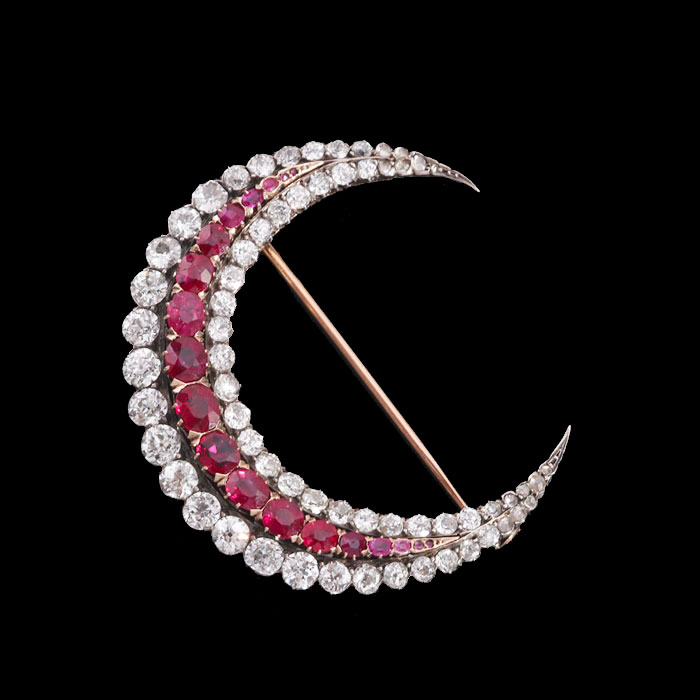
As with a prime real-estate purchase, every indicator needs to be green. Rarity is paramount, and even the slightest flaw can have a negative impact on value. Alterations should therefore be avoided at all costs. A pendant that was once a brooch, or an old-cut diamond replaced with a modern cut, will weigh heavily on resale prospects. The expert who issues the certificate also matters. For periods of high production, such as Art Deco, it is advisable to focus on pieces with a distinctive feature — an extra touch of character — whether onyx accents, calibre-cut diamonds or unusual detailing. Crescent-moon brooches were common in the 19th century, but the example that recently sold for 15,500 euros, almost tripling its estimate, stood out for its unusual dimensions and cabochon rubies.
Signature + maker’s mark = the Holy Grail
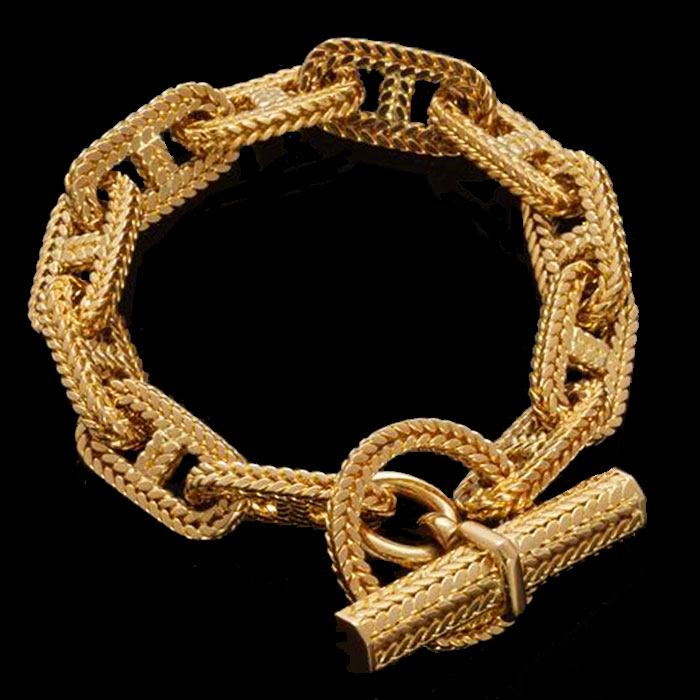
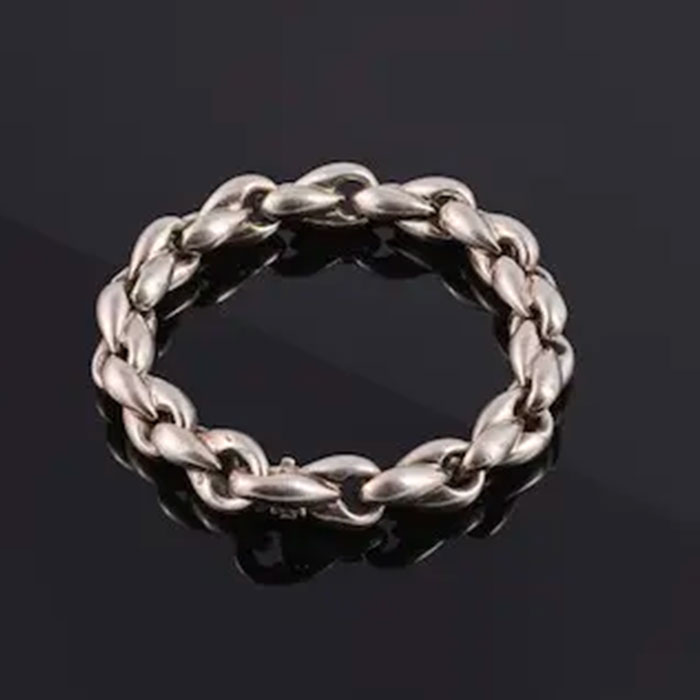
Today, the Holy Grail is the combination of a signature and a maker’s mark identifying the workshop. “The remarkable research carried out by experts into workshop hallmarks is now bearing fruit,” says Steven Portier. The names synonymous with excellence can be counted on one hand: Perry, Georges Lenfant, De Percin and, to a lesser extent, Gay and Vassor, all of whom worked for Van Cleef & Arpels, Boucheron and Hermès. This dual pedigree guarantees a surge in value, as evidenced last October at Bonhams Cornette de Saint Cyr, where this Hermès gold curb-link bracelet signed by Georges Lenfant sold for €38,400 — more than twice its estimate. As early as 2014, one example had been estimated at €2,000–2,500 and fetched €11,000. All Hermès silver curb-link bracelets benefit from this phenomenon as well — despite silver traditionally being associated with costume jewelry. One of them even set a record, reaching €95,650 last October, again at Bonhams Cornette de Saint Cyr.
As with equities, purchases should be stress-tested — in other words, assessed against a range of potential scenarios. It is wiser to compete for a 1970s Alhambra necklace by Van Cleef & Arpels than for a fragile early-20th-century necklace or a sentimental trench ring made by a soldier. For budgets under €10,000, don’t aim for a windfall. Instead, focus on “pleasure” jewellery, which tends to avoid sudden price swings. Seek out charming or well-designed pieces without a reserve price. And if, in twenty years’ time, your taste aligns with the market — so much the better.
Thanks to Stephen Portier from E&S Portier, Alexandre Léger, Castafiore, Emma Langlais at Gros & Delettrez, Astrid Guillon
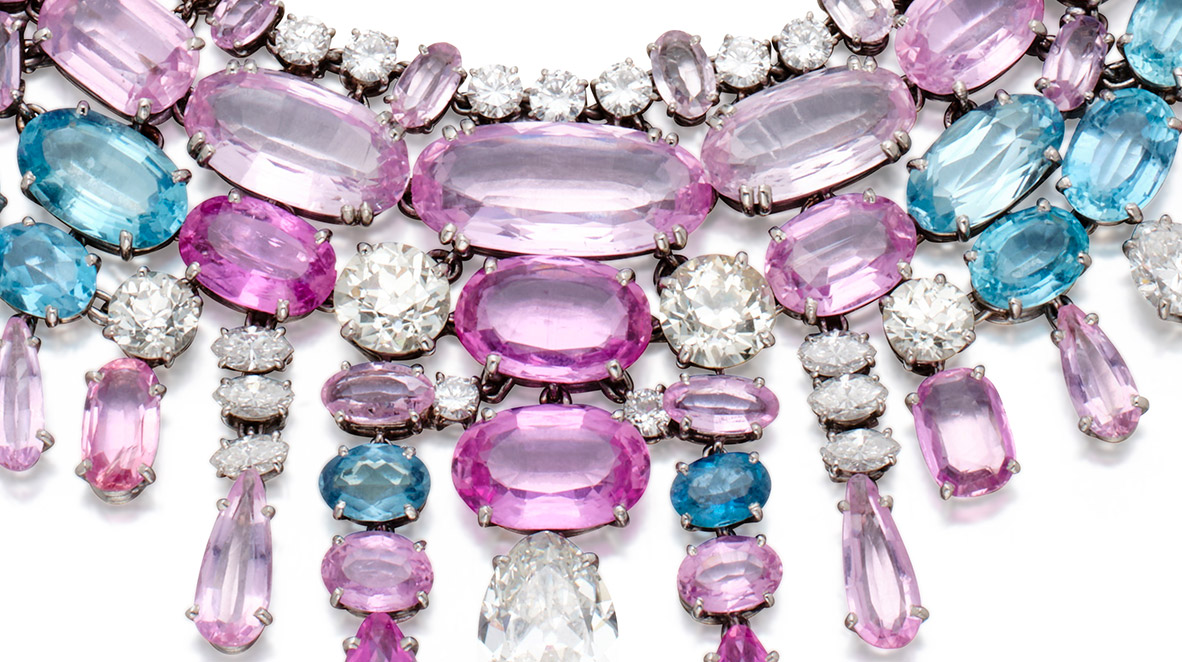
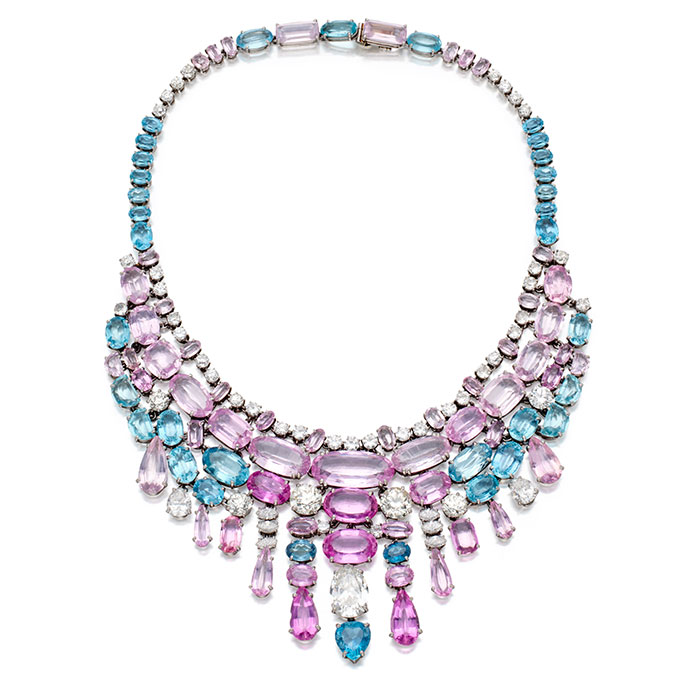
Banner image: topaz, aquamarine, and diamond necklace by Suzanne Belperron sold for $889,000 (three times its estimate of $600,000–1,000,000) at Sotheby’s NY (December 8, 2025)
Related articles:
Auctions: does brand-new jewelry have a place?
An exceptional collection of Suzanne Belperron and René Boivin jewelry at Sotheby’s New York