


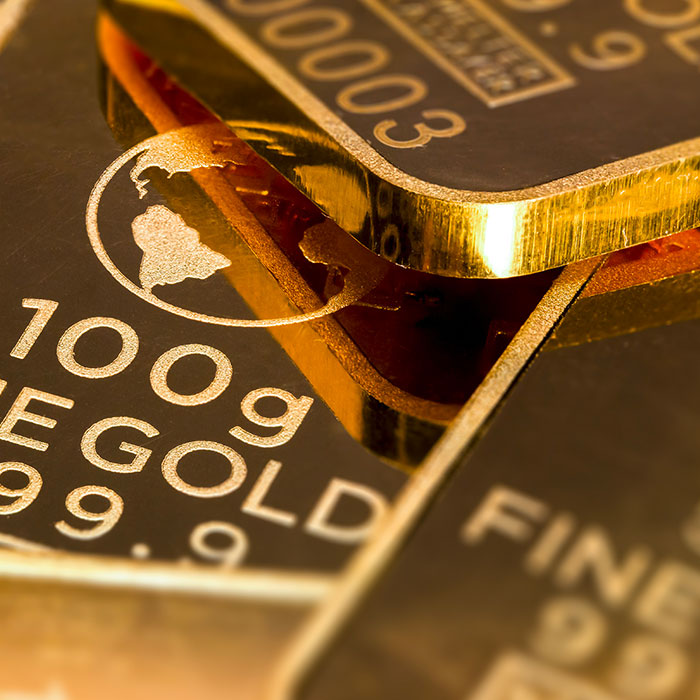
Gold has just passed the $3,000 mark. This is cause for concern in the jewelry world, particularly among independent designers.
By Sandrine Merle.
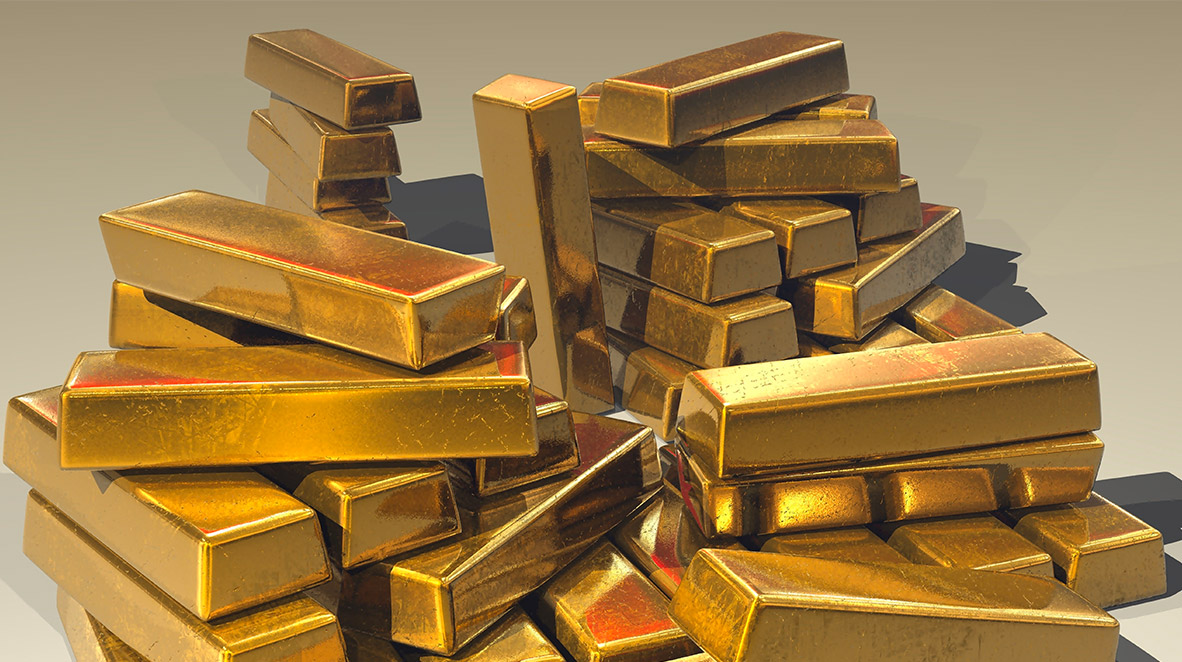
The figures related to the evolution of gold prices are giving jewelry professionals cold sweats. Between 2004 and 2024, the price of gold rose by more than 500%. In mid-April 2025, the price of gold broke its historic record in dollars: the price per ounce rose to $3,300 and, a few days later, even approached $3,500. No expert is predicting a drop in prices in the coming months, as the context remains favorable. This metal is a historic safe haven that reflects growing uncertainty and doubts about the future. It also depends on demand and central bank policies on gold reserves.
Who are the big losers?
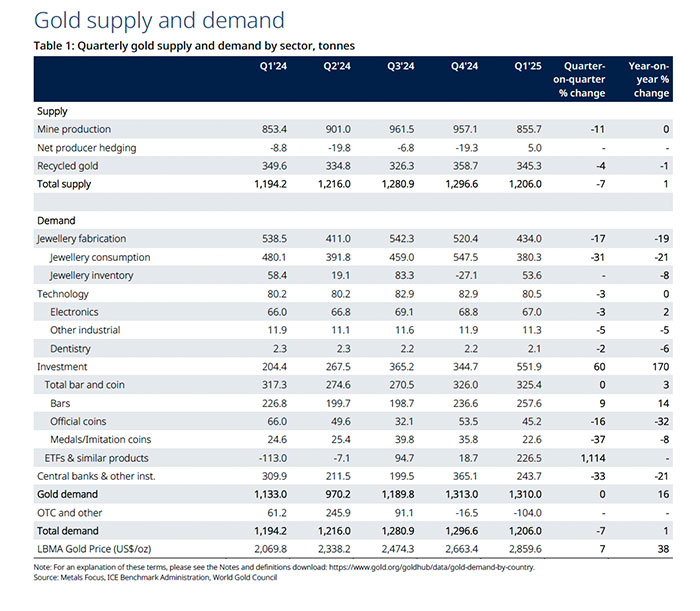
“In the first quarter of 2025, global demand for jewelry gold reached 434 tons, compared with 538 tons in the first quarter of 2024, a decline of 19%,” announced Patrick Schein (source: World Gold Council). And contrary to what one might think in such a context, the most expensive solid gold jewelry is not the most affected by this decline; it is the entry-level jewelry priced at $1,500-2,000. Indeed, it is becoming extremely difficult to make anything other than a basic gold ring because labor costs are also rising sharply. It’s a double whammy: independent designers don’t have the reserves to build up a stock of precious metals, nor do they have sufficient production to achieve economies of scale in their workshops. Dear customers, this is why the price of a basic gold wedding ring from an independent designer can sometimes be the same as or even higher than those found at jewelers on Place Vendôme.
Why not alloys?
For the time being, prices remain very competitive for ceramics, steel and titanium, which has the advantage of a very stable price. Watchmakers have understood this for a long time. Patrick Schein also encourages independent designers to turn to alloys with a lower gold content than that traditionally used in France. Instead of favoring 18-karat gold, which is 75% pure gold, 12.5% silver, and 12.5% copper, designers could shift their production to 14-karat gold, which is “only” 58.5% pure gold. However, the tradition of 18-karat gold, established by a 200-year-old law, is proving difficult to shake, despite the relaxation of legislation in 1994.
What strategies should be adopted?
Other strategies exist. The most logical is to reduce the precious metal content by playing with empty spaces, sculpting threads in the space, and trimming here and there. This quickly brings us back to the issue of high labor costs. Hanna Darmon de Mansano, who specializes in very fine jewelry, cannot make her pieces any lighter. “To ease the budget, I encourage my customers to bring in jewelry they no longer wear. I then remove the stones and melt down the gold to create something completely new.” A seemingly counterintuitive strategy is also emerging: increasing the volume and weight of gold, making chains heavier and longer, oversizing rings, etc., as Marie Lichtenberg, Amélie Huynh at Statement, and Camille Parruitte McKenna at Nouvel Héritage are doing. This move upmarket is possible because their customers view jewelry as an investment, similar to real estate.
Related articles:
5 things you need to know about the impact of gold mining on nature
Patrick Schein, Fairmined responsible gold
TFJP x Comité Colbert, putting gold on the menu!
Gold Service’s recycled gold: an interview with Yann Bouillonnec