


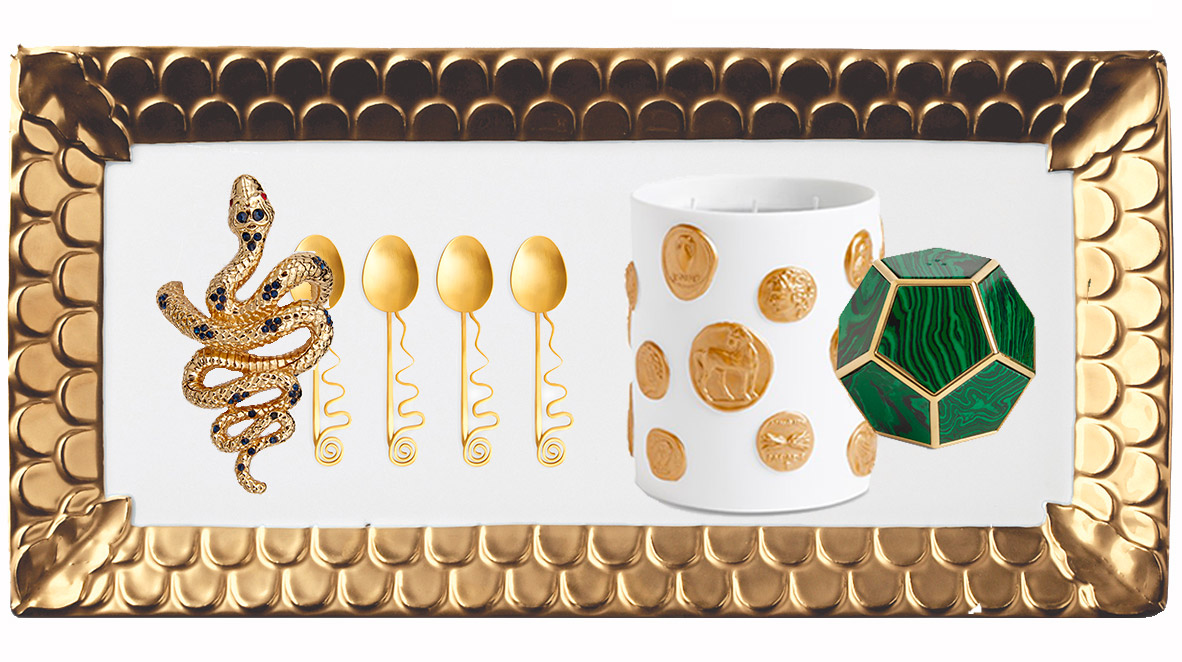
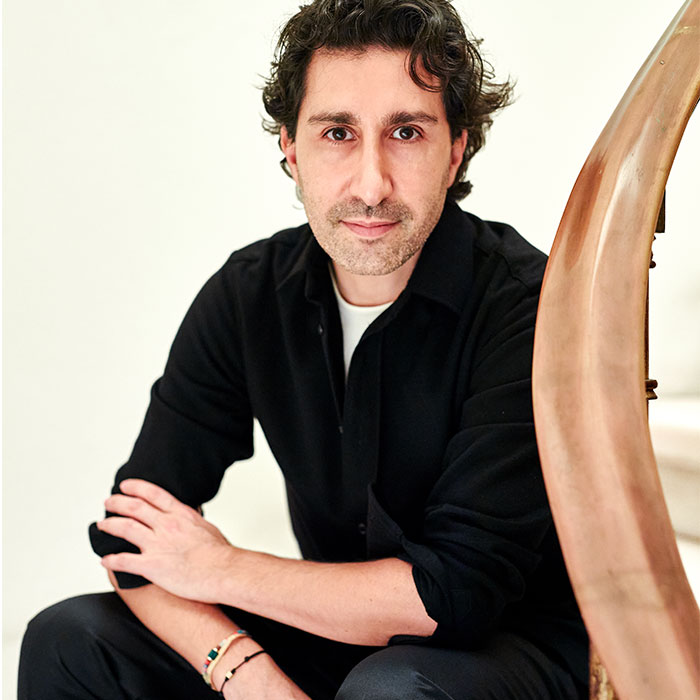
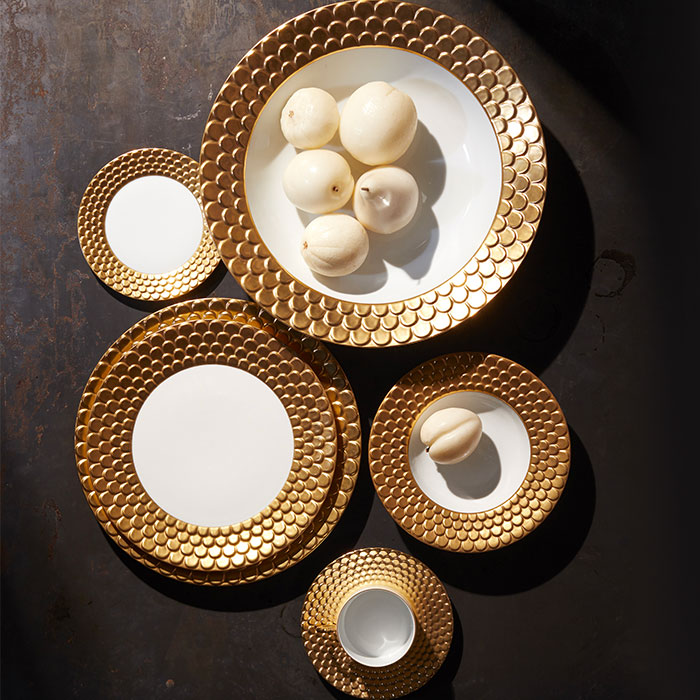
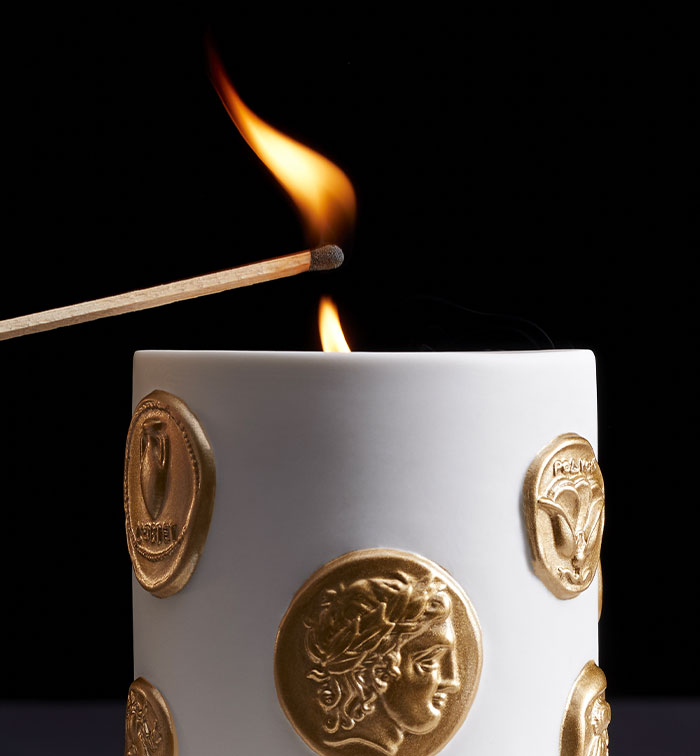
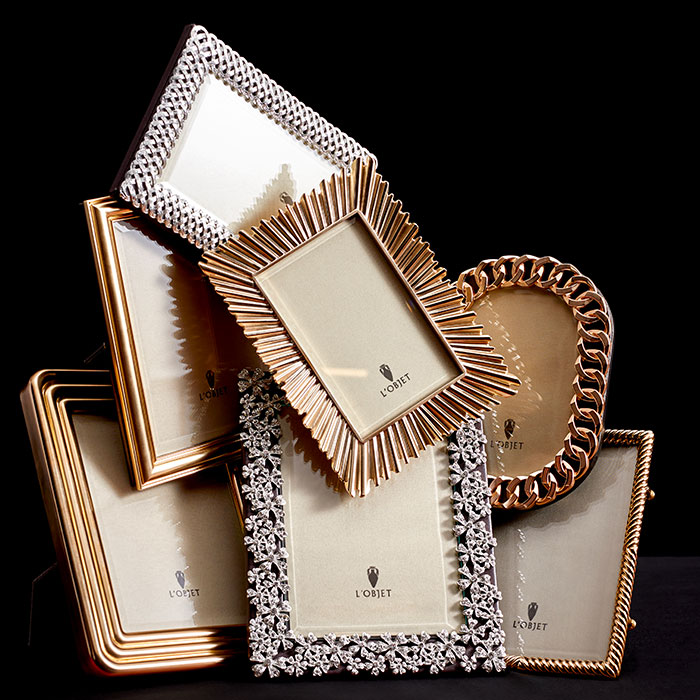
The first thing L’Objet has in common with jewelry, and not the least, is gold. Stoneware cups, stainless steel carafes, porcelain plates, slender candlesticks, and brass frames are almost all covered with a very thin layer of 24-karat gold, which is almost pure gold. There are also napkin rings encrusted with Swarovski crystals and adorned with a piece of coral, boxes embellished with turquoise enamel in the style of Aztec treasure, and candles decorated with elements reminiscent of ancient coins. “This fondness for the world of jewelry comes from my family, who worked in the gemstone trade”, explains Elad Yifrach, who was born in Tel Aviv before moving to Los Angeles. “I was also fascinated by the filigree gold bracelets that jingled on my mother’s and grandmother’s wrists. As is traditional in Morocco, they had received them as wedding gifts and when each of their children was born. “
Jewelry and tableware, historical ties
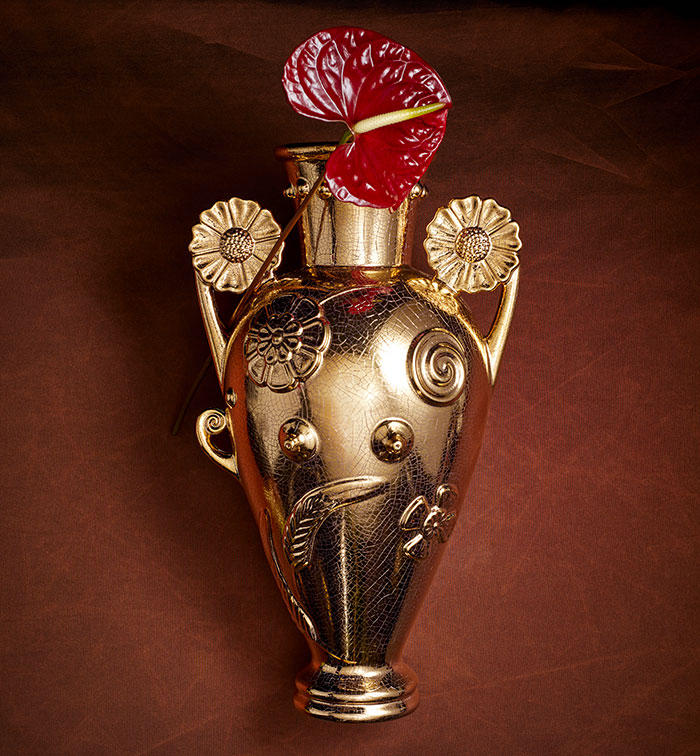
Ceremonial tableware has always had something in common with jewelry because it addresses the same issues: in Europe and the East, it serves to decorate and ostentatiously display the magnificence and power, wealth and nobility of the origins of which the patrons are proud. To recreate the finishes inherent in the splendor of Renaissance and 18th-century tables, Elad Yifrach settled in Portugal, where he is close to artisans capable of reproducing mirror-polished, gadrooned, and chiseled textures, or those reminiscent of Venetian Fortuny fabric (visible on the service). where he is close to artisans capable of recreating mirror-polished, gadrooned, and chiseled textures, or those reminiscent of Venetian Fortuny fabric (visible on the Fern service), as well as interlacing patterns, bouquets of foliage, and leaves.
Sophistication in every detail
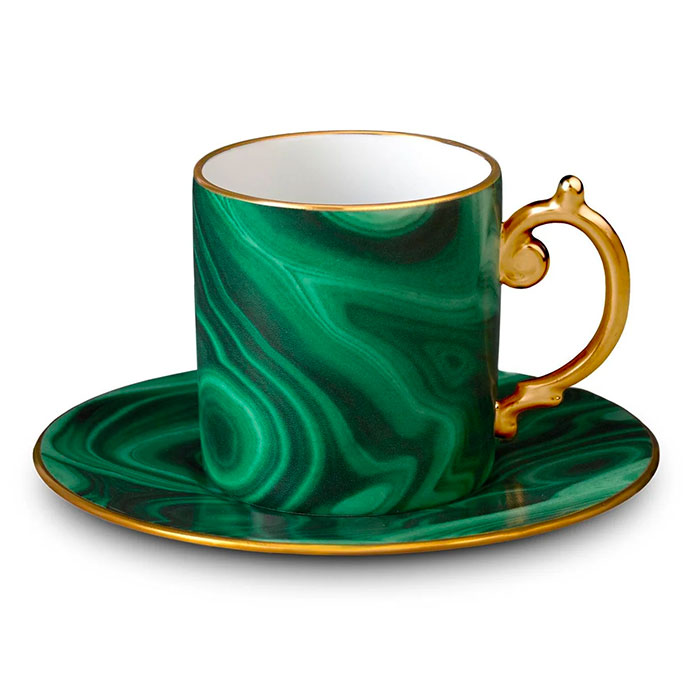
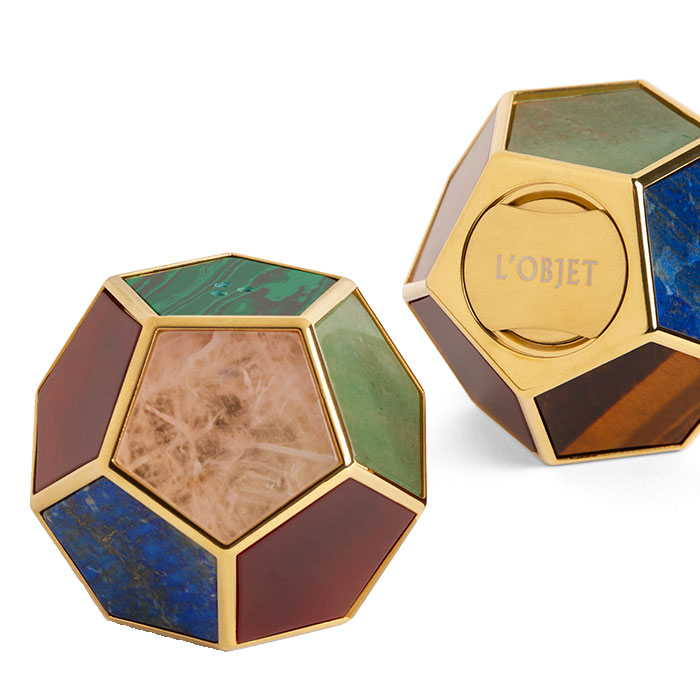
This hybridization with jewelry can be found in the smallest objects, such as salt and pepper shakers, but also in napkin rings, respectively named Spice Jewels and Napkin Rings. The former are available in faceted glass surrounded by gold weaving or in ornamental stone marquetry. One set is available in all-over malachite, Elad Yifrach’s favorite stone: concentric circles, ribbons, and irregular veins of intense green are painted in trompe l’oeil. Of note for enthusiasts: the malachite effect is also available in a coffee set and plates. Presented in velvet-lined drawers reminiscent of a jewelry box, the napkin rings feature archetypal jewelry motifs: links, snakes, garlands of flowers, and intertwined rings.
Jewelry collaborations
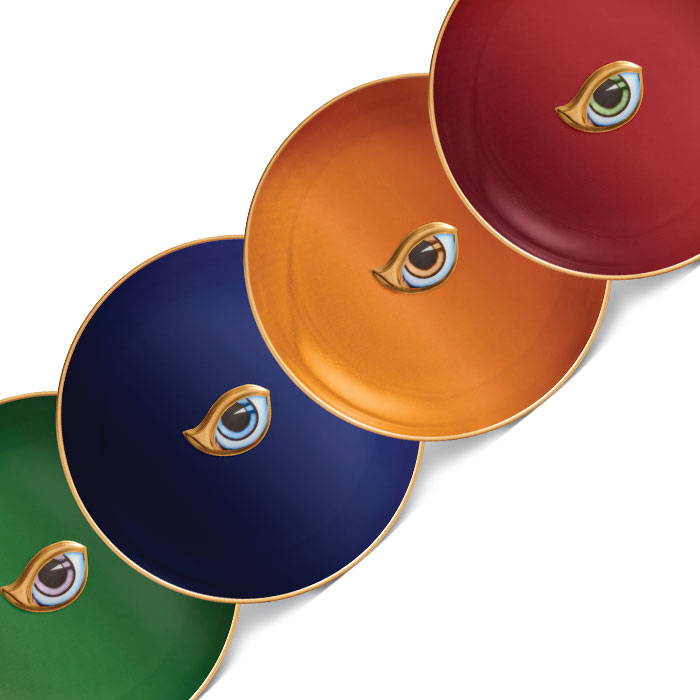
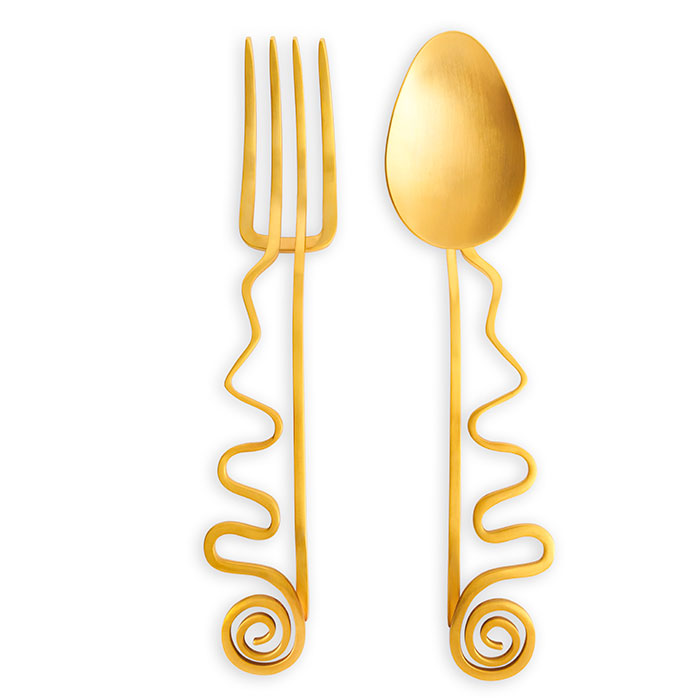
Elad Yifrach is surrounded by jewelry designers, including his friends Sara Beltran and Luis Morais. He admires the work of JAR, Sylvia Furmanovich and Taffin de Givenchy. And he regularly collaborates with some of them. The first, Greek designer Lito Karakostanoglou, has used his lucky charm eye motif, “Tu es partout” (You are everywhere), on tie-dye plates and boxes, as well as on bookends, pocket trays, etc. The second, Portuguese designer Sebastiao Lobo, a specialist in cutlery, has designed forks and teaspoons with wavy handles reminiscent of Calder’s work. In spring 2026, he will announce the name of the new designer to collaborate with L’Objet.
Related articles: