
Style

“Precious Bamboo”, Marion Vidal’s collection at the MiniMasterpiece gallery

For her first collaboration with the MiniMasterpiece Gallery, Marion Vidal presents the “Precious Bamboo” collection. A collection that began in Japan during her artistic research residency at Villa Kujoyama in 2025.

For her first collaboration with the MiniMasterpiece Gallery, Marion Vidal presents the “Precious Bamboo” collection. A collection that began in Japan during her artistic research residency at Villa Kujoyama in 2025.

By Sandrine Merle.


Rather than working with precious materials, Marion Vidal has taken an interest in ceramics, marble, wood, and Plexiglas. Today, she is exploring the possibilities of bamboo, a plant characterized by hollow stalks of various diameters. It plays a central role in Japan, where it grows quickly and straight. It has countless uses: to decorate, to cook, to eat, to store, to clean, to sleep, to defend oneself, to build. It also appears as an artistic motif or symbolic subject: integrity and honesty, constancy, family piety, etc. It is found in metaphors, tales, and popular sayings. As the saying goes, ‘Bamboo is honest: it reveals everything.


Immersion in the material

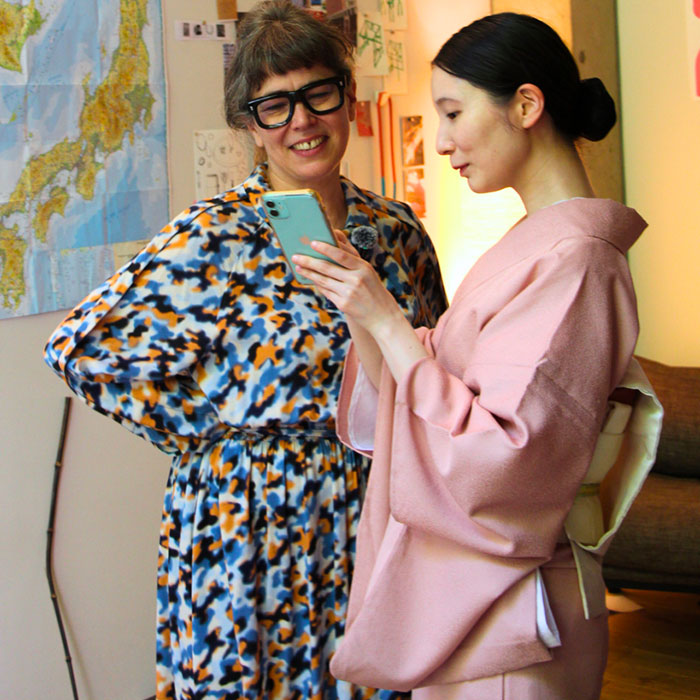
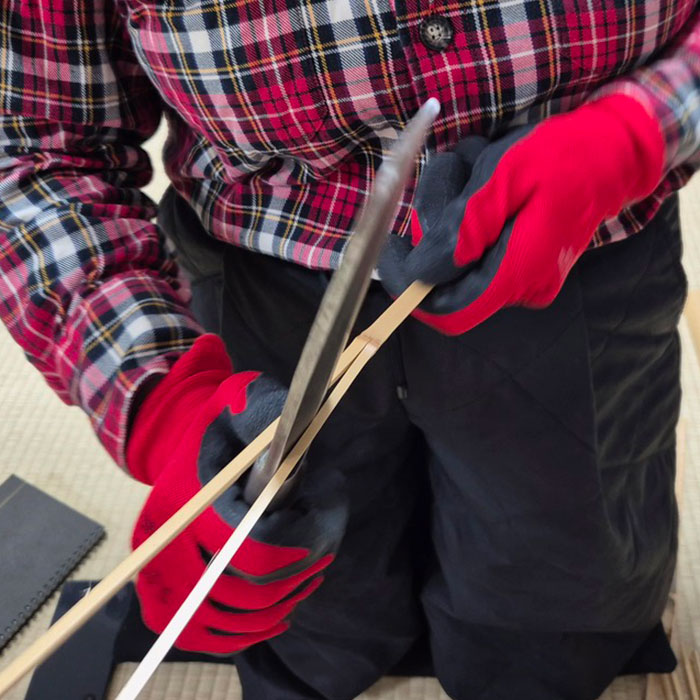
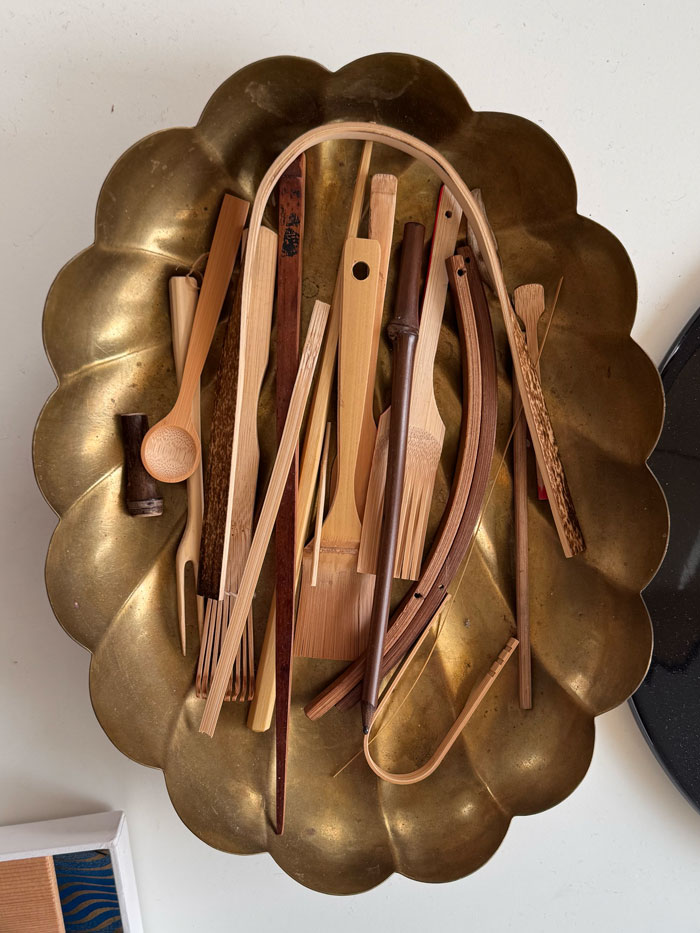
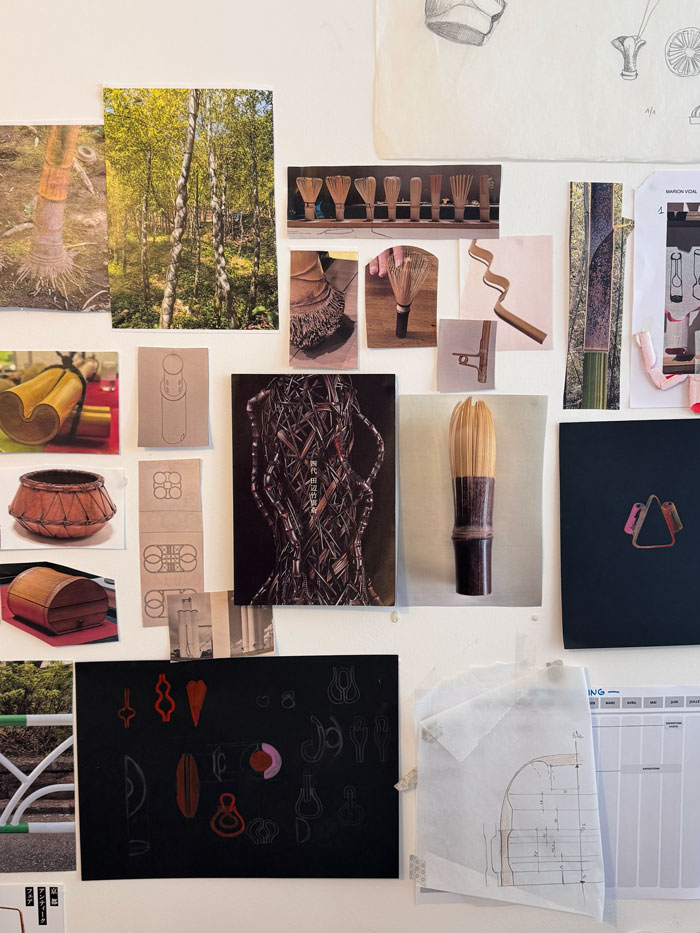
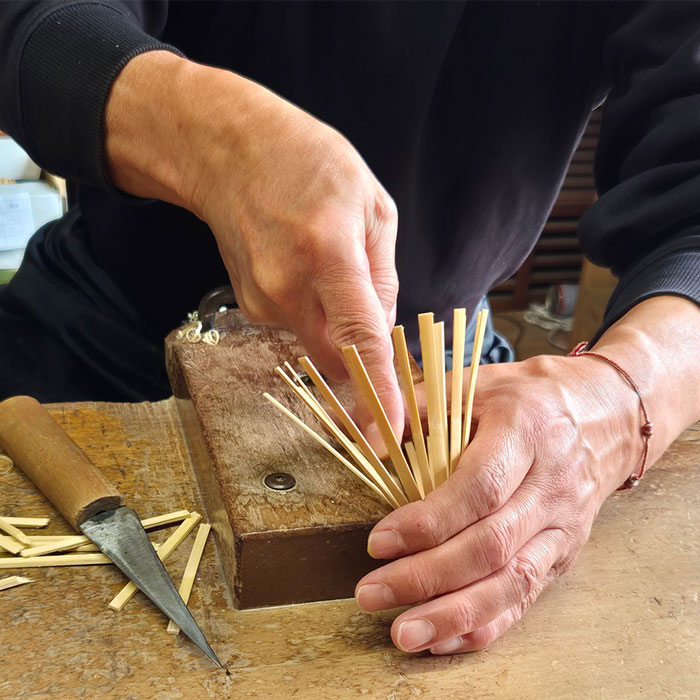
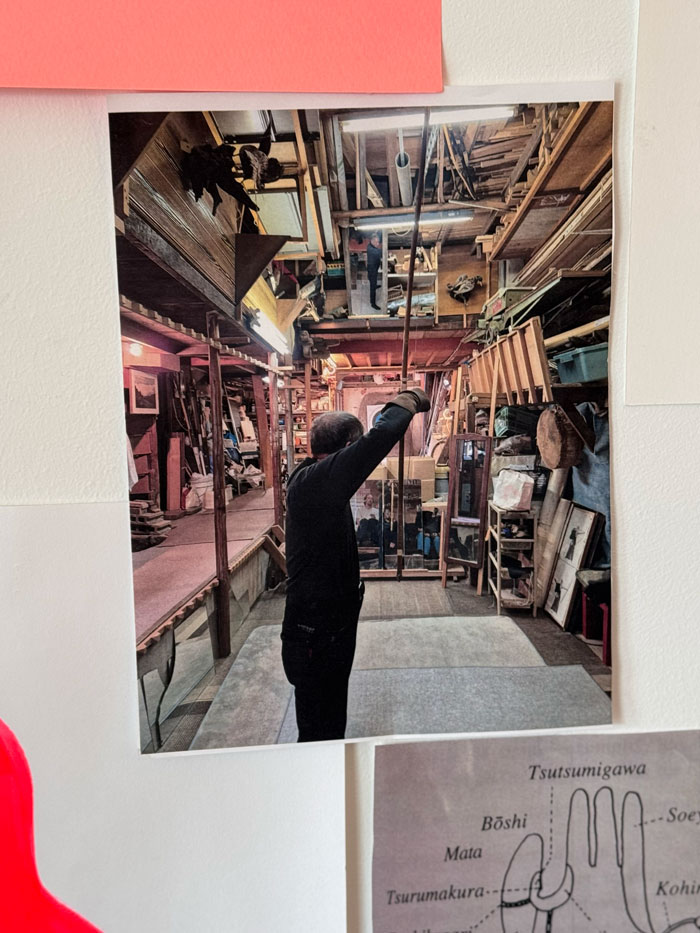
“This collection is the result of five months of total immersion in the material,” explains Marion Vidal. Thanks to Villa Kujoyama*, she has been able to experiment with this plant, which is said to be as flexible as the wind and as strong as metal… In Kyoto, Osaka, and Nara, she encountered its infinite possibilities during introductions to kyudo (archery) and matcha whisk making. “ An object on the scale of a piece of jewelry,” she notes. She cut the young shoots with a group of volunteers responsible for protecting the bamboo. She learns the art of weaving from the famous Tanabe Chikuunsai IV (Chikuunsai meaning “bamboo cloud”), a descendant of a great artistic lineage and one of the few masters to still have a workshop. He encourages her to be guided by the direction of the fibers, the knots, the flexibility… She also studied the different types of bamboo used in the history of objects and furniture during her visits to traditional art museums.


Black and gold

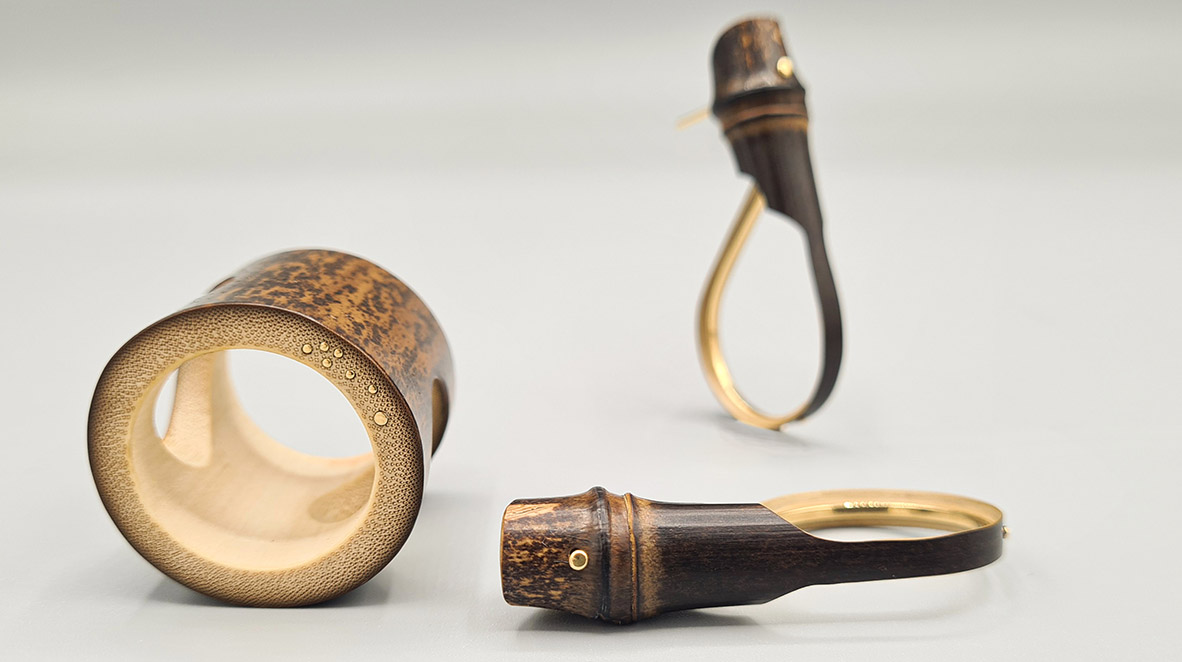
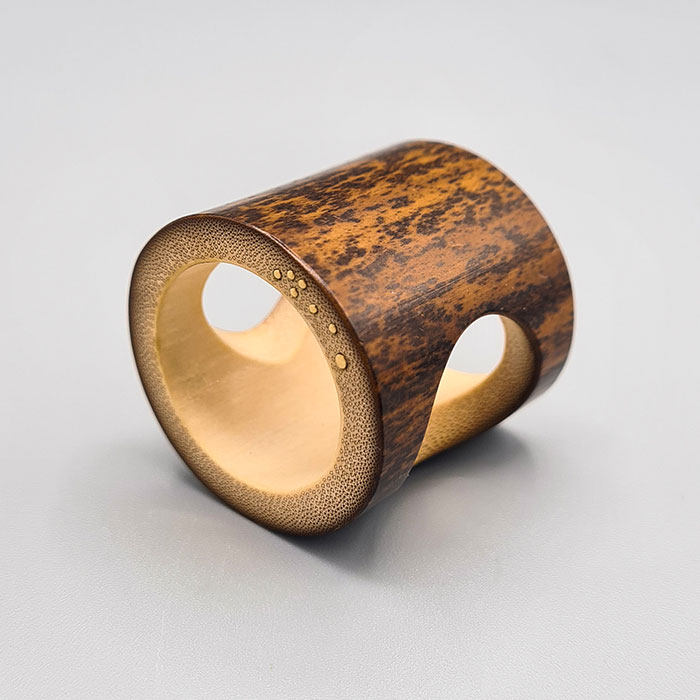
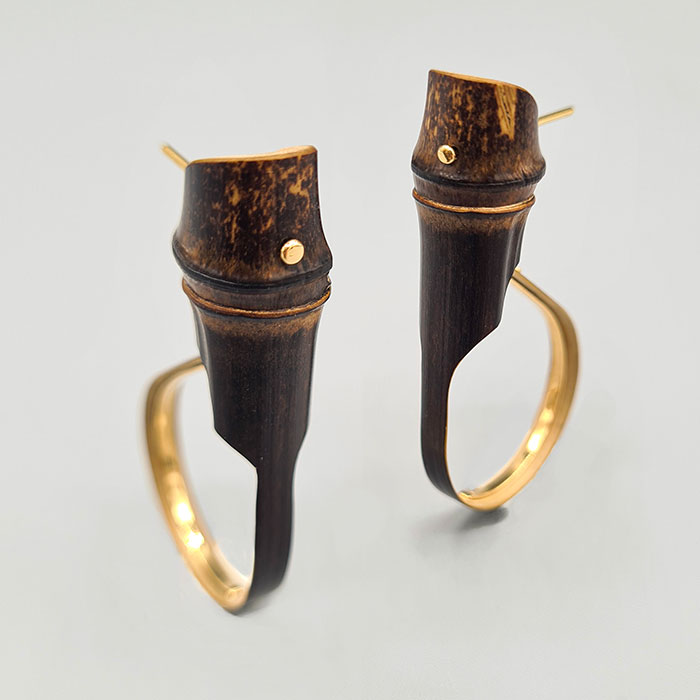
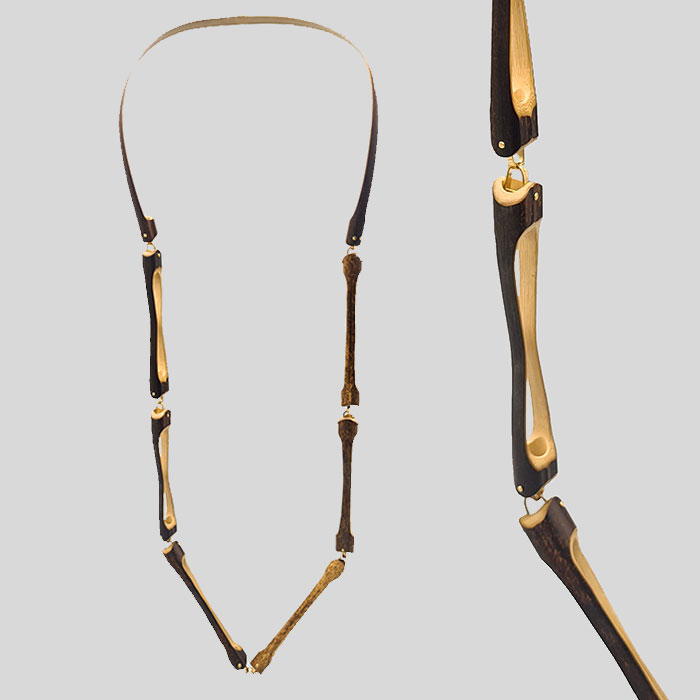
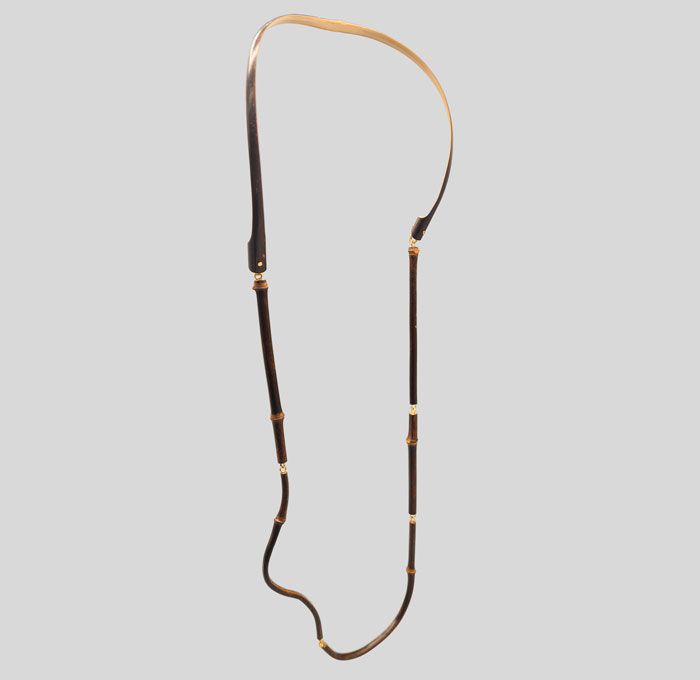
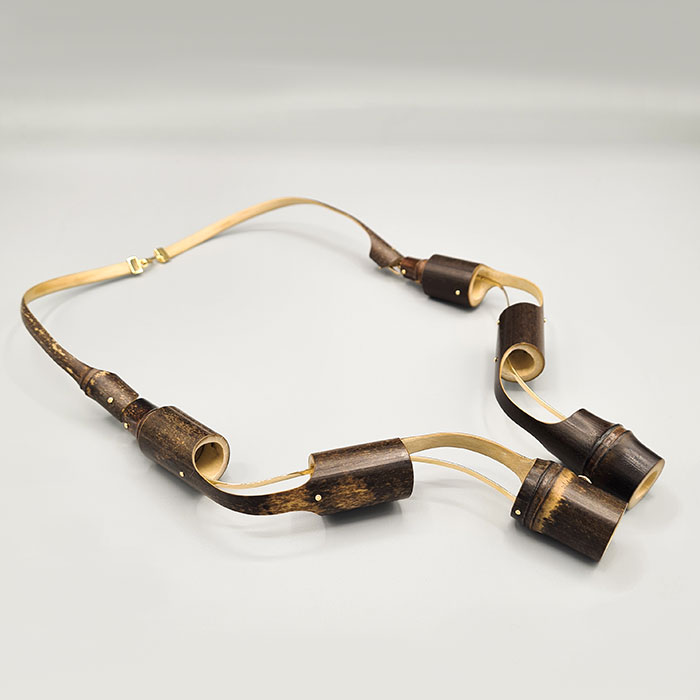
Not all bamboo is suitable; Japanese weavers use only a dozen of the nearly 500 varieties listed in the country. Marion Vidal has selected kurochiku, a naturally black variety of bamboo. This is quite different from susudake, a soot-covered bamboo that, when placed above an open hearth (irori), takes on a dark patina that makes it particularly valuable. “However, I wanted to avoid the pitfall of rusticity at all costs,” she insists. The thatch is split according to the location of the veins, as in marble work. It is then flattened, bent, and curved with hot steam to obtain highly defined shapes that are both sculptural and organic. This delicate and challenging process has resulted in a spectacular bib necklace, pendants, rings, and earrings, where yellow gold brings out the flat and curved surfaces, the light and shade, and the fullness and emptiness.


This work is part of a long-term project on Japan, during which she has been working with obijime weavers, screen printers, lacquerers, gold-leaf artisans, and others. Her remarkable new latest work, “Précieux Bambou” (Precious Bamboo), is on display at the MiniMasterpiece gallery.


“Precious Bamboo” from March 28 to May 22, 2026 at the MiniMasterpiece gallery.

*The Bettencourt Schueller Foundation has been a patron of Villa Kujoyama since 2014.

.


Articles about bamboo in jewelry:

Dangerous Luxury

Discover the Art of Bamboo


For her first collaboration with the MiniMasterpiece Gallery, Marion Vidal presents the “Precious Bamboo” collection. A collection that began in Japan during her artistic research residency at Villa Kujoyama in 2025.

By Sandrine Merle.


Rather than working with precious materials, Marion Vidal has taken an interest in ceramics, marble, wood, and Plexiglas. Today, she is exploring the possibilities of bamboo, a plant characterized by hollow stalks of various diameters. It plays a central role in Japan, where it grows quickly and straight. It has countless uses: to decorate, to cook, to eat, to store, to clean, to sleep, to defend oneself, to build. It also appears as an artistic motif or symbolic subject: integrity and honesty, constancy, family piety, etc. It is found in metaphors, tales, and popular sayings. As the saying goes, ‘Bamboo is honest: it reveals everything.


Immersion in the material

“This collection is the result of five months of total immersion in the material,” explains Marion Vidal. Thanks to Villa Kujoyama*, she has been able to experiment with this plant, which is said to be as flexible as the wind and as strong as metal… In Kyoto, Osaka, and Nara, she encountered its infinite possibilities during introductions to kyudo (archery) and matcha whisk making. “ An object on the scale of a piece of jewelry,” she notes. She cut the young shoots with a group of volunteers responsible for protecting the bamboo. She learns the art of weaving from the famous Tanabe Chikuunsai IV (Chikuunsai meaning “bamboo cloud”), a descendant of a great artistic lineage and one of the few masters to still have a workshop. He encourages her to be guided by the direction of the fibers, the knots, the flexibility… She also studied the different types of bamboo used in the history of objects and furniture during her visits to traditional art museums.


Black and gold

Not all bamboo is suitable; Japanese weavers use only a dozen of the nearly 500 varieties listed in the country. Marion Vidal has selected kurochiku, a naturally black variety of bamboo. This is quite different from susudake, a soot-covered bamboo that, when placed above an open hearth (irori), takes on a dark patina that makes it particularly valuable. “However, I wanted to avoid the pitfall of rusticity at all costs,” she insists. The thatch is split according to the location of the veins, as in marble work. It is then flattened, bent, and curved with hot steam to obtain highly defined shapes that are both sculptural and organic. This delicate and challenging process has resulted in a spectacular bib necklace, pendants, rings, and earrings, where yellow gold brings out the flat and curved surfaces, the light and shade, and the fullness and emptiness.


This work is part of a long-term project on Japan, during which she has been working with obijime weavers, screen printers, lacquerers, gold-leaf artisans, and others. Her remarkable new latest work, “Précieux Bambou” (Precious Bamboo), is on display at the MiniMasterpiece gallery.


“Precious Bamboo” from March 28 to May 22, 2026 at the MiniMasterpiece gallery.

*The Bettencourt Schueller Foundation has been a patron of Villa Kujoyama since 2014.

.


Articles about bamboo in jewelry:
Dangerous Luxury

Discover the Art of Bamboo


Most read articles