



“Dynastic Jewels: Power, Prestige, and Passion 1700-1950,” Paris
This is the third installment in a trilogy of exhibitions organized by the Al Thani Collection in collaboration with the Victoria and Albert Museum. Spread across four rooms, this exhibition presents spectacular stones and jewels commissioned by major historical figures linked to the monarchies of France, Russia, and the United Kingdom (Catherine II of Russia, Josephine, Marie Louise of Austria, Eugénie, Queen Victoria). It looks back at the upheavals of the 20th century that led to the dispersal of royal and aristocratic collections to new circles of bankers, heiresses, stars, and others. For example, the sumptuous ruby necklace commissioned by the Maharaja of Indore was acquired by socialite Gloria Guinness, a close friend of Truman Capote. A wow-factor exhibition for lovers of palaces, royalty, and celebrities.
From December 10, 2025, to April 6, 2026, Hôtel de la Marine
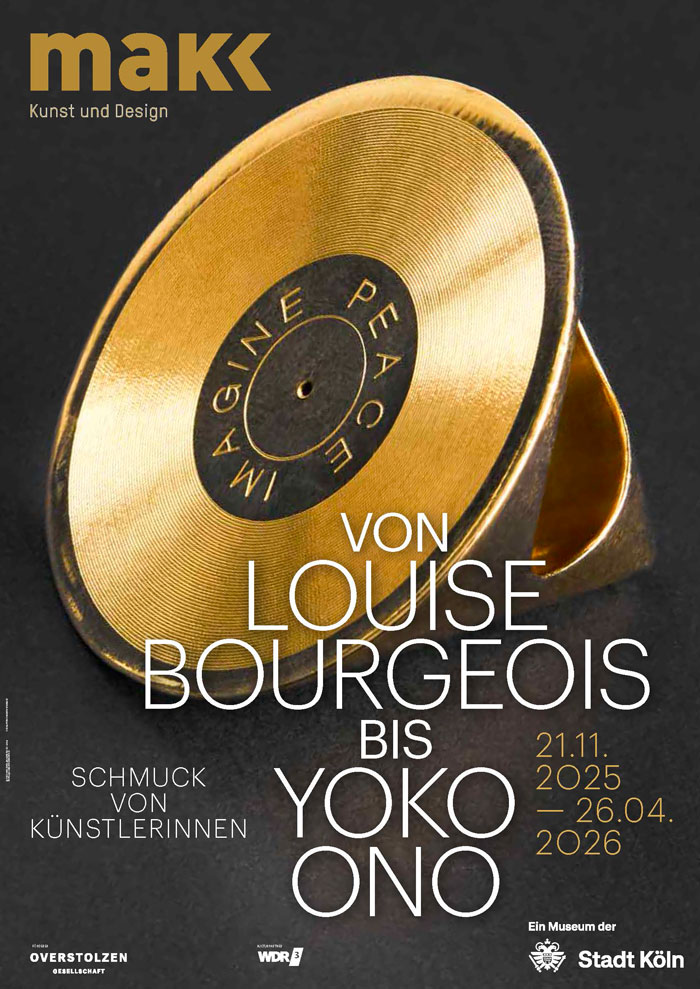
“From Louise Bourgeois to Yoko Ono. Jewelry created by women artists,” Cologne
The 90 pieces of jewelry created by 45 female visual artists from the 20th and 21st centuries (from the 1920s to the present day) definitively challenge male dominance in this field. Finally! We welcome the spotlight on the work of Lynda Benglis, Annabelle d’Huart, Leiko Ikemura, Margit Jäschke, Jacqueline de Jong, Alicja Kwade, Claude Lalanne, Liliane Lijn, Rita McBride, Michele Oka Doner, Yoko Ono, Meret Oppenheim, Françoise Pétrovitch, Armelle de Sainte Marie, Niki de Saint Phalle, Maïlys Seydoux-Dumas, Dorothea Tanning, Sophia Vari, and Joana Vasconcelos.
From November 21, 2025, to April 26, 2026, Museum of Applied Arts Cologne (MAKK)
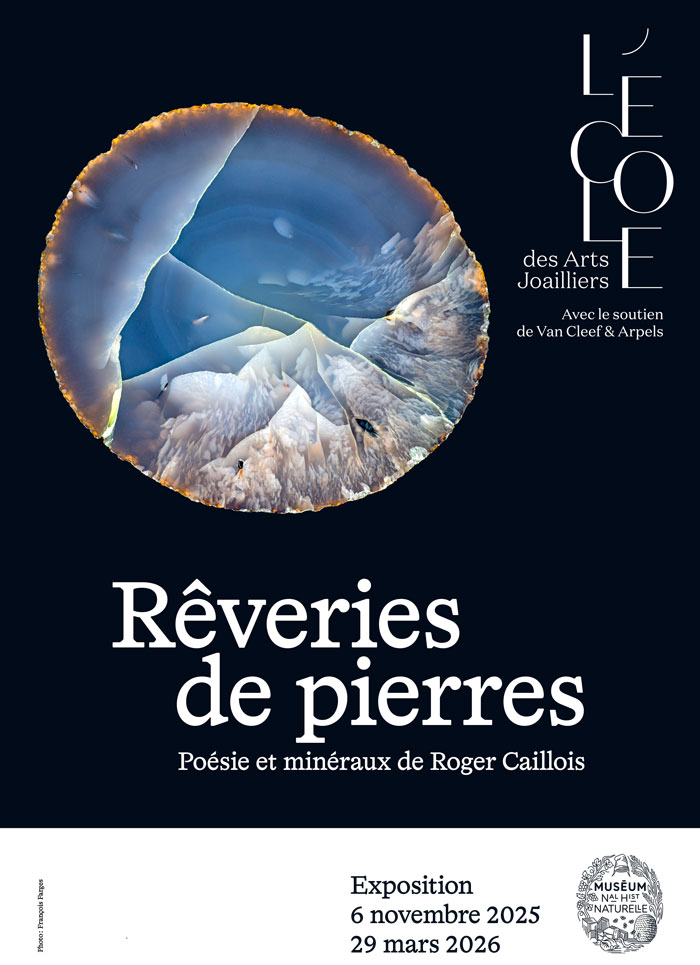
“Rêveries de pierres: Poetry and Minerals by Roger Caillois,” Paris
Feel free to bring your little ones to discover the minerals of Roger Caillois, who saw castles, characters, forests, and more in these minerals. The collection, assembled between 1952 and 1978 by this academician, scholar, sociologist, and historian of religions, includes 1,000 specimens, 200 of which are on display here. Most are jasper and agate stones that reveal abstract and sometimes figurative images of landscapes or objects. “More than once, I have thought that stones should be viewed as a kind of poetry,” said this intellectual with his encyclopedic knowledge. He also saw them as “hieroglyphs without a message.” Among the masterpieces, don’t miss Le Château, a limestone with dendrites evoking a fortress and small figures, or La Cime, an agate evoking a mountain. Here, they are juxtaposed with excerpts from his prose, as fascinating and poetic as they are challenging, taken from “L’Écriture des pierres” (The Writing of Stones) and “Pierres irréfléchies” (Unreflective Stones).
“1925-2025: A Century of Art Deco”, Paris
2025 marks the 100th anniversary of the exhibition dedicated to decorative arts that retrospectively gave its name to a style: Art Deco, which would endure until World War II. This style, a reaction against the excesses of Art Nouveau, is characterized by geometric and symmetrical lines and bright, bold colors, and draws on multiple influences from other cultures (Egypt, India, Japan). A thousand pieces of furniture, drawings, posters, and clothing trace its origins, development, heyday, and contemporary reinterpretations in a chronological and thematic manner. All the big names are there: Sonia Delaunay, Robert Mallet-Stevens, Albert-Armand Rateau, etc. In the jewelry section, the series of brooches by Raymond Templier and Jean Desprès sits alongside the sublime hardstone marquetry brooch by Boucheron and pieces by Van Cleef & Arpels. Cartier is given pride of place, notably with a coral chimera bracelet and the design for the Bérénice emerald, which has rarely been exhibited to date. “The house is considered the pioneer of this movement and has an absolutely unique collection of archives and period pieces,” says Mathieu Rousset-Perrier, heritage curator for the Medieval, Renaissance, and Jewelry collections.
From October 22, 2025, to April 26, 2026, Musée des Arts Décoratifs
“The Poetry of Birds”, Dubai
Van Cleef & Arpels explores the theme of birds, “which have long held a sacred place in Middle Eastern cultures as symbols of freedom, renewal, and the human spirit,” explains Marie-Laure Cassius-Duranton, curator of the exhibition, gemologist, and art historian. Jewelry, precious objects, and gouaches created by renowned jewelers (including Van Cleef & Arpels, Cartier, Buccellati, and Fabergé) bear witness to this and interact with works of art (carpets, ceramics, miniatures) on loan from the Sharjah Museum of Islamic Civilization and the Dubai Museums.
Until April 25, 2026
“The Journey of Women: Yemeni Women and Social Growth”, Bloomington (États-Unis)
Le Yémen… Il n’est pas ici question de la situation tragique de ce pays mais des bijoux en argent et en textile réalisés par des orfèvres au savoir-faire minutieux. Au-delà de la représentation du statut social, du rôle dans les événements importants de la vie, etc., ces bijoux, une fois offerts, sont considérés comme la propriété des femmes. Elles ont alors toute latitude pour décider de leur utilisation y compris la possibilité de les vendre.
Du 25 octobre 2025 au 13 aout 2027, Museum of Archaeology and Anthropology
“Donation Joël Faivre-Chalon,” Cagnes-sur-Mer
The artistic career of the recently deceased Joël Faivre-Chalon is showcased here thanks to a collection of archives (photographs, drawings, body of work, and prototypes) donated by his widow. In the 1970s, he established himself as a major figure in contemporary French jewelry (alongside Jean Dinh Van and Gilles Jonemann) by conducting research into refined forms, technicality, and materials such as brass, silver, titanium, Formica®, and carbon fiber. This exhibition is a continuation of the one presented in Parcours Bijoux 2023, shortly after his death.
From September 19, 2025, to May 17, 2026, Musée du Bijou Contemporain
“Jewelry from Dutch soil,” Middleburg (Netherlands)
Never before have so many archaeological jewelry items found on Dutch soil been brought together. Many of the pieces come from the impressive collection of the National Museum of Antiquities in Leiden, supplemented by loans from collections across the country. One of the oldest objects on display, a boar’s tooth pendant, dates from around 9000-4000 BCE.
Until March 1, 2026, Zeeuws Museum
The Jewelry of Dorothea Prühl, Houston
Amateurs de bijoux contemporains, cette exposition consacrée à Dorothea Prühl est pour vous. Le MFAH qui possède la plus grande collection publique au monde de cette artiste allemande présente cinq décennies de son travail, entre 1976 et 2025, colliers et broches aux grandes formes audacieuses et répétitives dictées par la nature du matériau, bois ou métal. À la frontière entre le figuratif et l’abstrait, elles évoquent grenouilles, oiseaux et fleurs.
Jusqu’au 3 janvier 2027, MFAH
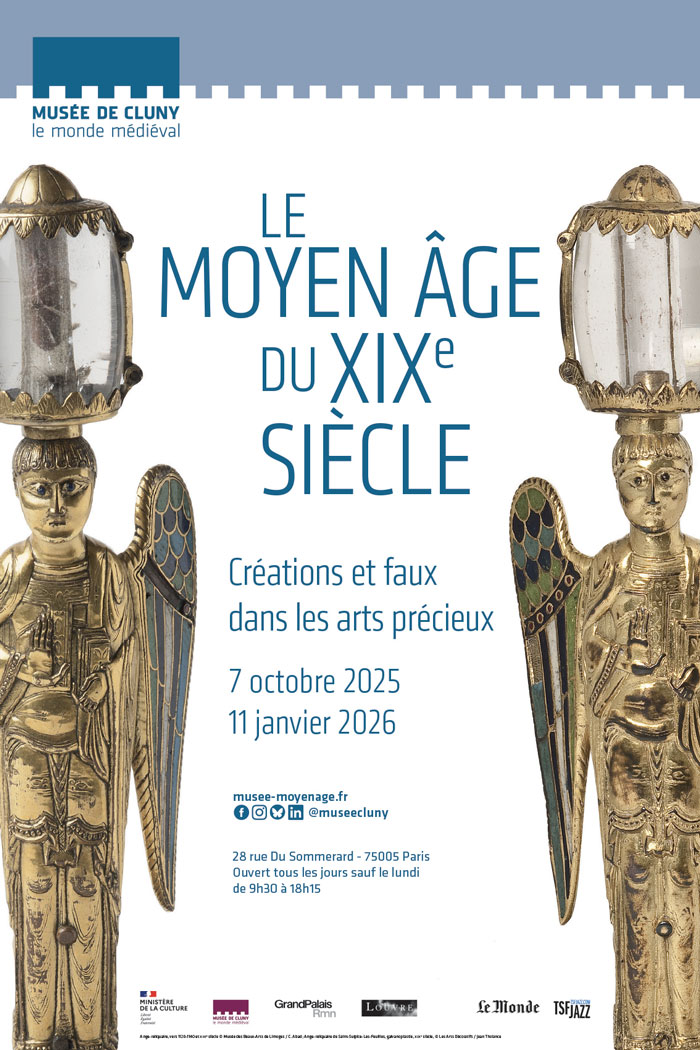
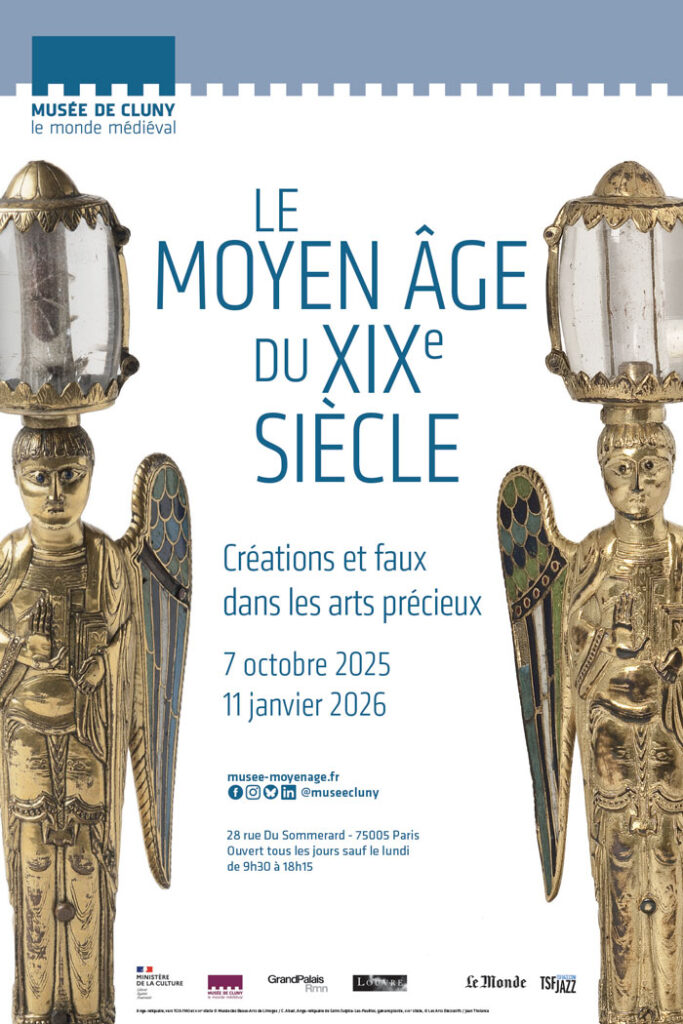
“The Middle Ages of the 19th Century – Creations and Fakes in the Precious Arts,” Paris
19th-century artists created countless pastiches, composite works, and fakes inspired by the Middle Ages. Viollet-Le-Duc immediately comes to mind… Just like the precious arts, textiles, goldsmithing, etc., jewelry did not escape this revival. Falize’s comb brings back into fashion the fantastical creatures from Romanesque bestiaries and the medieval technique of cloisonné enamel on gold. The chastity belt, associated with the Crusades and supposed to guarantee the virtue of a knight’s wife during his journey to the Holy Land, is a pure fantasy of the 19th century.
From October 7, 2025, to January 11, 2026, Musée de Cluny
« Viking North », York
Ces marchands scandinaves, colosses barbus et casqués voguant sur les eaux, se sont constitués des fortunes colossales en pillant ports, monastères, etc. Parmi les rares vestiges figurent deux trésors datant de 866 à 1066. Le premier, le trésor de Bedale contient un large bracelet en argent d’origine irlandaise, un collier torsadé de style permien provenant de Russie et d’autres objets probablement fabriqués en Grande-Bretagne ou en Scandinavie. Le second, le remarquable trésor de Harrogate a été découvert en 2007, à l’aide de détecteurs de métaux. Contenu dans un récipient en argent doré, il se compose de plus de 700 pièces. La nature exotique de certains (Afghanistan, d’Afrique du Nord et Russie) est surprenante.
Jusqu’en juillet 2027, Yorkshire Museum
Discovering Ancient Egypt, Leiden (Netherlands)
The public never tires of discovering the beauties of Pharaonic Egypt, from magnificently painted coffins and colorful papyri to animal mummies, manuscripts, and more. In terms of jewelry, the centerpieces here are the gold funerary offerings from the tomb of General Djehuti (who served Thutmose III), unearthed in the Saqqara necropolis in 1824. In his report, the discoverer described “a tomb containing a mummy entirely wrapped in solid gold (each limb and each finger had its own wrapper inscribed with hieroglyphics), a scarab attached to a gold chain, a gold ring and a pair of gold bracelets, along with other precious relics…” Scattered across several European museums, these pieces are being brought together for the first time since their discovery 200 years ago.
Until March 15, 2026, Rijksmuseum van Oudheden (National Museum of Antiquities)
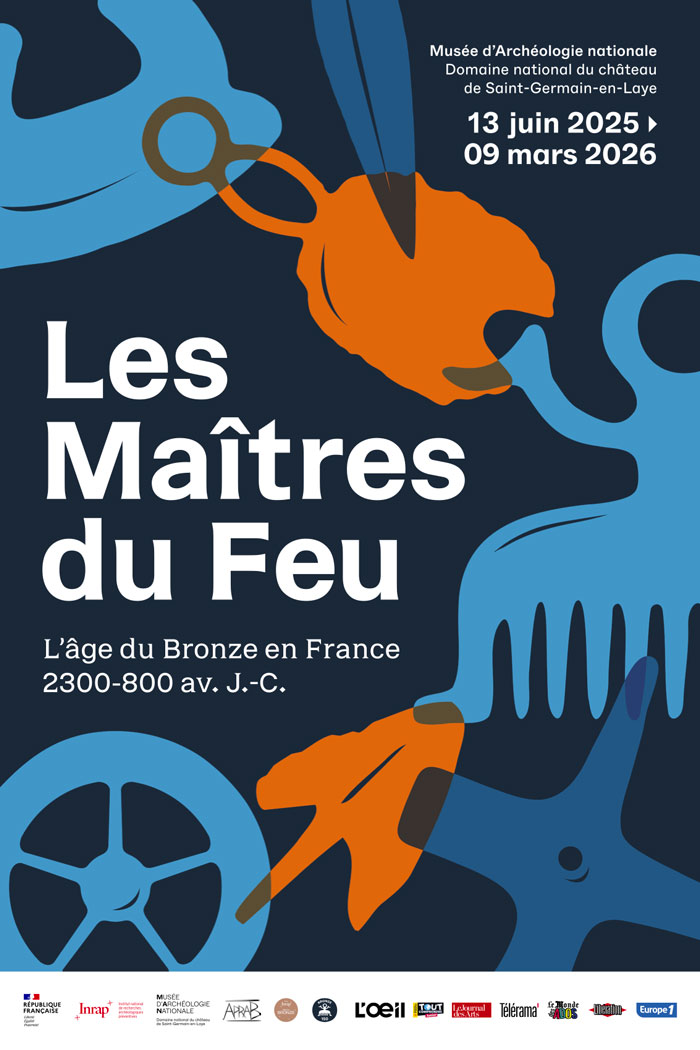
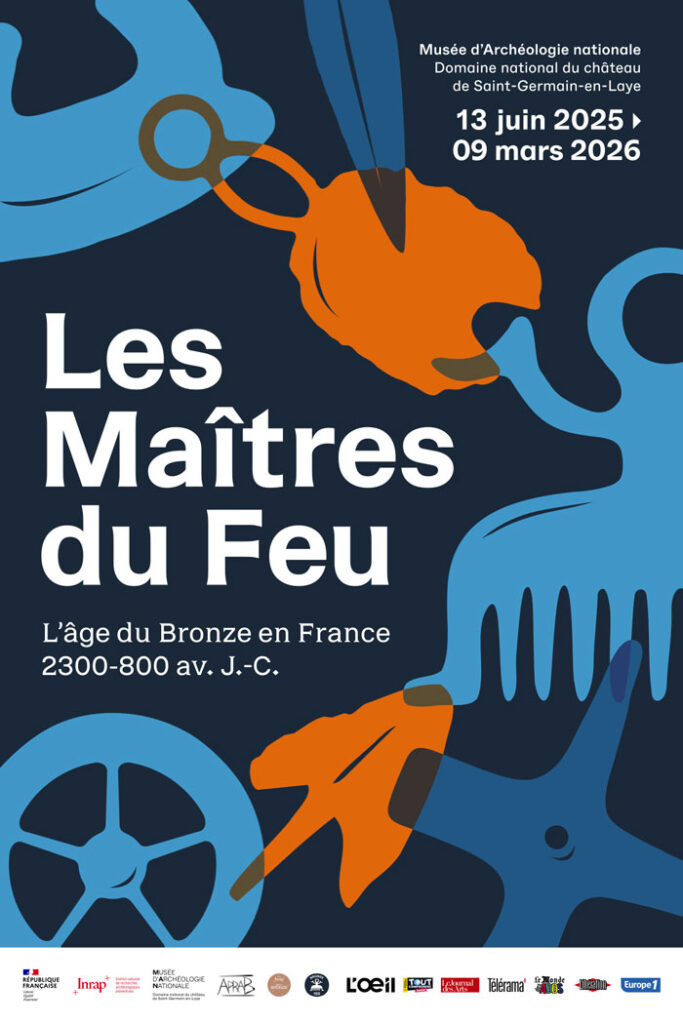
“Les Maîtres du Feu” (Masters of Fire), Saint-Germain-en-Laye
The arrival of bronze (an alloy of copper and tin) brought about real changes in objects, weapons, and jewelry. This is evidenced by a comb-shaped pendant dating from 900-1000 BC. The two sublime torques from Guînes (Pas-de-Calais), finely chiseled in gold and linked to the votive practices of the time, illustrate the theme of metallurgy more broadly.
From June 13 to March 9, 2026, National Archaeology Museum – National Estate of the Château de Saint-Germain-en-Laye
“Whakahokihoki – Jewelry from the Dowse Collection”, Wellington (New-Zealand)
Whakahokihoki (meaning “to return”) brings together 60 contemporary jewelry pieces that have recently been added to the Dowse Museum’s collection or that had been absent while traveling around the world. Forty artists are represented, including Warwick Freeman, Karl Fritsch, and Alan Preston, to name just a few of the best known.
Until February 15, 2026, Dowse Art Museum
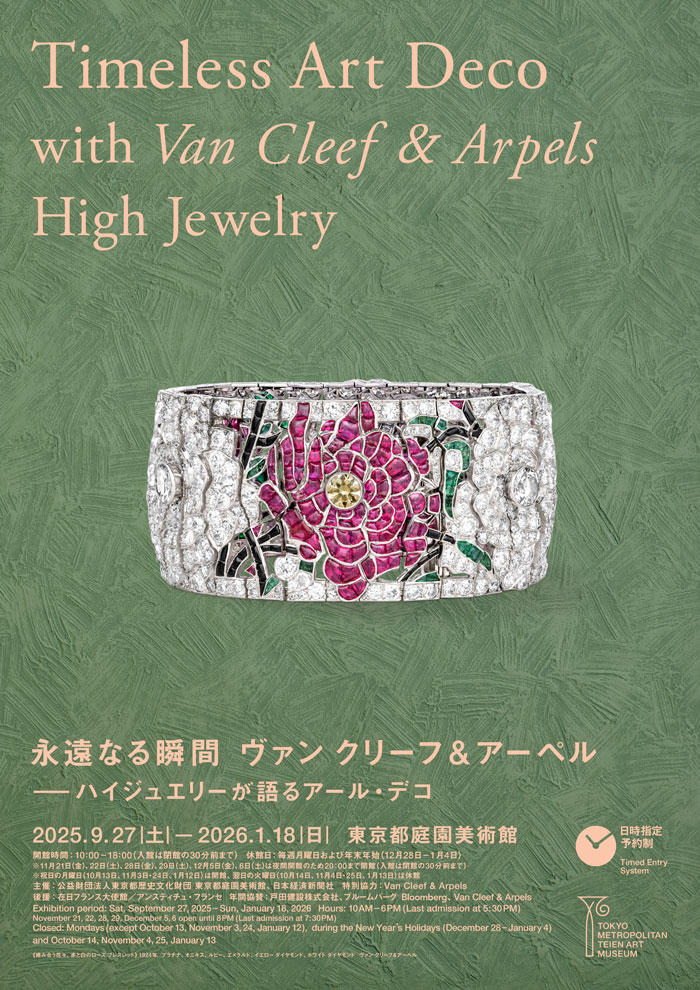
“Timeless Art Deco with Van Cleef & Arpels High Jewelry”, Tokyo
We all know how much the Japanese love French decorative arts… Here, they are treated to 250 pieces (jewelry, watches, and precious objects) from the Art Deco period, drawn from the Van Cleef & Arpels heritage collection and private collections.
Until January 18, 2026, Metropolitan Teien Art Museum
“Ode to Nature by Van Cleef & Arpels,” Paris
Fauna and flora are an inexhaustible source of inspiration for jewelers. Fifty-three creations, dating from the 1920s to the 2000s, illustrate their importance in the style of Van Cleef & Arpels. A gold shell powder compact, the Fleurette set, a gold and coral seahorse clip, a parrot with chrysoprase and coral plumage, a yellow sapphire daffodil, and more: together, they form a veritable ode to life.
From July 4, 2025, to January 12, 2026, Van Cleef & Arpels boutique – Heritage Gallery
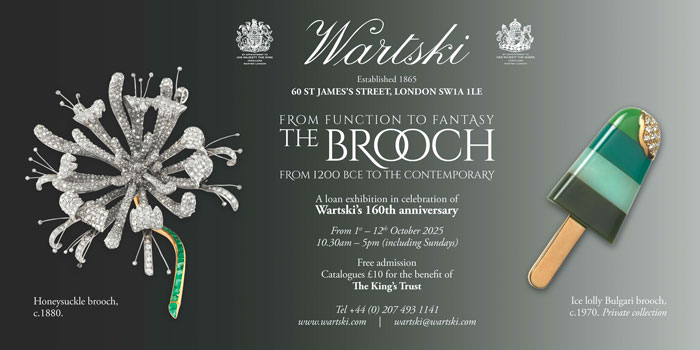
“From function to fantasy: the brooch”, Londres
Read the itw of Katerine Purcell on TFJP.
October 1–12, 2025 – Wartski Gallery (free admission), London
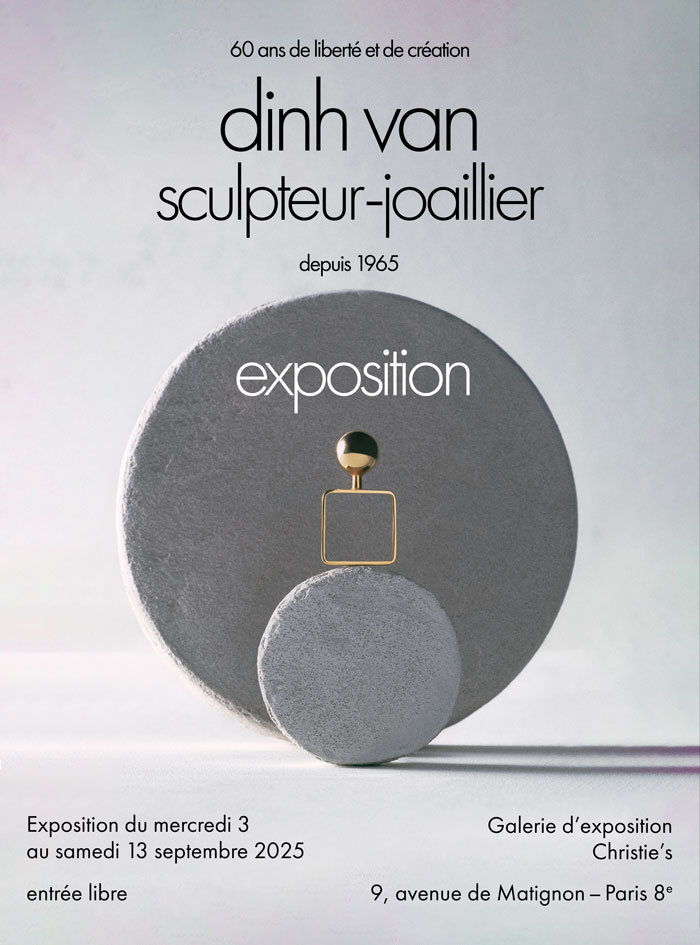
“Dinh Van, 60 Years of Creation and Freedom,” Paris
September 3–13, 2025, Christie’s
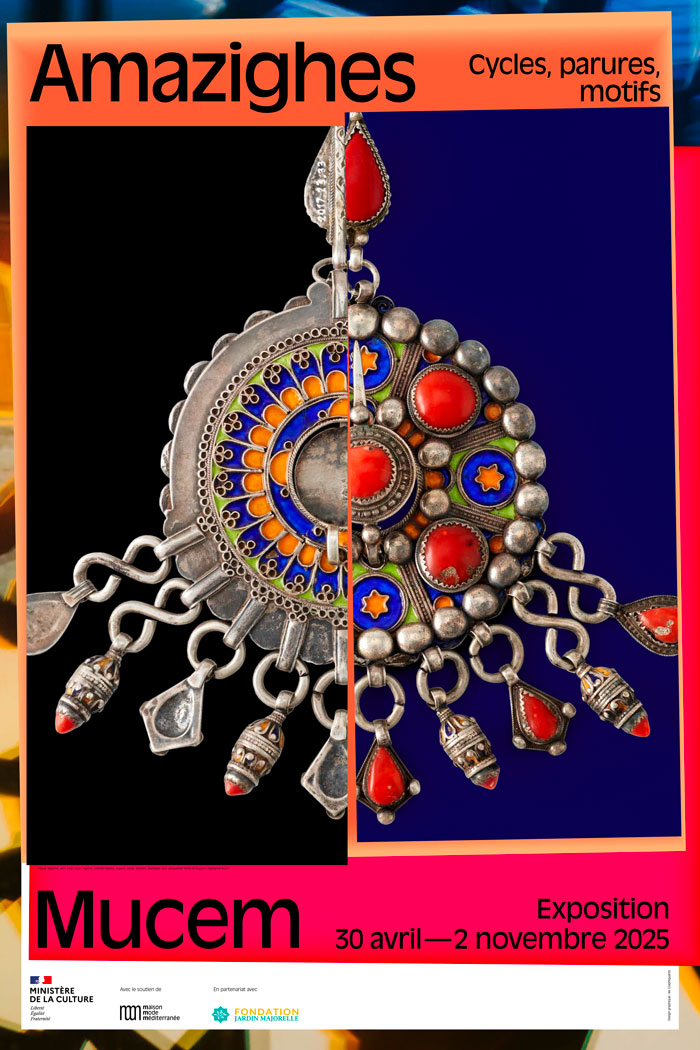
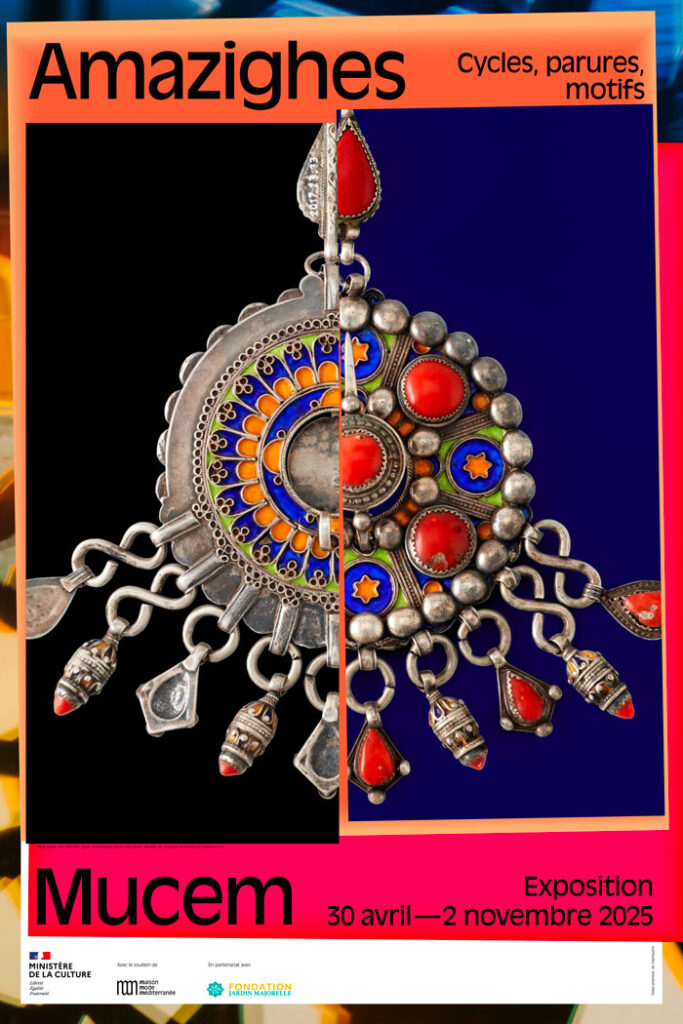
“Amazighes — Cycles, Adornments, Patterns,” Marseille
Amazigh jewelry, found in an area stretching from Egypt to Morocco via northern Mali, Mauritania, and Niger, is often equated with Berber jewelry, folklorized and reduced to “a simple silent artifact.” However, as this exhibition highlights, its patterns, shapes, and symbols are there to ward off bad luck and mark social status and gender. One section showcases an iconic piece of jewelry: the fibula, a metal clasp formed by a circle and a triangle, used to fasten clothing.
April 30 to November 2, 2025, MUCEM Fort Saint-Jean
“Marie Antoinette Style – Shaped by the most fashionable queen in history”, London
Those who are still talking about the pair of Converse amidst the silk pumps in Sofia Coppola’s film will love this exhibition! The objects are here to bear witness to “the late monarch’s lasting influence on over 250 years of design, fashion, film and the decorative arts”. So it’s a mix of anachronisms, shoes by Manolo Blahnik (sponsor of the event), portraits like the one from 1773 painted by François-Hubert Drouais, and objects and furniture like the chair made for her private apartment. The Château Versailles is lending around twenty works, including a replica of the famous necklace belonging to the Queen, created by jewelers Boehmer and Bassenge, which was at the heart of the scandal that rocked the court in 1784-1785 and compromised the reputation of Marie Antoinette, who was innocent of the charges against her. This modern and symbolic object, illustrating the queen’s taste for expensive jewelry, was made in the 1960s based on an engraving preserved at the Bibliothèque Nationale de France.
September 20, 2025 to March 22, 2026, Victoria & Albert Museum
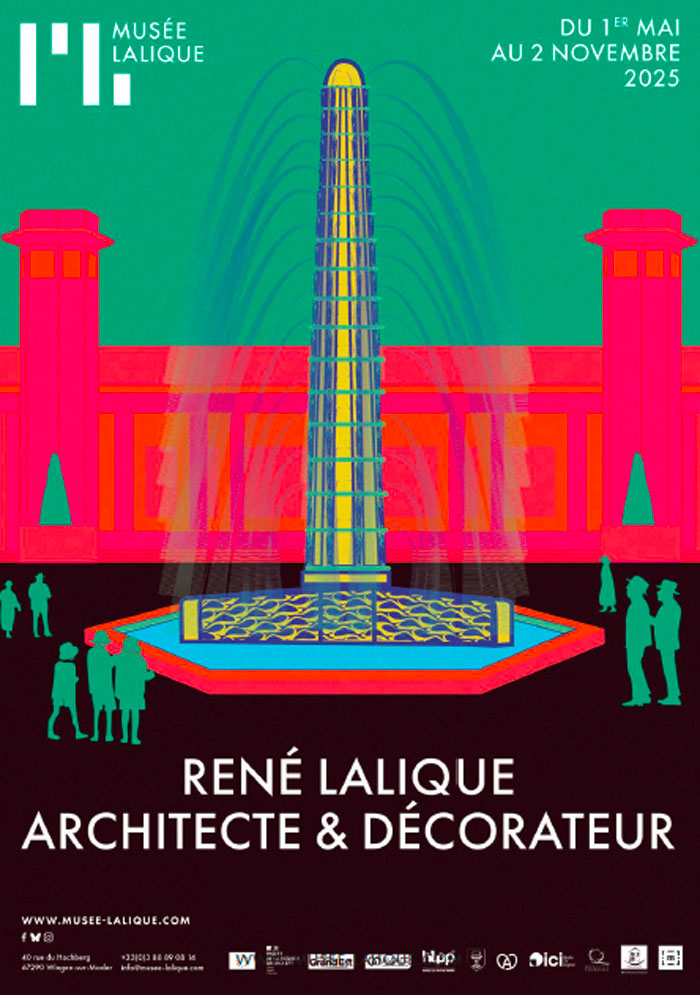
“René Lalique, architecte et décorateur”, Wingen-sur-moder
From May, 1st to November, 2 2025, René Lalique Museum
“Cartier”, London
It’s been over a century since the first exhibition in London, organized by Jacques Cartier when he was head of the boutique: it was dedicated to the tiara to capitalize on the coronation of King George V. The exhibition features 350 objects, some of which are directly related to the English branch: the Scroll tiara worn by Elizabeth II at her coronation and by Rihanna on the cover of W magazine (2016), or the Manchester tiara (1903) belonging to the V&A collection. For royal family afficionados, King Charles III is lending a number of pieces, including the tiara worn by Kate Middleton at her wedding to Prince William. A sentimental jewel not to be missed among all these statutory pieces: the amethyst and sapphire brooch, made in accordance with Jacques Cartier’s wishes for his wife Nelly.
April 12, 2025 – November 16, 2025, Victoria & Albert Museum
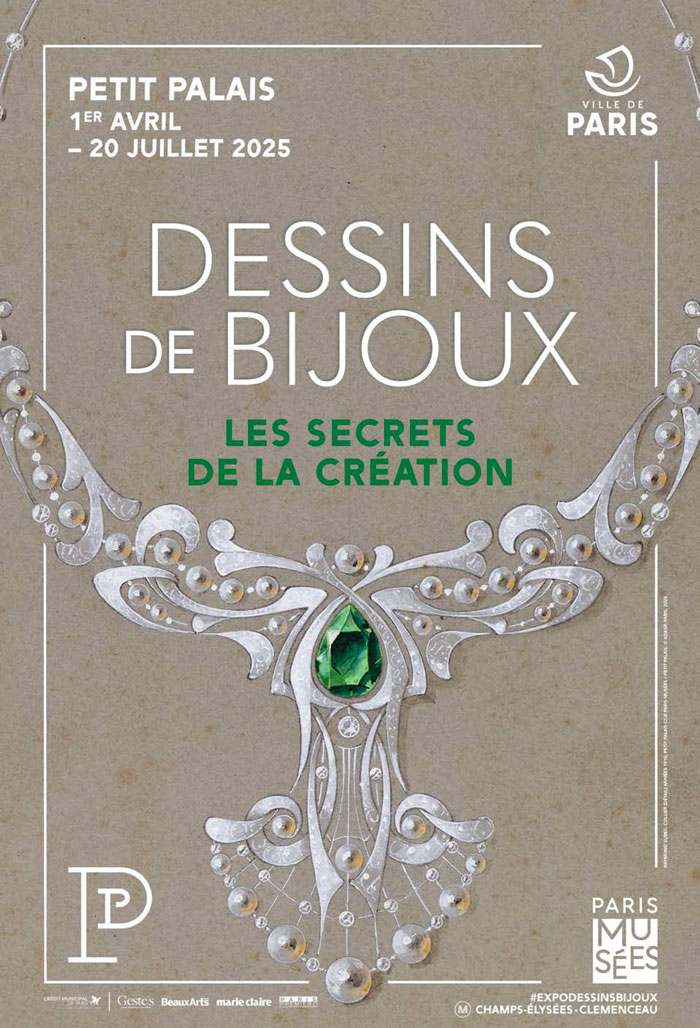
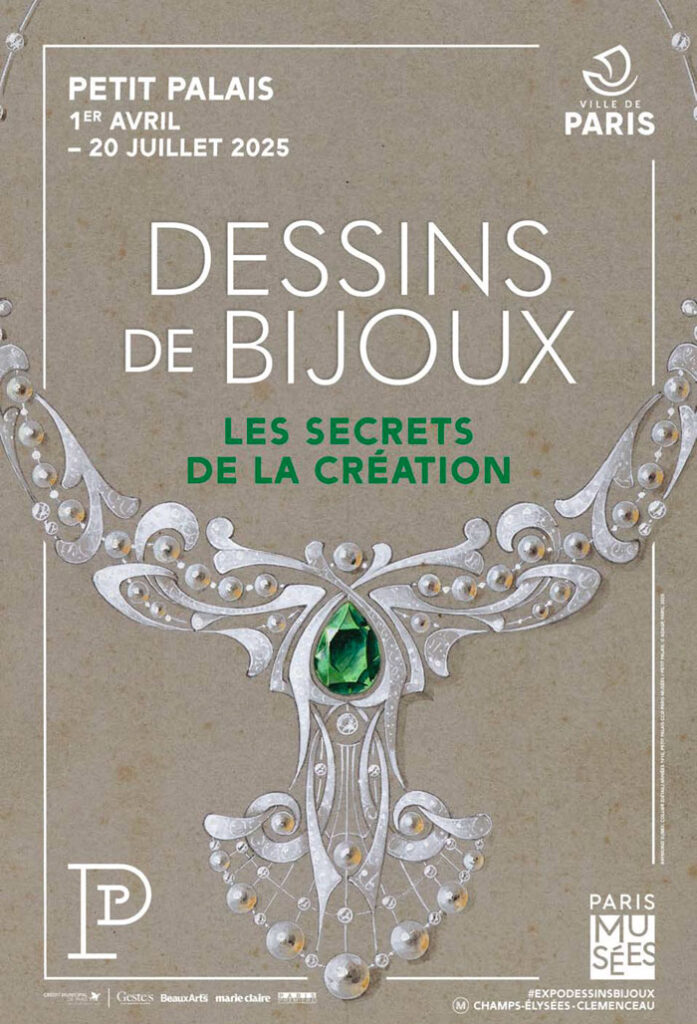
« Dessins de Bijoux », Paris
The Petit Palais is unveiling its vast collection of jewelry designs for the first time, bringing together 5,500 sheets from the 19th to the 20th century. At the heart of this collection, the Charles Jacqueau collection, designer for the Cartier house, stands out with 4,400 works. The exhibition presents books, ornament collections, photographs and objects to delve into the psyche of the designers. It also shows the essential role of preparatory drawings in the design of jewelry: they guide the artisans (jewelers, setters) but also help with marketing. We discover numerous face-to-face comparisons between the preparatory drawings and the jewelry. Creations by Cartier or Georges Fouquet are displayed alongside their original sketches, as well as gouaches, which are generally more highly valued. Made to full scale with extreme meticulousness, these drawings are true works of art.
Until July 20, 2025, Petit Palais
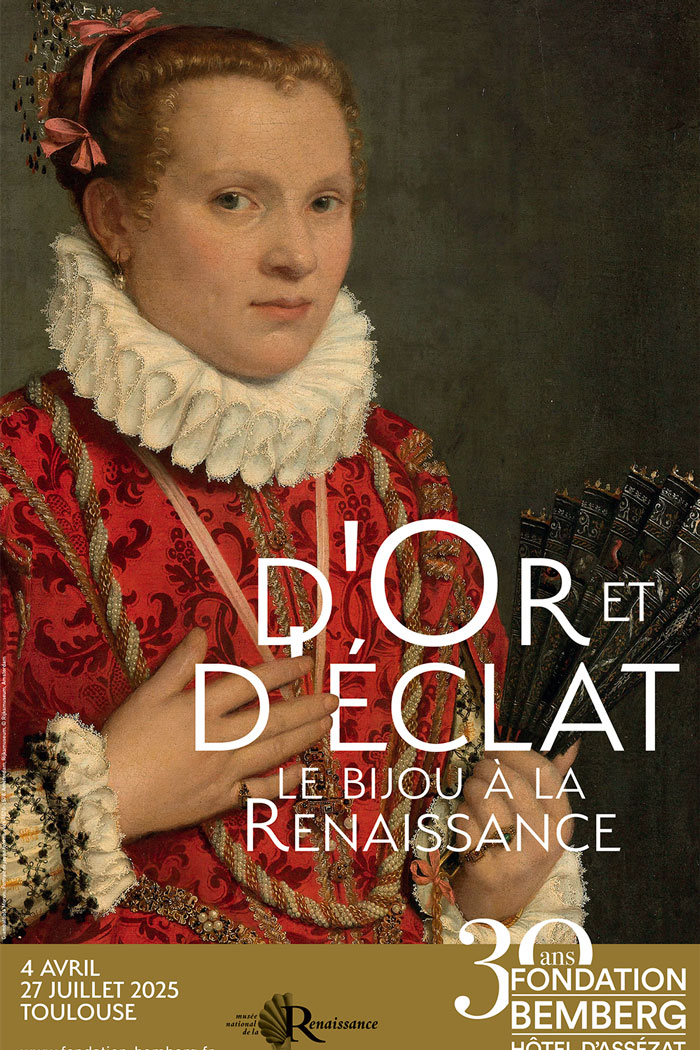
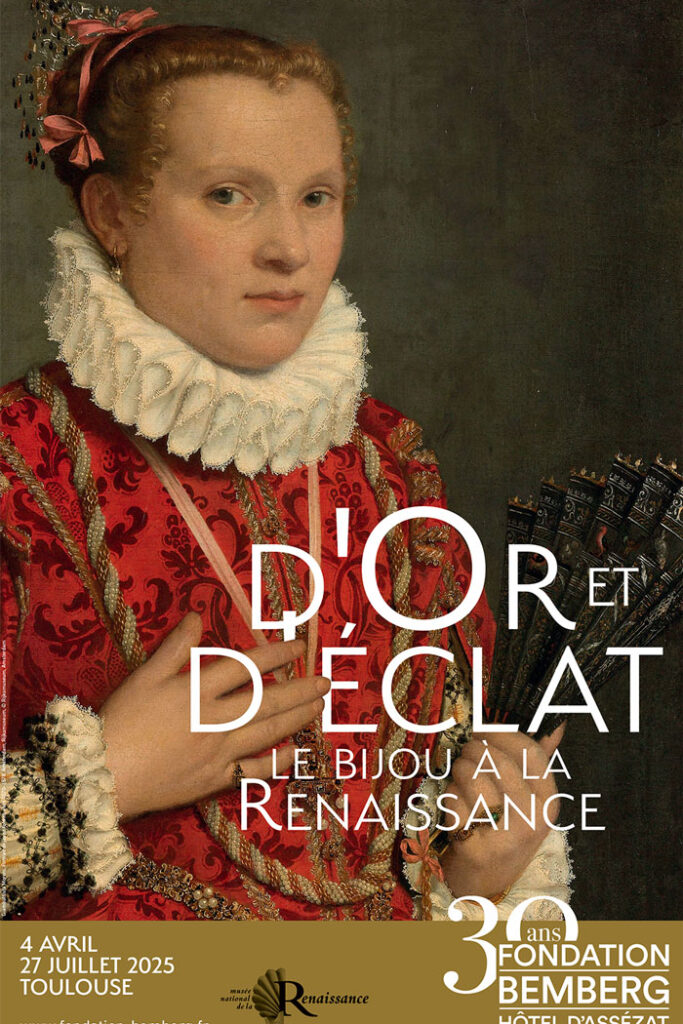
« D’or et d’Éclat », Toulouse
The jewel of the Renaissance has so far only had one dedicated exhibition in Europe… in 1980 at the Victoria & Albert Museum in London. This one, organized by the Musée de la Renaissance in Écouen and the Bemberg Foundation, finally sheds light on these very refined pieces. With a scenography by Hubert le Gall, it explores the evolution of jewelry between the 16th and 17th centuries, the golden age of ornamentation. While the manufacturing techniques remain close to those of the Middle Ages, the forms are inspired by the arts such as painting and sculpture. Gold is crafted, colored enamel (which has not yet been dethroned by the diamond, whose cutting is still in its infancy). Baroque pearls arrive from the other side of the world thanks to the discovery of new sea routes. Cameos, for their part, bear witness to an unprecedented infatuation with Antiquity. Beyond its decorative function, jewelry also served as currency. It symbolized power, faith or commitment. The exhibition notably presents a set of four cupid pendants brought together for the first time. The issue of fake Renaissance jewelry manufactured in the 19th century, at the height of the revival of this period, is also addressed. Today, it is estimated that they represent three quarters of the specimens exhibited in museums.
Read the article Cupid pendants, iconic Renaissance jewelry, explained by Julie Rohou
Until July 27, 2025, Fondation Bemberg
“Hook Hand Heart Star”, Munich
Until June 15, 2025, Pinakothek der Modern
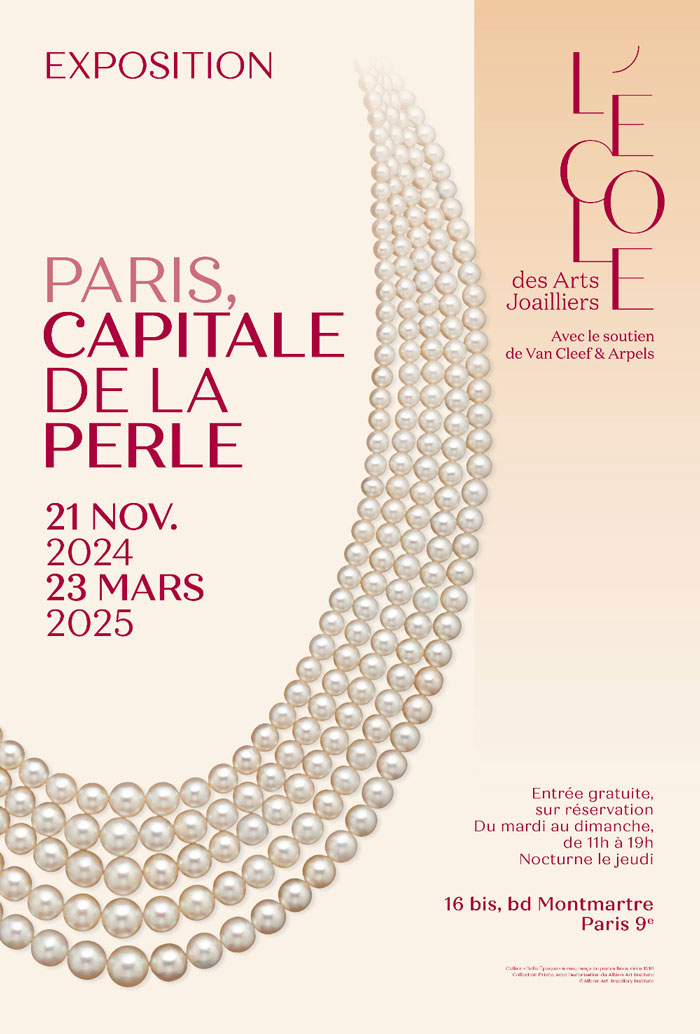
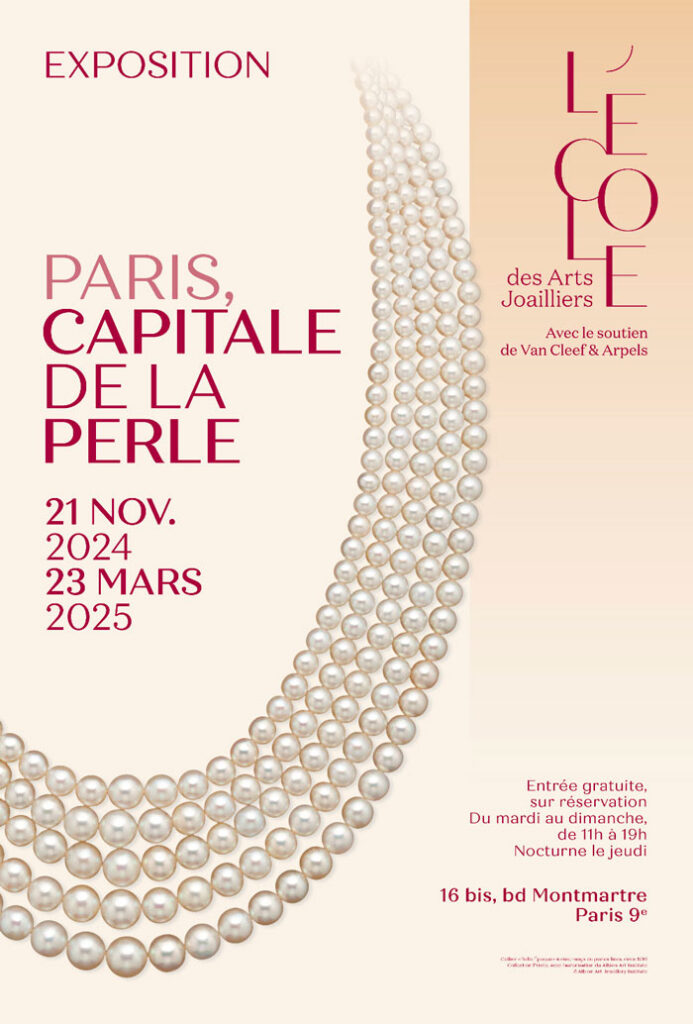
“Paris, Capital of Pearl”, Paris
This chronological exhibition focuses primarily on natural pearls. Among the hundred pieces of jewelry on display are splendid Belle Époque necklaces formed by strands of perfectly matched pearls, i.e. virtually identical in size and color, as well as a sheep’s head brooch by Joel Arthur Rosenthal from 2006, whose strands of micro-pearls mimic curly fleece. The main purpose is to recall that, at the end of the 19th century, Paris became the center of international trade. Pearls fished in the Arabian Gulf were sold by three hundred Parisian traders. In addition to the exhibition, the richly illustrated book written by Léonard Pouy is a must-read to learn more about this story, which came to an end in the 1930s.
Until June 1, 2025, L’École des Arts Joailliers L’Hôtel de Mercy-Argenteau
“Sparkle! Gifts of Contemporary Jewelry from Robert Hiller”, Kansas City
An exhibition for insiders only… The museum is exhibiting avant-garde pieces donated by Robert Hiller over the past decade. The collector and teacher at Stuttgart’s Musikhochschule was a fan of the brooch, and fell in love with the tiara after seeing the famous exhibition at the Victoria and Albert Museum in 2022. Hence the presence of numerous interpretations by contemporary designers in a dazzling variety of materials and forms.
Until December 7, 2025, The Nelson-Atkins Museum of Art
“Au fil de l’or. The art of dressing from the Orient to the Rising Sun”, Paris
This exhibition retraces the thousand-year history of gold and its use in Asian textile arts. Kimonos and obis from Japan, saris from India, songket (long silk rectangles) from Malaysia… Depending on the technique used, gold is threaded, woven or embroidered by the Lesage workshop. Not everything that glitters is gold, and it can also be naturally golden silk, such as that produced by spiders in Madagascar. The exhibition also features spectacular creations by Chinese fashion designer Guo Pei.
February 11 to July 6, 2025, Musée du Quai Branly
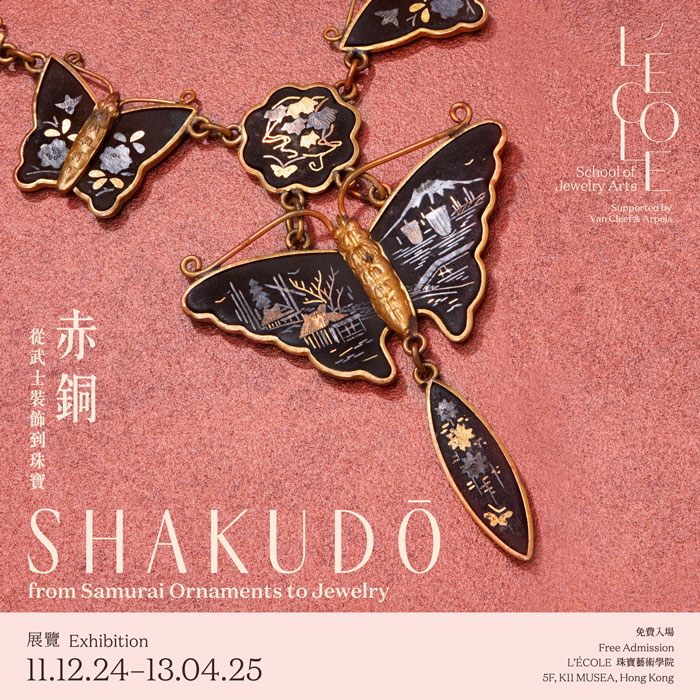
“Shakudō: from Samurai Ornaments to Jewelry”, Hong Kong
How did the shakudō go from sword to jewel? In this exhibition, L’École The School of Jewelry Arts sets out for the first time to tell this fascinating and untold story, which has its roots in a political event: the forced opening up of Japan to international trade during the Edo period, from 1853 onwards. The modernisation of the country, with the abolition of the feudal system, led in particular to the end of the samurai and the ban on the use of swords in 1876. With no customers, metalworkers began to make shakudō components for European jewelry. This exhibition presents 36 pieces from a private collection that has never before been shown to the public.
Until April 13 2025, L’École des Arts Joailliers
“Solid Gold”, New-York City
For its 200th anniversary, the Brooklyn Museum is exhibiting 500 pieces (paintings, clothing, videos, jewelry, design, coins, sculptures) or partially covered in the precious metal. 250 of these are from its own collections. As the chronology unfolds, Cartier jewels appear, including this magnificent necklace of Muslim prayer beads and the fly necklace worn by Elizabeth Taylor in the film Cleopatra (1963). Rare enough in this type of exhibition to be worth noting: the curators tackle the dark side of gold mining, such as colonization and environmental destruction.
Until July 6, 2025, Brooklyn Museum
“Silver and Stones: Collaborations in Southwest Jewelry, Santa Fe
If you’re passing through Santa Fe, this jewelry collection is a great opportunity to get acquainted with the Navajo style. Jewelry from the 1940s and 1950s, part of the museum’s permanent collection, illustrates the collaboration between silversmith Diné and artist David Taliman (1901-1967) to create jewelry for William C. Ilfeld (1905-1979). Ilfeld was a well-known local figure, head of the family store’s Native American jewelry department.
Until April 1, 2025, Palace of the Governors, New Mexico History Museum
“Pinned! Contemporary Antwerp Jewellery”, Antwerp
Antwerp has a reputation as a city of fashion and design, and this exhibition is an opportunity to showcase its jewelry creativity. Dirk Schrijvers, the collector and lender of the 200 pieces, and the 60 designers all hail from this Flemish city. These include Rembrandt Jordan, Dimitar Stankov, Peter Vermandere, Nadine Wijnants and even Dries van Noten. There’s no need to look for another thread: Dirk Schrijvers chose these pieces (mostly brooches) on a whim. It’s his favorite moment, even before he owns them.
Until April 21, 2025, Diva Museum
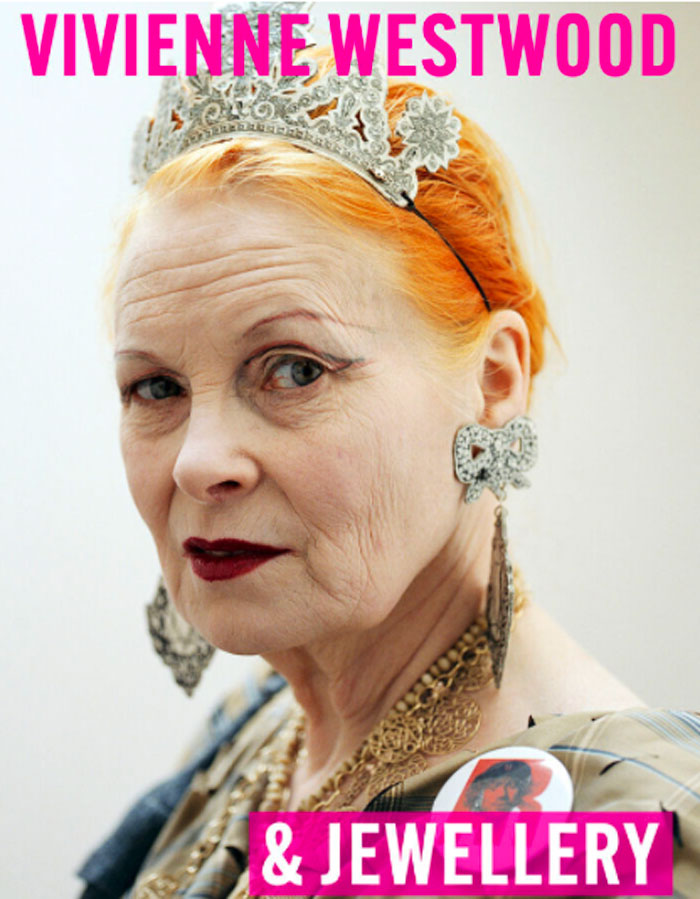
“Vivienne Westwood & Jewellery”, Wellington
Was it the extraordinary success of the pearl necklace with the Alpha generation that prompted the house of Vivienne Westwood to organize an exhibition on jewelry? For the time being, her eighteenth-century frock coats, skirts with exaggerated hip and buttock padding, bustiers in romantic Boucher-style prints, tartans, etc. were more celebrated than her brooches and necklaces. Yet they are an integral part of her style, as evidenced by the presence of 550 pieces on silhouettes classified by decade since the 1980s. Westwood began selling jewelry at a market stall on Portobello Road in the 1970s.
From December 13, 2024 to April 27, 2025, Te Papa
“Samurai Splendor: Sword Fittings from Edo Japan”, New-York City
During the Edo period, Japanese swords made for samurai reached such a level of sophistication that they became veritable works of art. This exhibition presents a selection from the MET’s collections, as well as accessories and related objects: makers’ sketchbooks, decorative elements such as the tsuba at the base of the blade and the menuki on the sides of the handle. Most had never been exhibited before.
Until March 23, 2025, MET museum
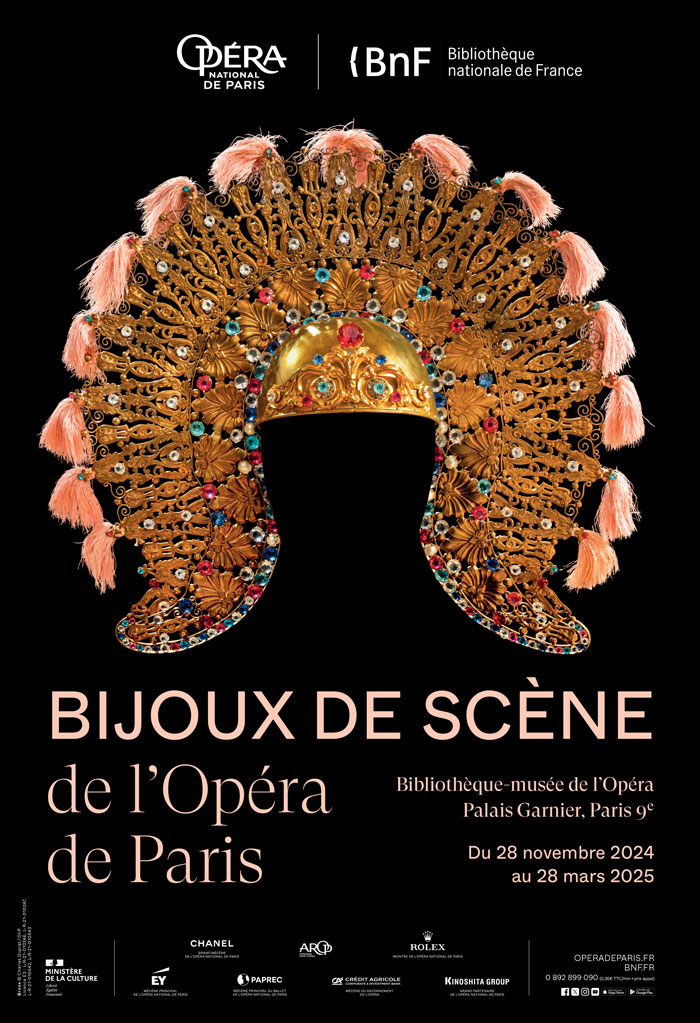
“Jewels of the Opéra de Paris”, Paris
One of the missions of the Bibliothèque nationale de France (BNF) is to preserve jewelry and objects no longer used by the Paris Opera. The curators have selected 70 pieces (out of a total of 4,000) that are documented, in other words, whose function and the show in which they appeared are known. These include Salammbo’s headdress and its depiction in a painting by Georges Clairin (1893), the floral headband in blown pearls created in 2011 and, in a nearby photo from the Atelier Nadar, the original designed by René Lalique and worn by Sarah Bernhardt in La Princesse Lointaine (1895). A number of contemporary pieces, not yet deposited with the BNF, demonstrate the durability of traditional manufacturing techniques in the workshops of the two theaters, Garnier and Bastille.
Until March 28, 2025, Bibliothèque-musée de l’Opéra Palais Garnier
“Zero Waste: Jewelry”, Racine (USA-Wisconsin)
In contrast to traditional jewelers who focus on gold and gems, avant-garde designers are big fans of non-precious materials originally intended for uses other than jewelry. Bones, shells, curlers, U.S. currency, newspaper, zippers… are all part of their DNA. All these jewels belong to the RAM collection.
Until February 22, 2025, Musée d’art de Racine (RAM)
“Chicago Collects: Jewelry in Perspective, Chicago
Chicago was a major jewelry-making center in the United States immediately after the World’s Fair was held there in 1893. The two hundred pieces (from Chicago public and private collections) cover a period from the late Renaissance to the present day, including Art Nouveau, the 19th century, the Belle Époque and Art Deco. A 19th-century monstrance rubs shoulders with diadems, medals of the kings of France, jewelry by Fabergé, Louis Comfort Tiffany and René Lalique. It’s also an opportunity to discover pieces from the Kalo boutique, where women were taught metalworking.
Until January 5, 2025, Muskegon Museum of Art
“Machu Picchu and the Golden Empires of Peru”, Sydney
Read my story
Until February 23, 2025, Australian Museum
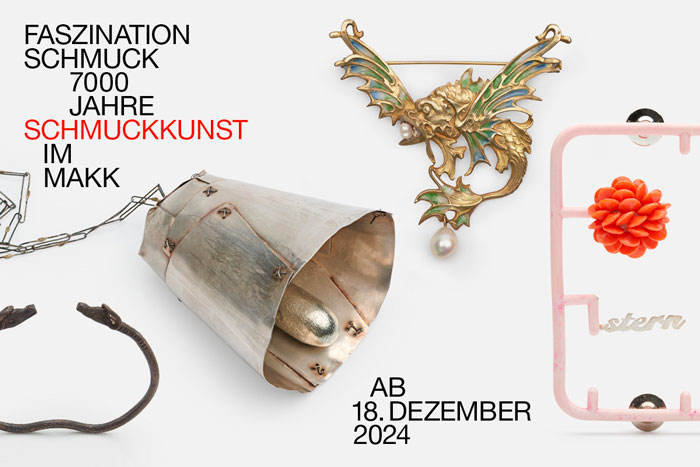
“The Fascination of Jewellery – 7000 Years of Jewellery Art”, Cologne
The exhibition features 370 pieces of jewelry, all from the MAKK’s collection of 1,700 pieces spanning seven millennia. One of the highlights is a group of pieces by Elisabeth Treskow, a little-known Colonian silversmith, characterized by the ancient technique of granulation. Nineteenth and twentieth-century jewels by masters such as René Lalique, Karl Gustav Hansen and Castellani also provide an excellent opportunity to visit Cologne, a four-hour train journey from Paris.
December 18, 2024 – August 24, 2025, Museum of Applied Arts Cologne (MAKK)
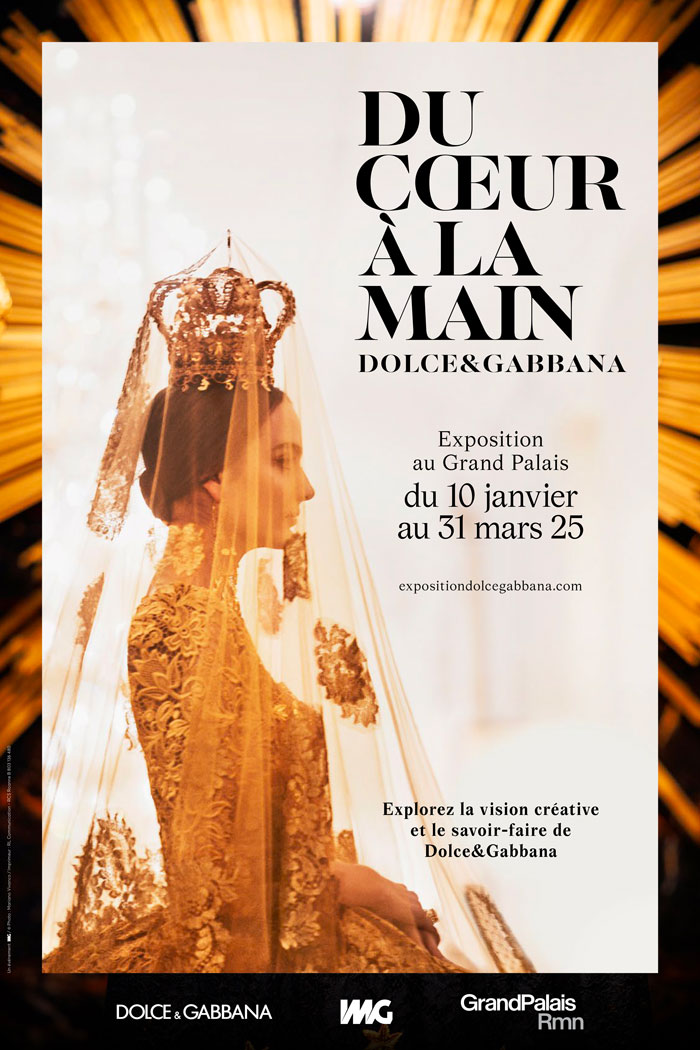
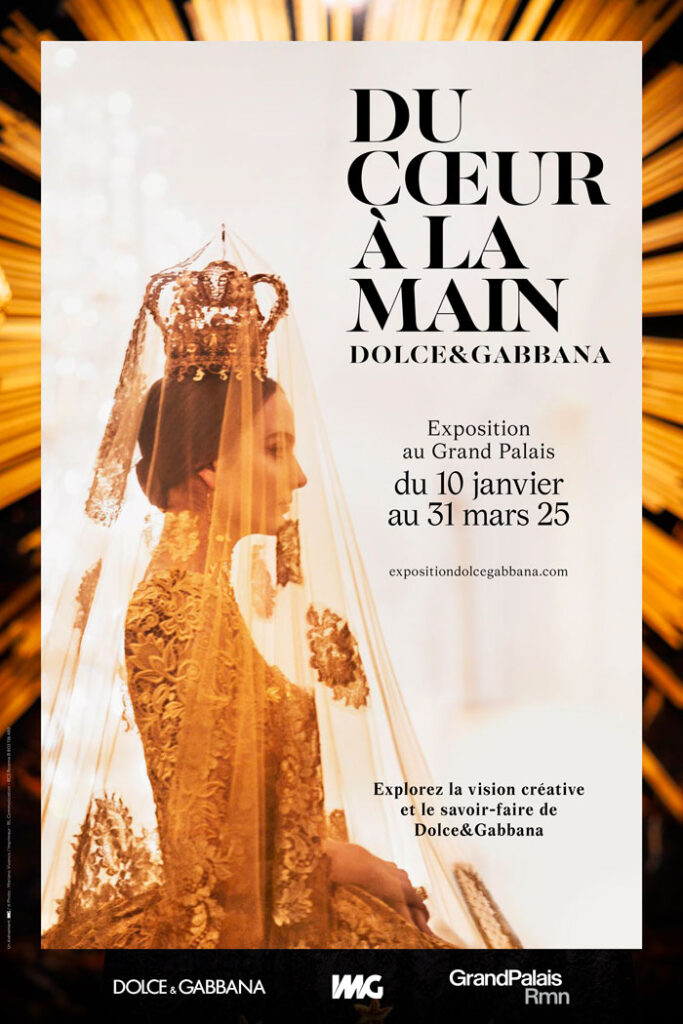
“From Heart to Hand – Dolce&Gabanna”, Paris
After Milan, the exhibition dedicated to the Italian duo Domenico Dolce and Stefano Gabbana moves to Paris. The two hundred creations interact with works of art in theatrical settings. One room is wallpapered with golden tesserae, another overloaded with mirrors and elaborate chandeliers in which flamboyant garments are reflected. Jackets in velvet threaded with silver, dresses in silk glittering with gold arabesques and crystal tassels, bodices embroidered with brooches in the shape of ex-votos, and so on. Guaranteed to dazzle; slow-fashion fans, beware…
January 10 – March 31, 2025, Grand Palais