
Style

Acne Studios Revives Painted Portrait Miniatures for Summer 2027

In Acne Studios’ Spring/Summer 2027 collection, delicate 19th-century painted miniatures adorn ultramodern denim silhouettes.

By Sandrine Merle.

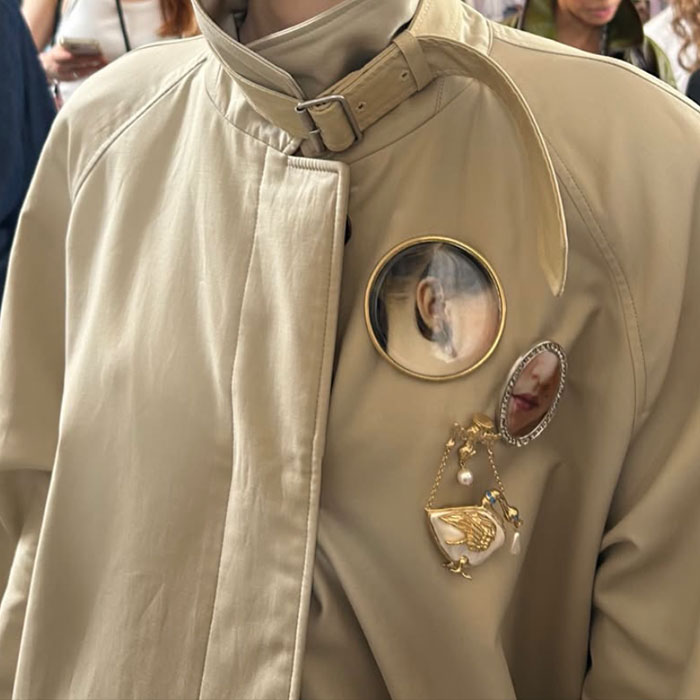
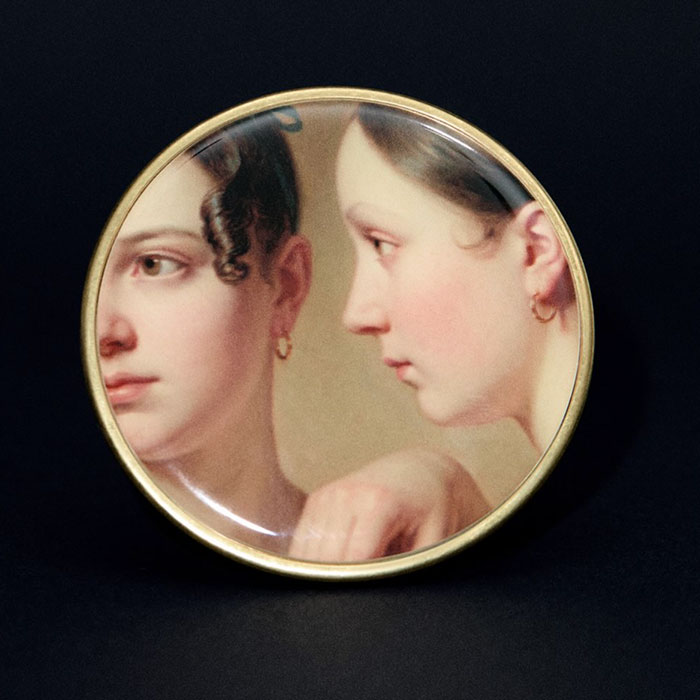
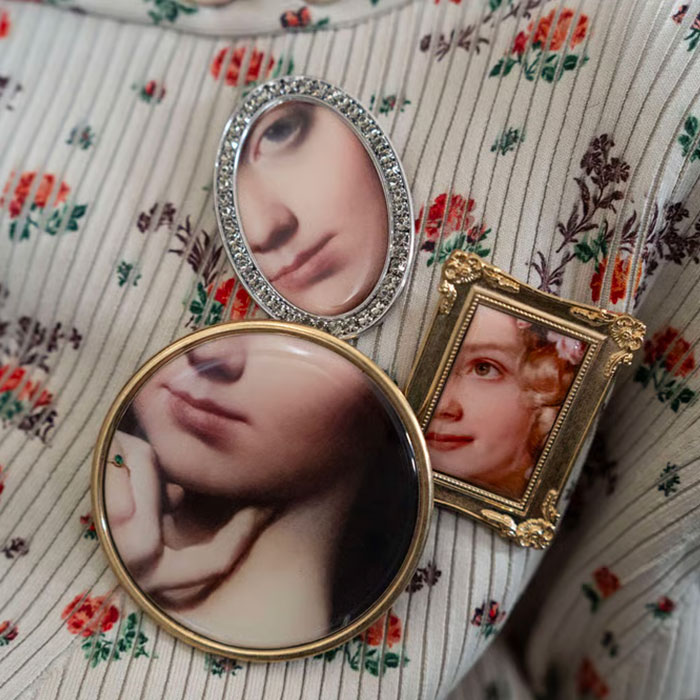
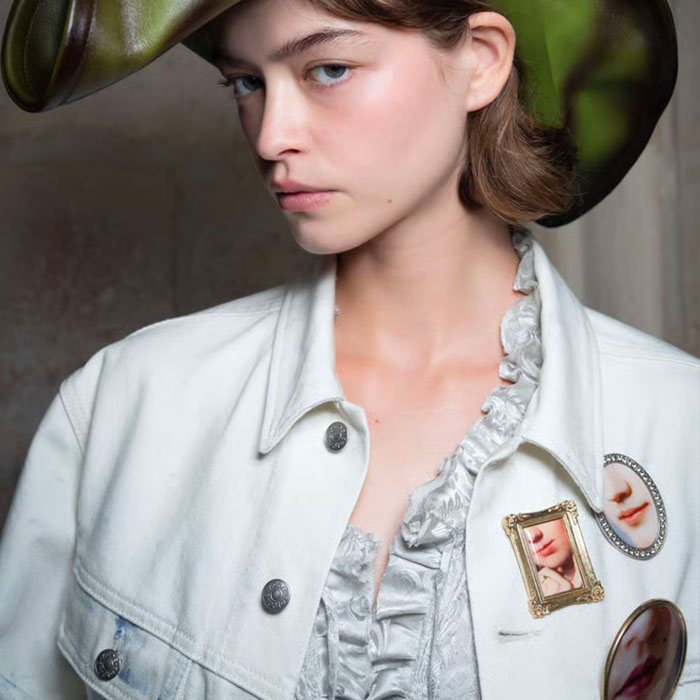
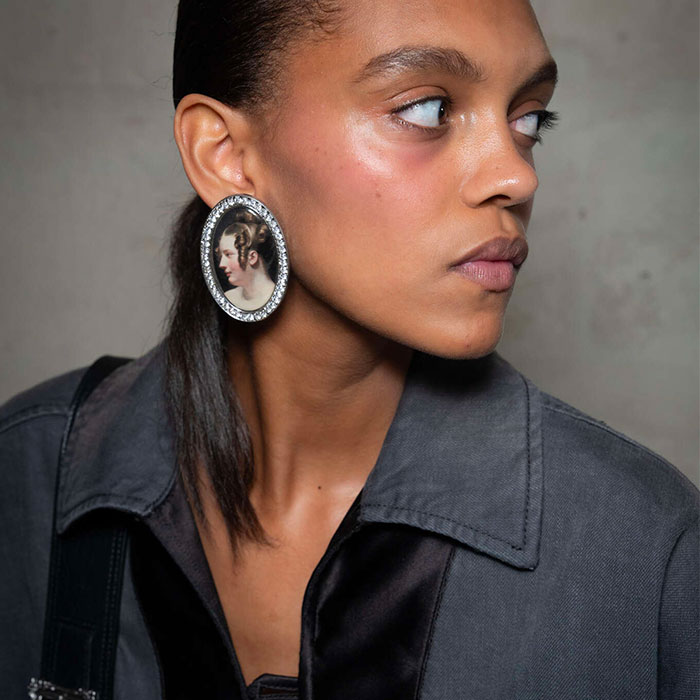
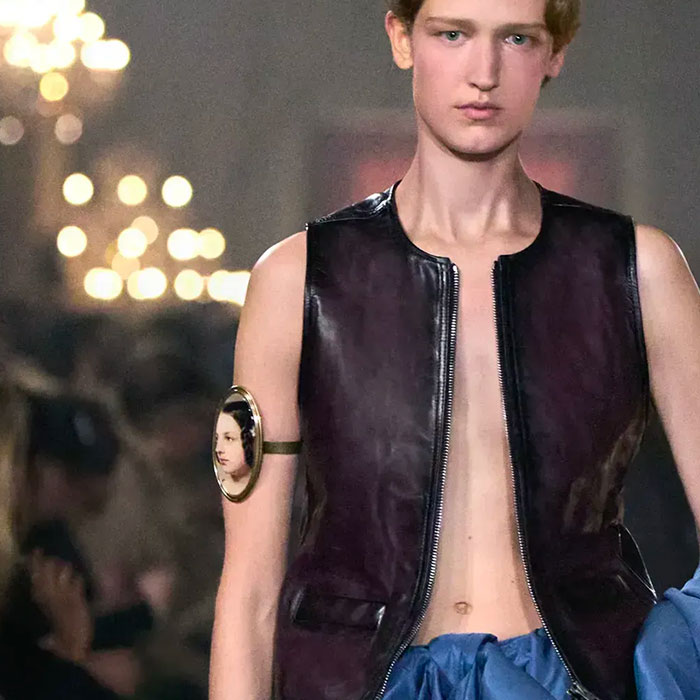
In this collection, Acne Studios creative director Jonny Johansson blends the brand’s signature denim with references to historical dress. In the spirit of London’s New Romantics, distressed denim, lined with satin and printed with floral motifs, meets trench coats, technical taffeta shirts, and period lace undergarments. This theatrical wardrobe is punctuated by miniature portraits that seem to have come straight from a museum. Pinned singly or in clusters to jacket lapels, worn as earrings or rings, they stand out above all for their close cropping: an eye fringed with long lashes, delicate lips with a beauty patch just above them, an earlobe adorned with a bow. This sense of theater recalls the world of Sofia Coppola’s Marie Antoinette, where historical costume meets a contemporary sensibility.

Sentimental Miniatures

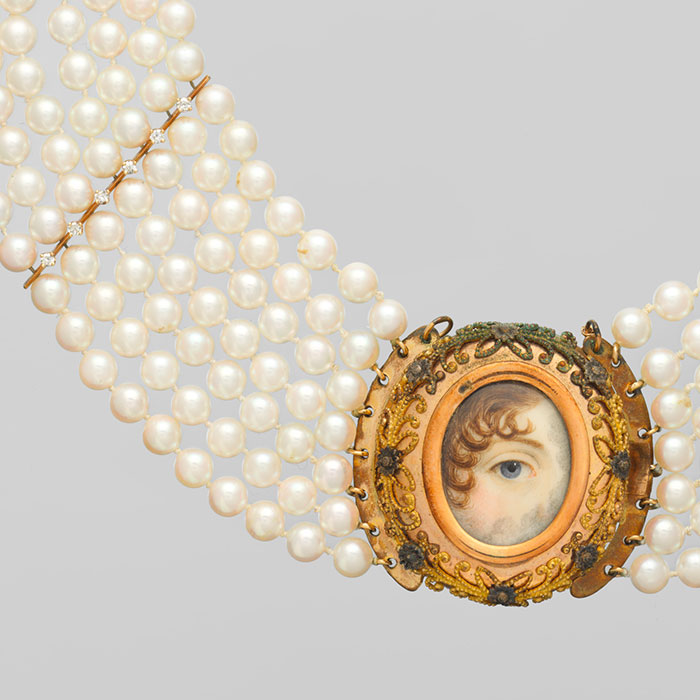
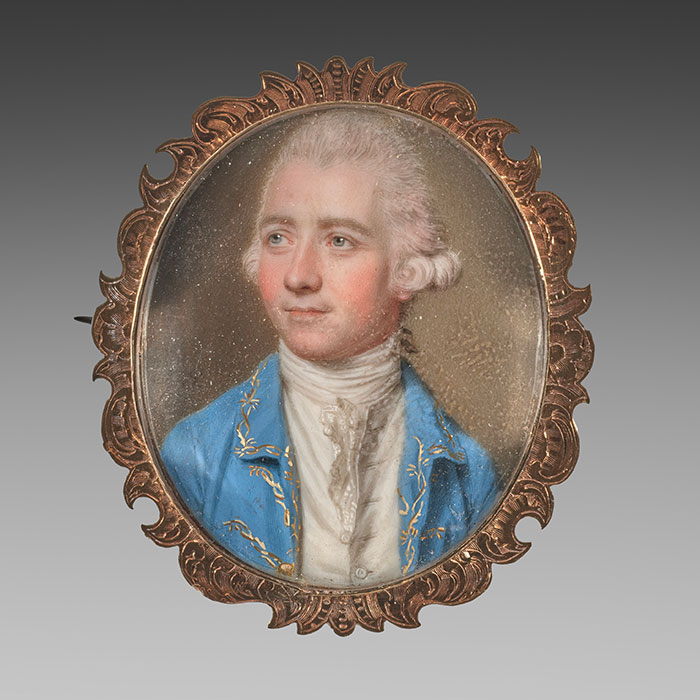
Acne Studios’ jewelry evokes the watercolor portrait miniatures painted on vellum that emerged as early as the 1520s at the court of Francis I and in the England of Henry VIII, who had a passion for the art form. Their small size made them particularly suited to jewelry: they were set in rings and lockets, worn around the neck or suspended from a belt on long gold chains. Richly enameled frames set with precious stones held the likeness of a husband or a lover, or kept alive the memory of a departed loved one. In the 19th century, many painted miniatures that had survived the upheavals of history found their way into private and museum collections, notably those of the Victoria and Albert Museum in London and the Metropolitan Museum of Art in New York.

Lover’s Eyes

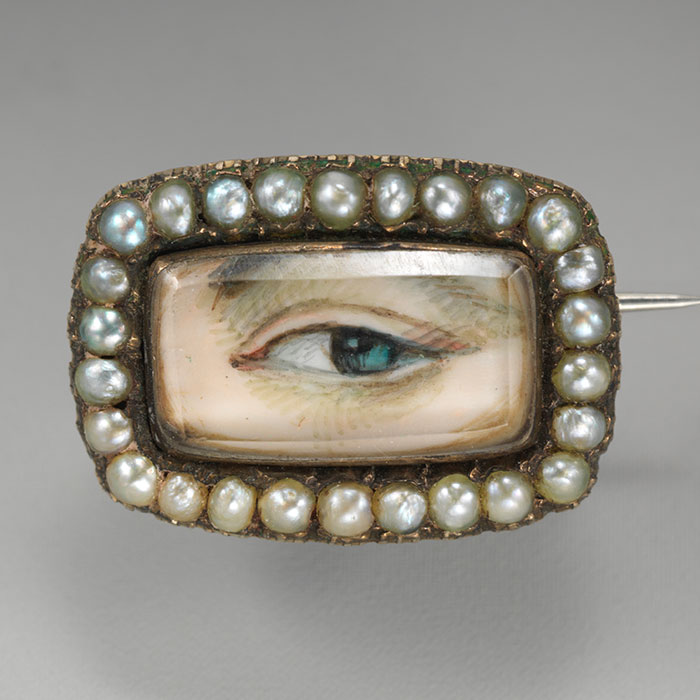
Their diminutive size and intimate close-ups of lips, earlobes, and eyes invite a closer look… These miniatures recall, in particular, lover’s eyes: painted eye miniatures that became fashionable in the late 18th and early 19th centuries, especially in Britain. Art historian Hanneke Grootenboer captures their distinctive quality: “They do not simply give us something to look at; they seem to look back.” The miniature thus sustains a sense of the loved one’s presence.

Their popularity owed much to the romance between the Prince of Wales, the future George IV, and Maria Fitzherbert, a Catholic widow. They married in secret, in a ceremony that was not legally recognized, and exchanged tiny portraits of their eyes—jewels that symbolized their love without revealing their identities.


Further reading on 19th-century painted miniatures:

Elle Shushan, ed., Lover’s Eyes: Eye Miniatures from the Skier Collection. Contributions by Graham C. Boettcher, Stephen Lloyd, and Elle Shushan. Giles, 2021.

Diana Scarisbrick, Portrait Jewels: Opulence and Intimacy from the Medici to the Romanovs. Thames & Hudson, 2011.

In this collection, Acne Studios creative director Jonny Johansson blends the brand’s signature denim with references to historical dress. In the spirit of London’s New Romantics, distressed denim, lined with satin and printed with floral motifs, meets trench coats, technical taffeta shirts, and period lace undergarments. This theatrical wardrobe is punctuated by miniature portraits that seem to have come straight from a museum. Pinned singly or in clusters to jacket lapels, worn as earrings or rings, they stand out above all for their close cropping: an eye fringed with long lashes, delicate lips with a beauty patch just above them, an earlobe adorned with a bow. This sense of theater recalls the world of Sofia Coppola’s Marie Antoinette, where historical costume meets a contemporary sensibility.

Sentimental Miniatures

Acne Studios’ jewelry evokes the watercolor portrait miniatures painted on vellum that emerged as early as the 1520s at the court of Francis I and in the England of Henry VIII, who had a passion for the art form. Their small size made them particularly suited to jewelry: they were set in rings and lockets, worn around the neck or suspended from a belt on long gold chains. Richly enameled frames set with precious stones held the likeness of a husband or a lover, or kept alive the memory of a departed loved one. In the 19th century, many painted miniatures that had survived the upheavals of history found their way into private and museum collections, notably those of the Victoria and Albert Museum in London and the Metropolitan Museum of Art in New York.

Lover’s Eyes

Their diminutive size and intimate close-ups of lips, earlobes, and eyes invite a closer look… These miniatures recall, in particular, lover’s eyes: painted eye miniatures that became fashionable in the late 18th and early 19th centuries, especially in Britain. Art historian Hanneke Grootenboer captures their distinctive quality: “They do not simply give us something to look at; they seem to look back.” The miniature thus sustains a sense of the loved one’s presence.

Their popularity owed much to the romance between the Prince of Wales, the future George IV, and Maria Fitzherbert, a Catholic widow. They married in secret, in a ceremony that was not legally recognized, and exchanged tiny portraits of their eyes—jewels that symbolized their love without revealing their identities.


Further reading on 19th-century painted miniatures:

Elle Shushan, ed., Lover’s Eyes: Eye Miniatures from the Skier Collection. Contributions by Graham C. Boettcher, Stephen Lloyd, and Elle Shushan. Giles, 2021.

Diana Scarisbrick, Portrait Jewels: Opulence and Intimacy from the Medici to the Romanovs. Thames & Hudson, 2011.
Most read articles