



Sandrine Merle. Why dedicate an entire exhibition to brooches?
Katherine Purcell. Too often underestimated, brooches are the jewelry that say the most about the person wearing them, unlike bracelets or necklaces, which can be worn anywhere: on the shoulder, on a sleeve, on the back, on the belt, or even in a series around the neck. In Alice Toklas’ memoirs*, the passage recounting her meeting in Paris with her partner Gertrude Stein inspired me greatly. She writes: “Gertrude Stein spoke to me through her brooch; I was mesmerized by her brooch “. Yet it was a modest design set with a coral cabochon, now in the Fitzwilliam Museum and featured in this exhibition. It is also the one that can be seen in Picasso’s portrait of Stein, which is kept at the MET.
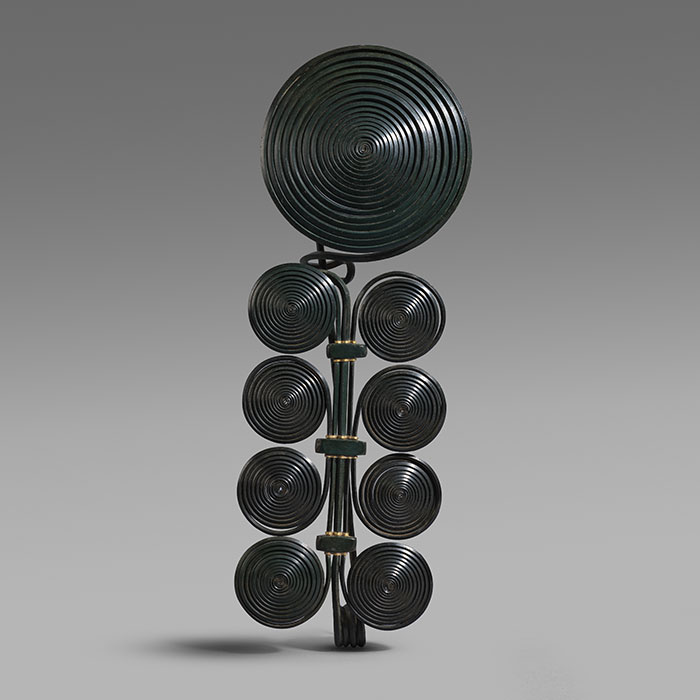
Sandrine Merle. You cover 3,000 years from the Bronze Age (with a splendid fibula from 1200 BC) to the present day. Can you tell us more about how it unfolds?
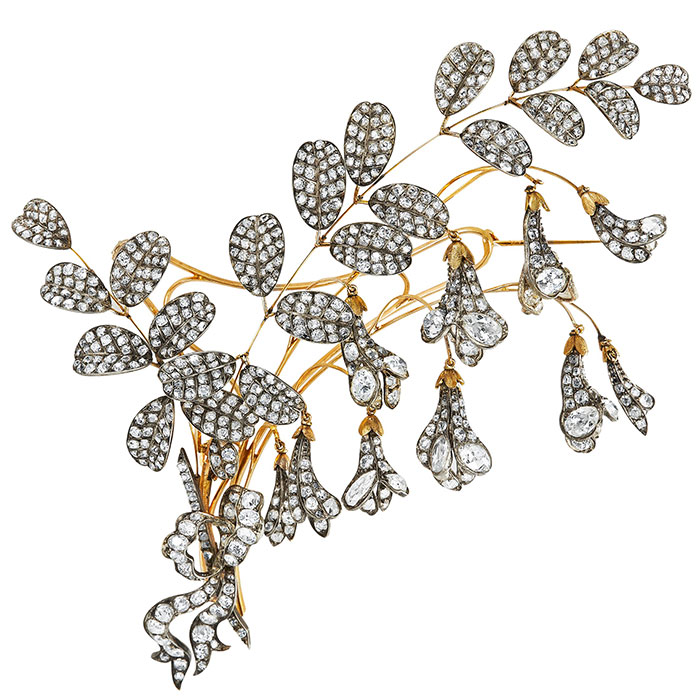
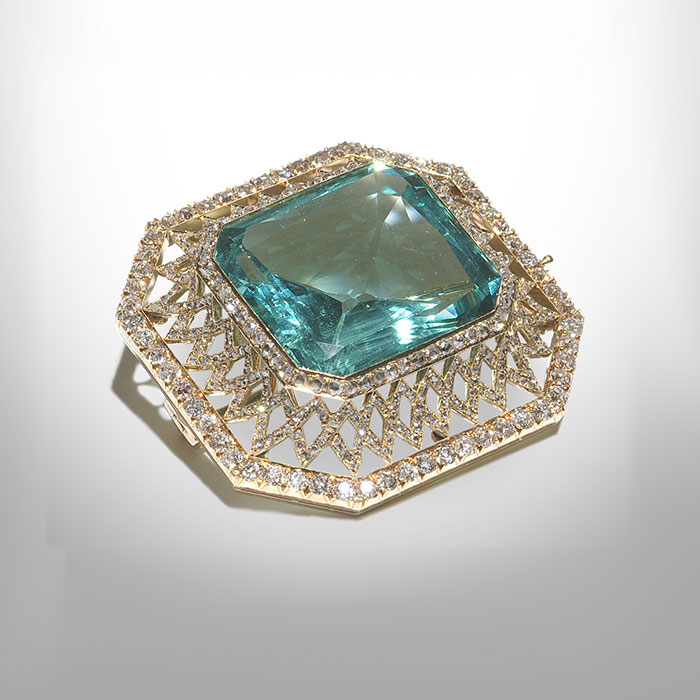
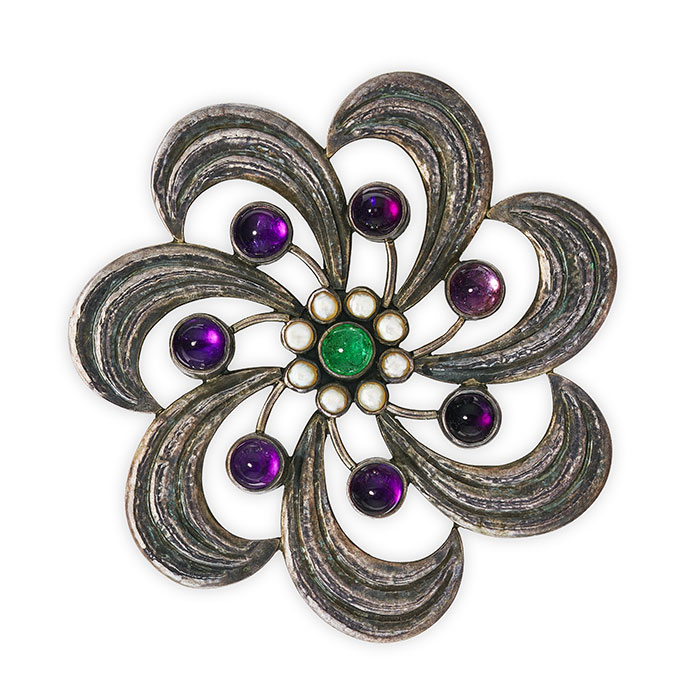
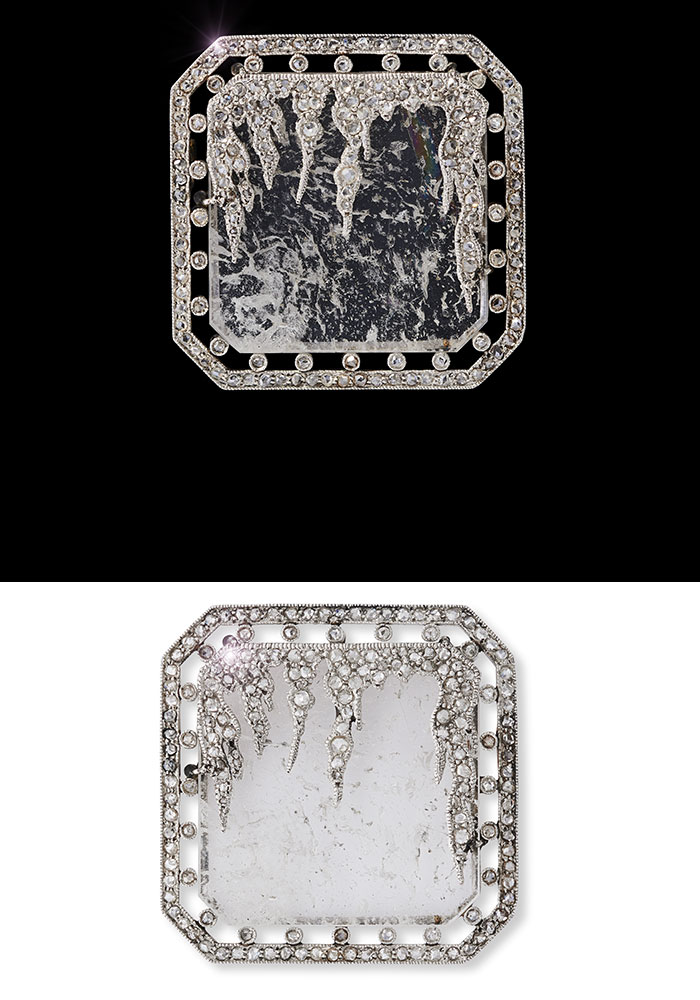
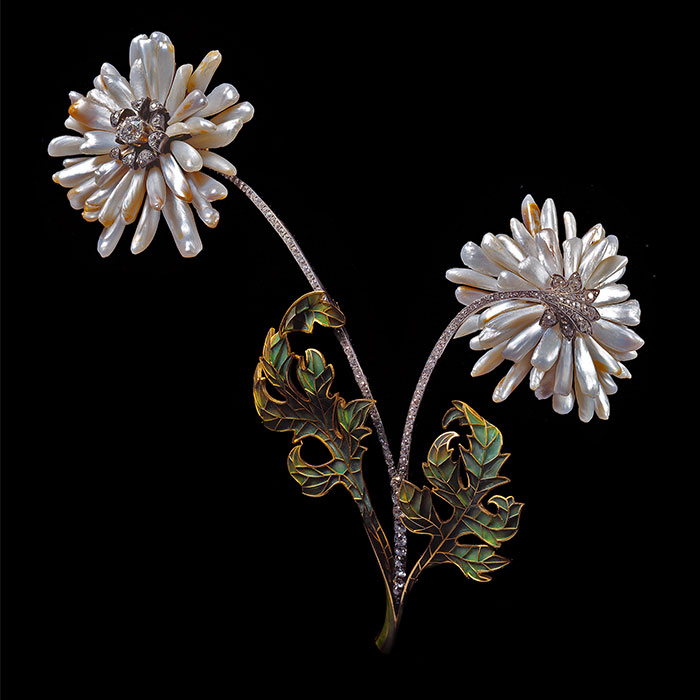
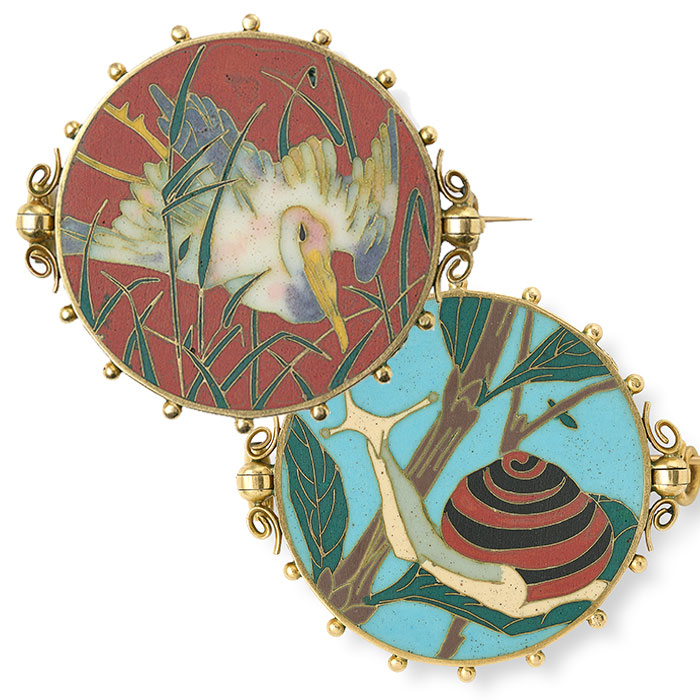
Katherine Purcell. Between these two periods, we pass through the Middle Ages, the Renaissance, the Neo-Greek period, the 19th century, characterized by major technical innovations, and Japonism, which features two exceptional pieces by Henri Vever. The famous Mississippi pearl chrysanthemum brooch sits alongside a large bodice train featuring a cherry branch, probably presented at the 1889 World’s Fair; a marvel whose flowers are mounted in a trembling pattern. There are also cloisonné enamel brooches by Falize and the famous belt buckle brooch by Chaumet, representing Raijin, the god of rain and thunder. Throughout the exhibition, the names of famous jewelers such as Mellerio, Tiffany & Co., etc. appear.
Sandrine Merle. Which brooches are you particularly proud to present?
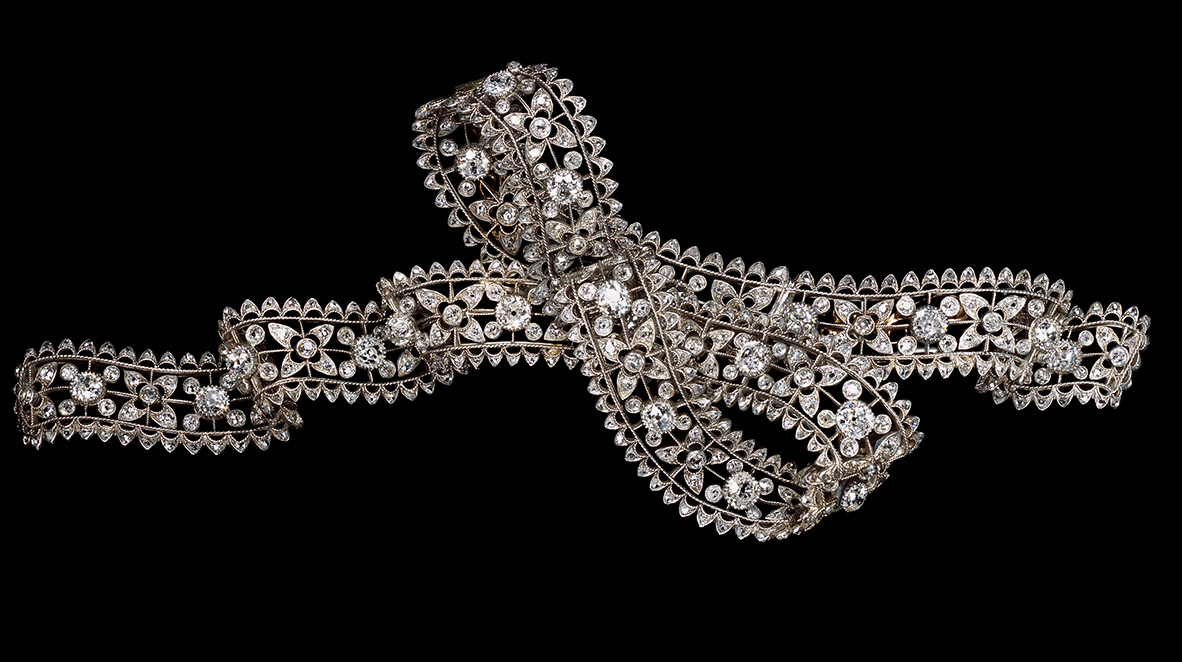
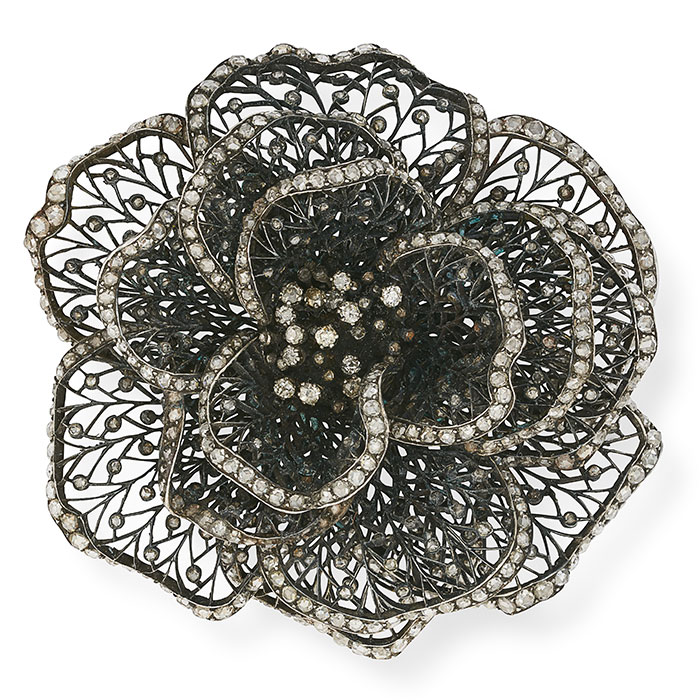
Katherine Purcell. These are two extraordinarily poetic pieces characterized by a technical innovation that was patented, one in 1854 and the other in 1878. The first, on the Mellerio brooch, involves setting precious stones on a flexible stem that seems to tremble gently. The second is Oscar Massin’s ribbon brooch, featuring gold and diamond lace. To my knowledge, it is the only piece of its kind by Massin that has survived. Both perfectly illustrate French excellence in the 19th century.
Sandrine Merle. Let’s take the “Pioneer Women” section. What type of jewelry did you select?
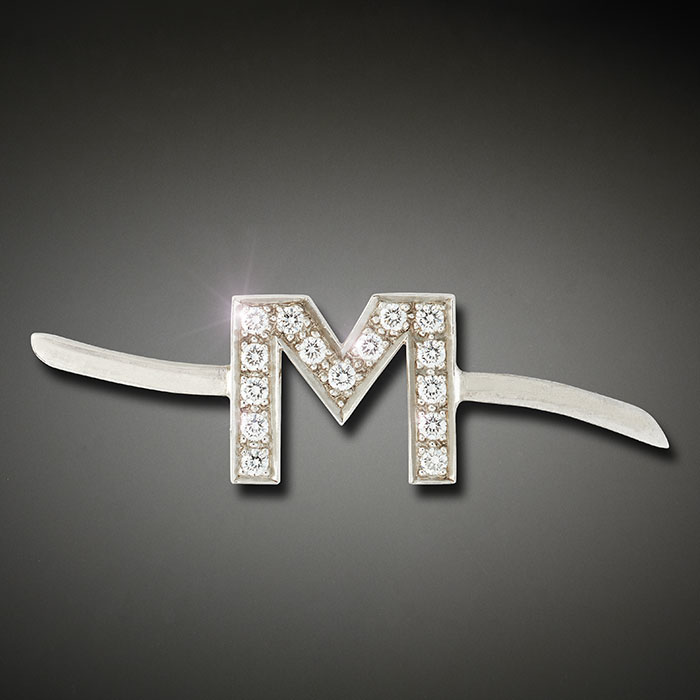
Katherine Purcell. First, there are brooches awarded by the Women’s Social and Political Union to suffragettes who were imprisoned in Holloway Prison because of their activism. The one worn by Christabel Pankhurst (daughter of the founder of the movement), is displayed alongside a gold and diamond reinterpretation that belonged to Betty Boothroyd, the first woman to be elected Speaker of the House of Commons in 1992. James Bond fans will appreciate the “M” brooch worn by Dame Judi Dench, head of the Secret Intelligence Service, succeeding her predecessors, who were all male. I would have liked to show the large spider worn by Lady Hale, the first female president of the UK Supreme Court, when she ruled that Boris Johnson’s decision to suspend parliament was unlawful; she preferred to entrust me with her first spider, a gift from her husband.
Sandrine Merle. Some pieces weren’t even planned!
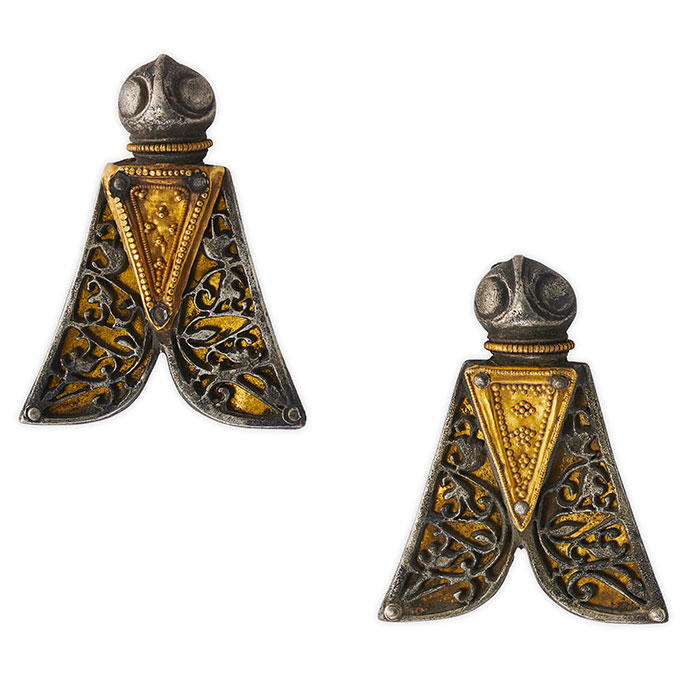
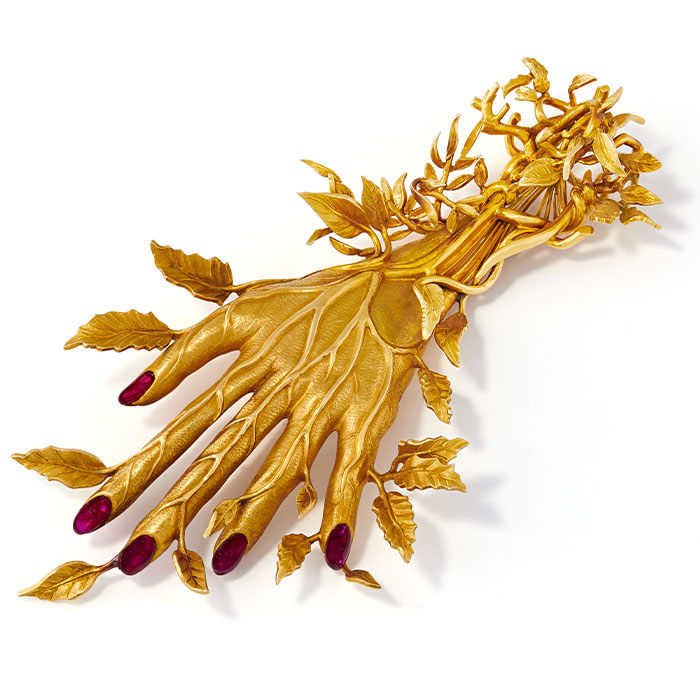
Katherine Purcell. I was spontaneously offered two magnificent and extremely rare Roman gold and silver cicada brooches dating from the 4th century BC, as well as a hand by Jean Schlumberger with intertwined branches evoking veins. I didn’t even know the latter existed! Its owner has the original drawing, so they will be exhibited together for the first time.
Sandrine Merle. This isn’t your first exhibition at Wartski, and you’ve also written a number of books.
Katherine Purcell. In 1999, my first exhibition was Falize: A Dynasty of Jewelers, a subject that had not been unexplored before. With 180 pieces, including drawings loaned by the family, it remains the only one ever to have been published on this French jeweler. When Vever’s book was translated, I designed A Hundred Years of French Jewelry with 314 pieces, followed in 2006 by Fabergé and the Russian Jewelers. The latest, Japonisme from Falize to Fabergé, the Goldsmith and Japan, dates back to 2011. I brought my expertise in French jewelry to Wartski, while my colleague Thomas Holman contributed his knowledge of engraved gems with the 2019 exhibition Multum in Parvo: A Collection of Engraved Gems. At Wartski, this scientific tradition dates back to Kenneth Snowman (grandson of the founder), who wrote the first book on Fabergé in 1953, with a preface by Eugène, Carl Fabergé’s son. In 1977, at a time when this was not common practice, the V&A Museum asked Kenneth Snowman to curate the first exhibition dedicated to Fabergé. Later, he approached my colleague Geoffrey C. Munn (now retired) for Tiaras: Past and Present, and more recently my colleague Kieran McCarthy for Fabergé in London: Romance to Revolution.
Sandrine Merle. This scientific approach allows you to be the only commercial gallery to obtain exceptional loans from the Schmuck Museum, the Fitzwilliam Museum, the British Museum, the Victoria & Albert Museum…
Katherine Purcell. Half of the jewelry in this exhibition comes from museums, which I am extremely flattered about. We have a very good long-standing relationship with them, and they also trust Wartski Gallery by purchasing pieces from us to enrich their collections. That said, we also fulfill two conditions: nothing in our exhibitions is for sale, and we have ultra-secure display cases.
Sandrine Merle. This concern for security has led you to ban photos in this exhibition.
Katherine Purcell. It’s about taking every precaution with these extremely valuable pieces of jewelry, but that’s not all: in our limited space, we want to ensure the best possible experience for visitors.
* “What is Remembered: an autobiography” by Alice Toklas published by Michael Joseph (1963)
Banner image: Oscar Massin – Gold and silver brooch in the shape of an openwork ribbon set with diamonds, 1878 © Private Collection, Courtesy of Albion Art Jewellery Institute
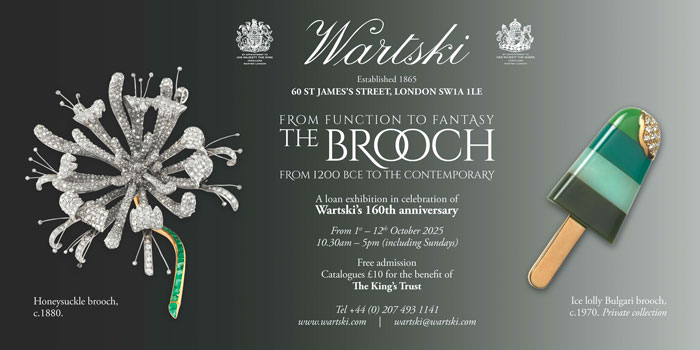
“From function to fantasy, the brooch,” October 1-12, 2025 – Wartski Gallery (free admission), London
Related articles: